Supposedly or Supposably: Meaning, Difference, and Usage ( for 2026)
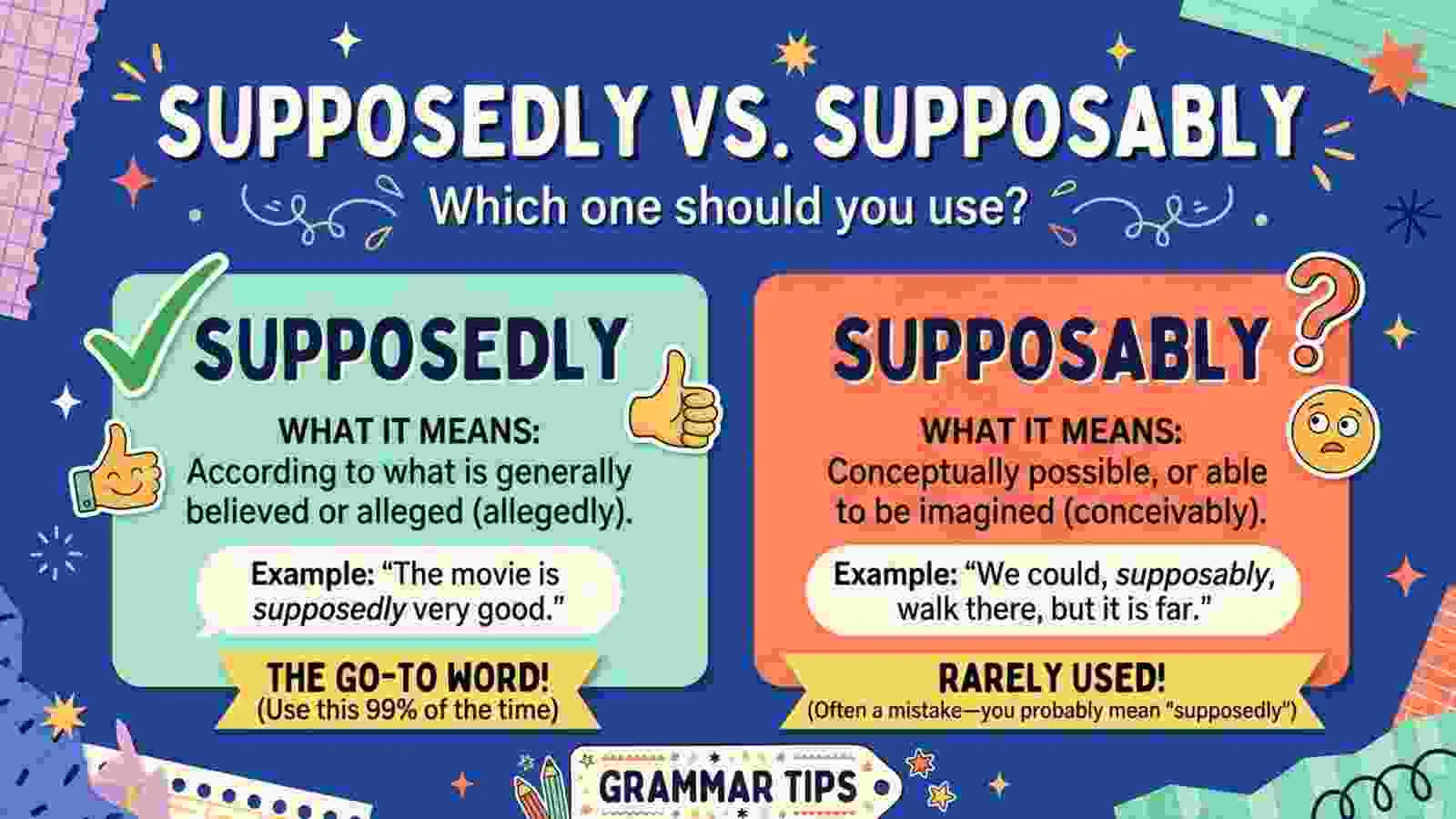
Supposedly is correct. Supposably is incorrect in standard English — it is a common mispronunciation/misspelling of supposedly. Supposedly = according ...
Read more
Leech or Leach: Meaning, Spelling, and Usage ( for 2026)
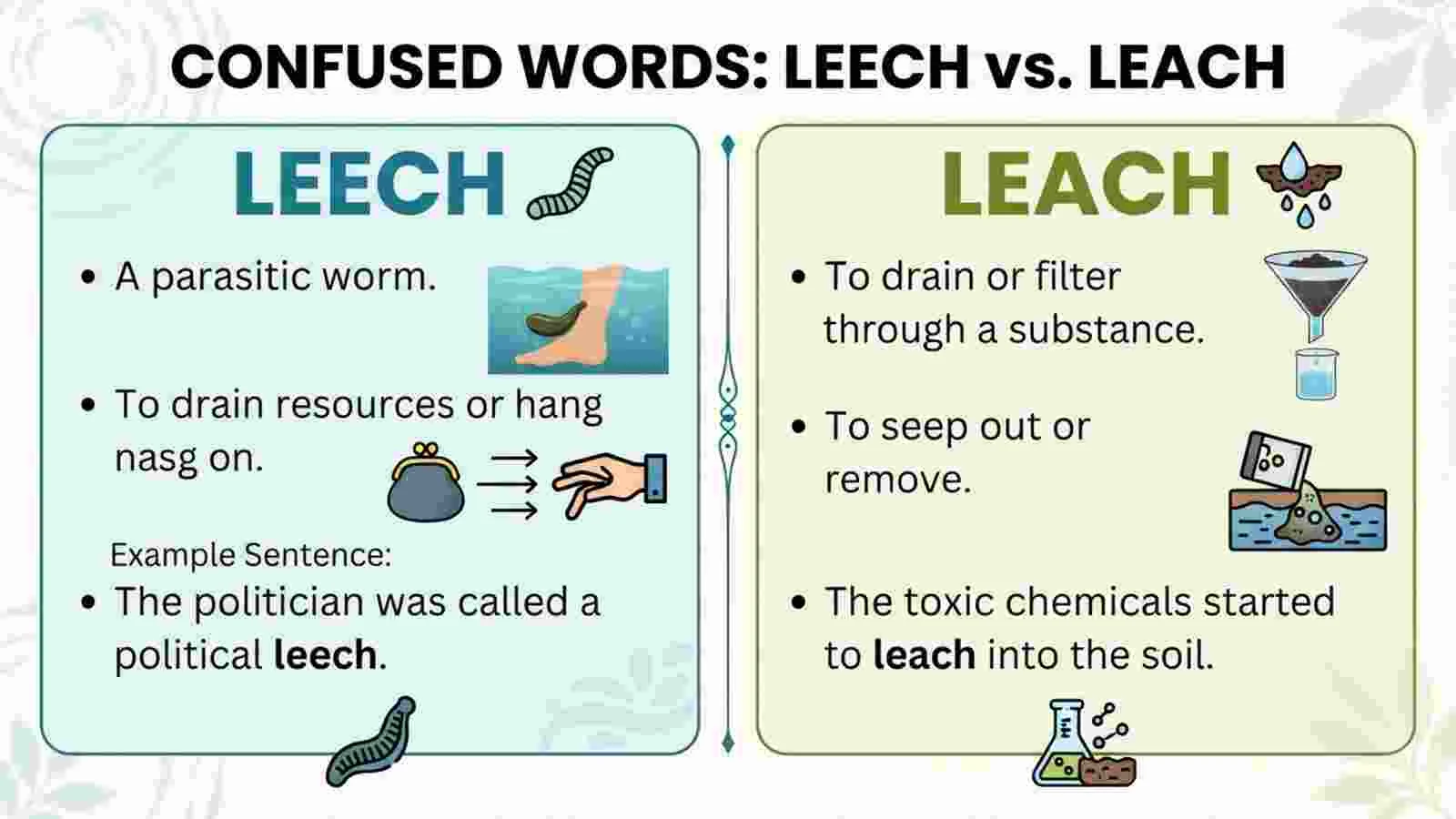
Leech is correct for the blood-sucking worm (and, figuratively, a person who lives off others). Leach is a different word ...
Read more
Pokey or Poky: Meaning, Differences, and Usage ( for 2026)
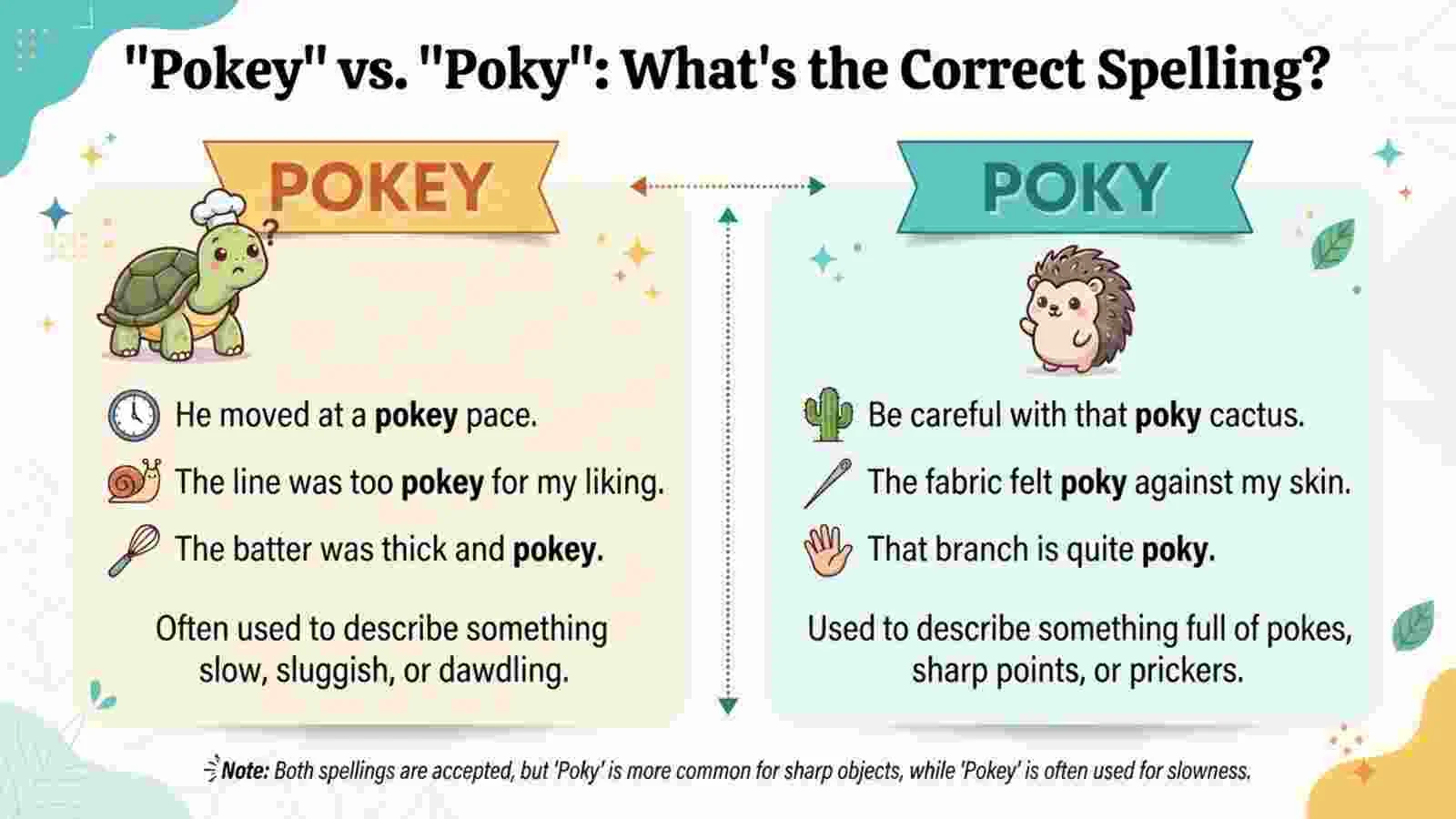
Poky is correct and the standard spelling — it means slow, or (for a horse) slow-moving and lazy. Pokey is ...
Read more
Judgemental or Judgmental: Meaning, Spelling, and Usage ( for 2026)
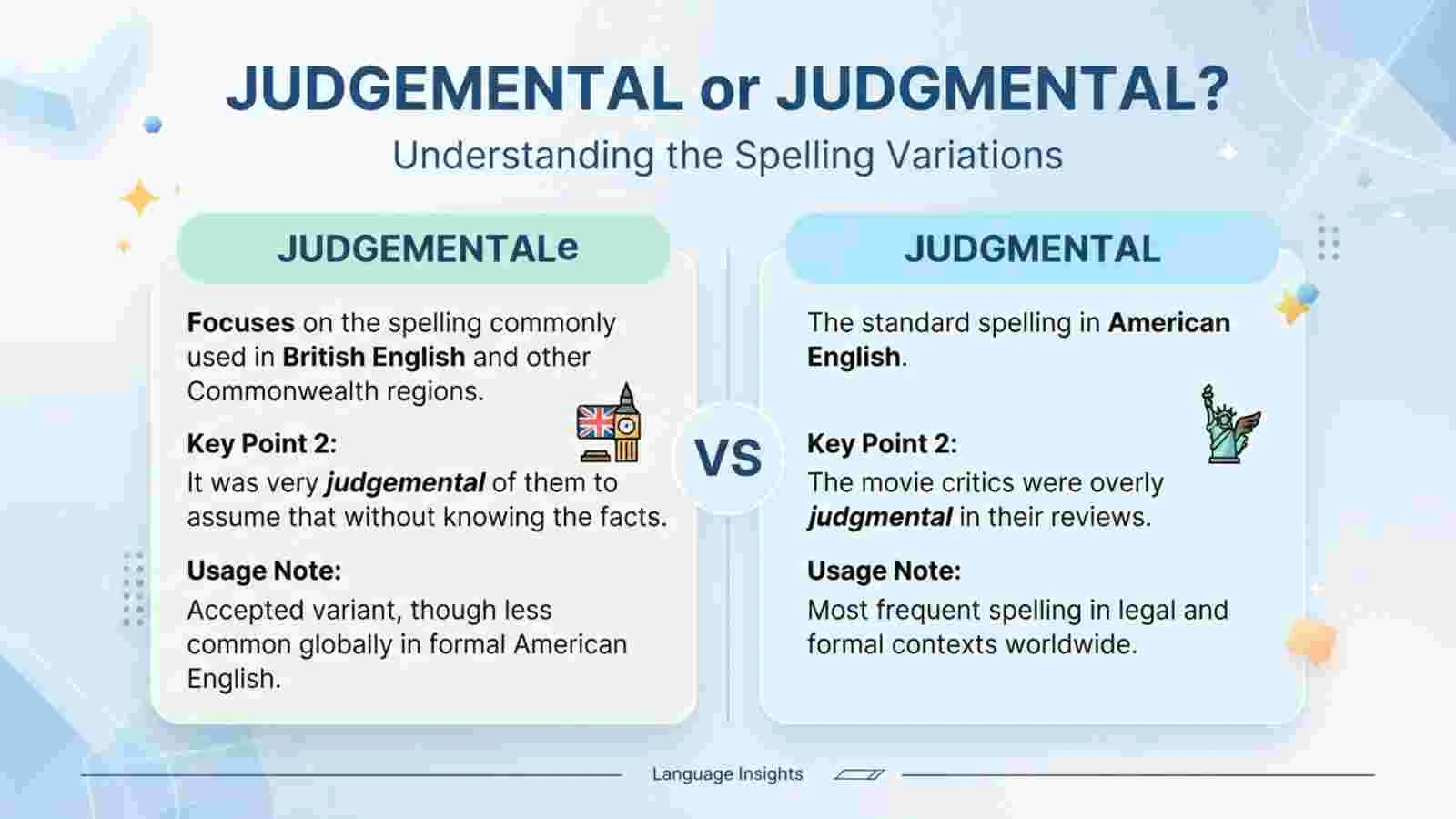
Both judgemental and judgmental are correct. Judgmental (without the e) is American English and the more common spelling worldwide; judgemental ...
Read more
Goodbye or Good Bye: Definition, Origin, and Usage ( for 2026)
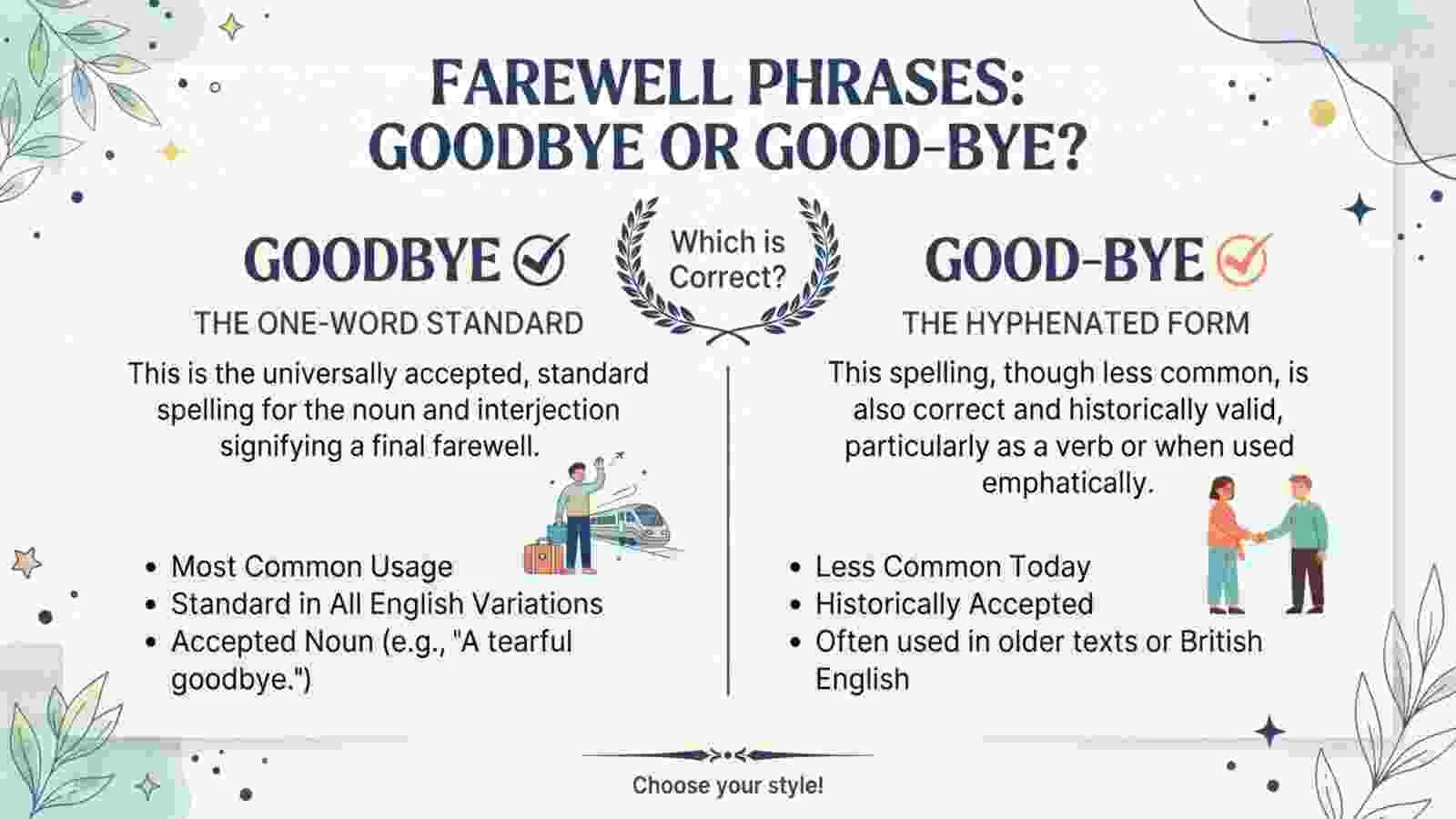
Both goodbye and good-bye are correct and mean the same thing — a farewell. Goodbye (one word) is the most ...
Read more
Tardies vs Tardys: Meaning, Spelling, and Usage ( for 2026)
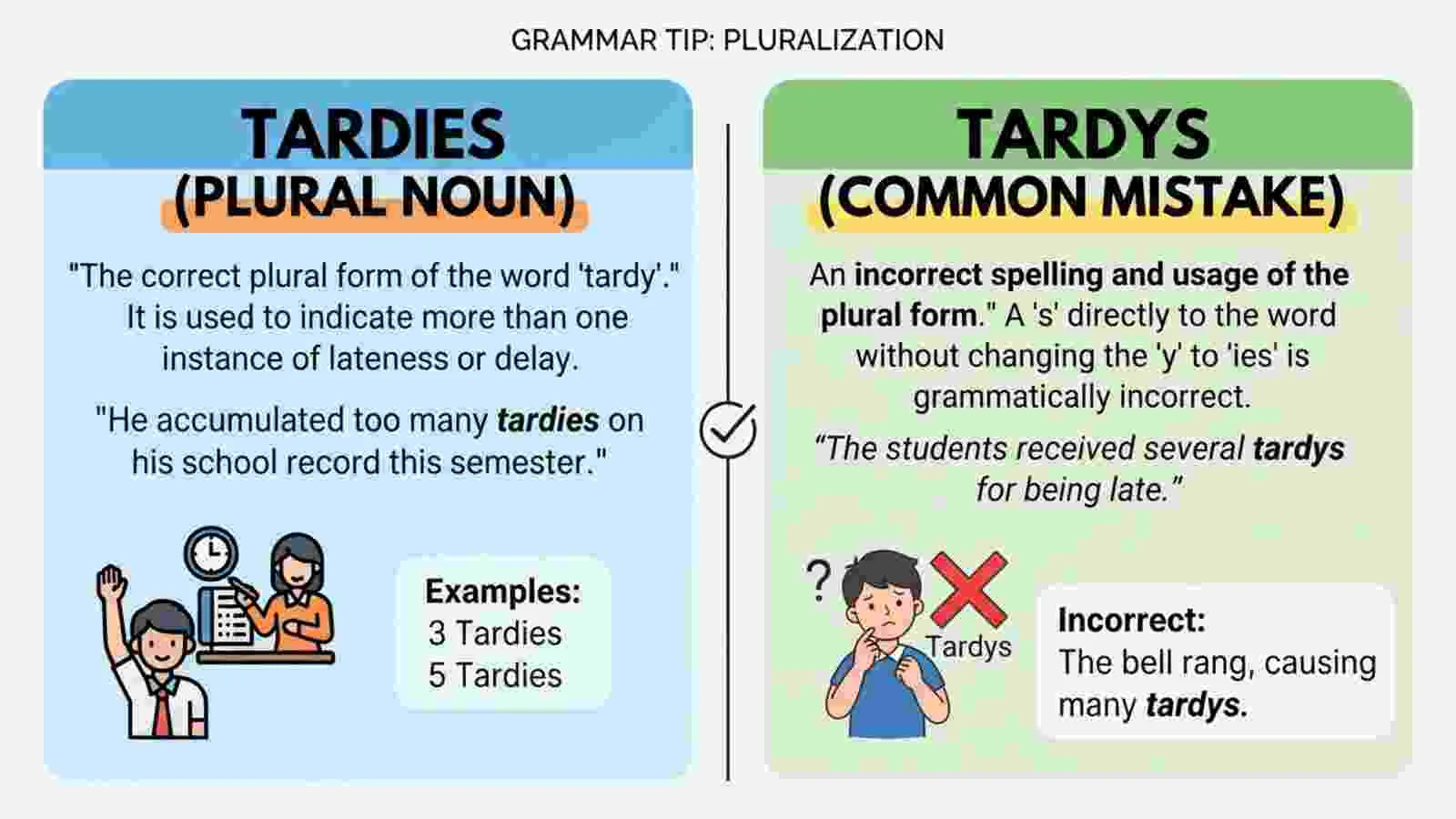
Tardies is correct. Tardys is incorrect. Tardies is the plural of tardy — tardy becomes tardies (y changes to ies). ...
Read more
Autumn or Fall: Meaning, Usage, and Differences ( for 2026)
Both autumn and fall are correct and mean the same season (the season between summer and winter). Autumn is the ...
Read more
Teammate vs. Team Mate: Meaning, Spelling, and Usage ( for 2026)
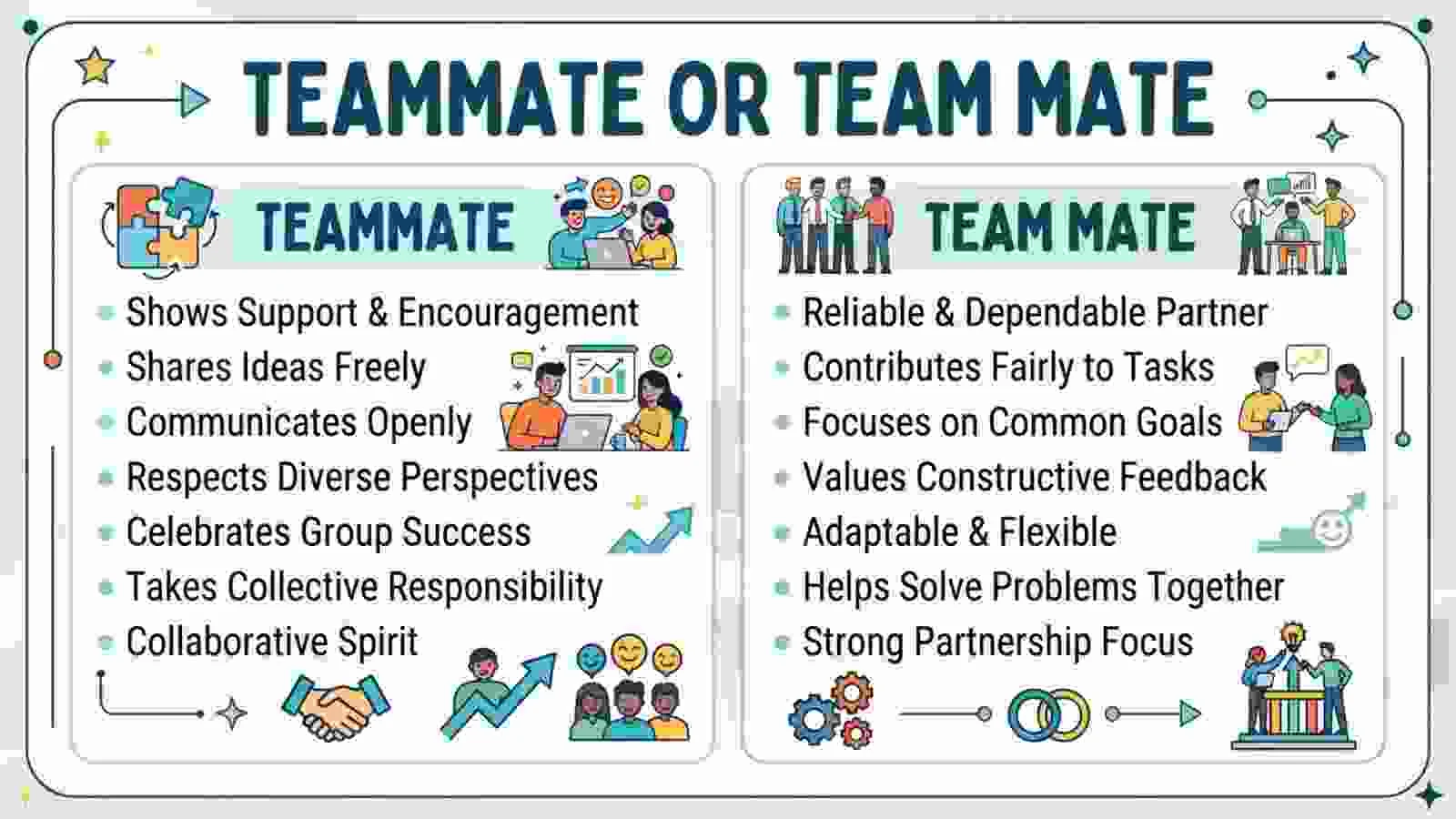
Teammate (one word) is the most common spelling. Team mate (two words) is also correct and means the same thing ...
Read more
Onward vs Onwards: Meaning, Difference, and Usage ( for 2026)
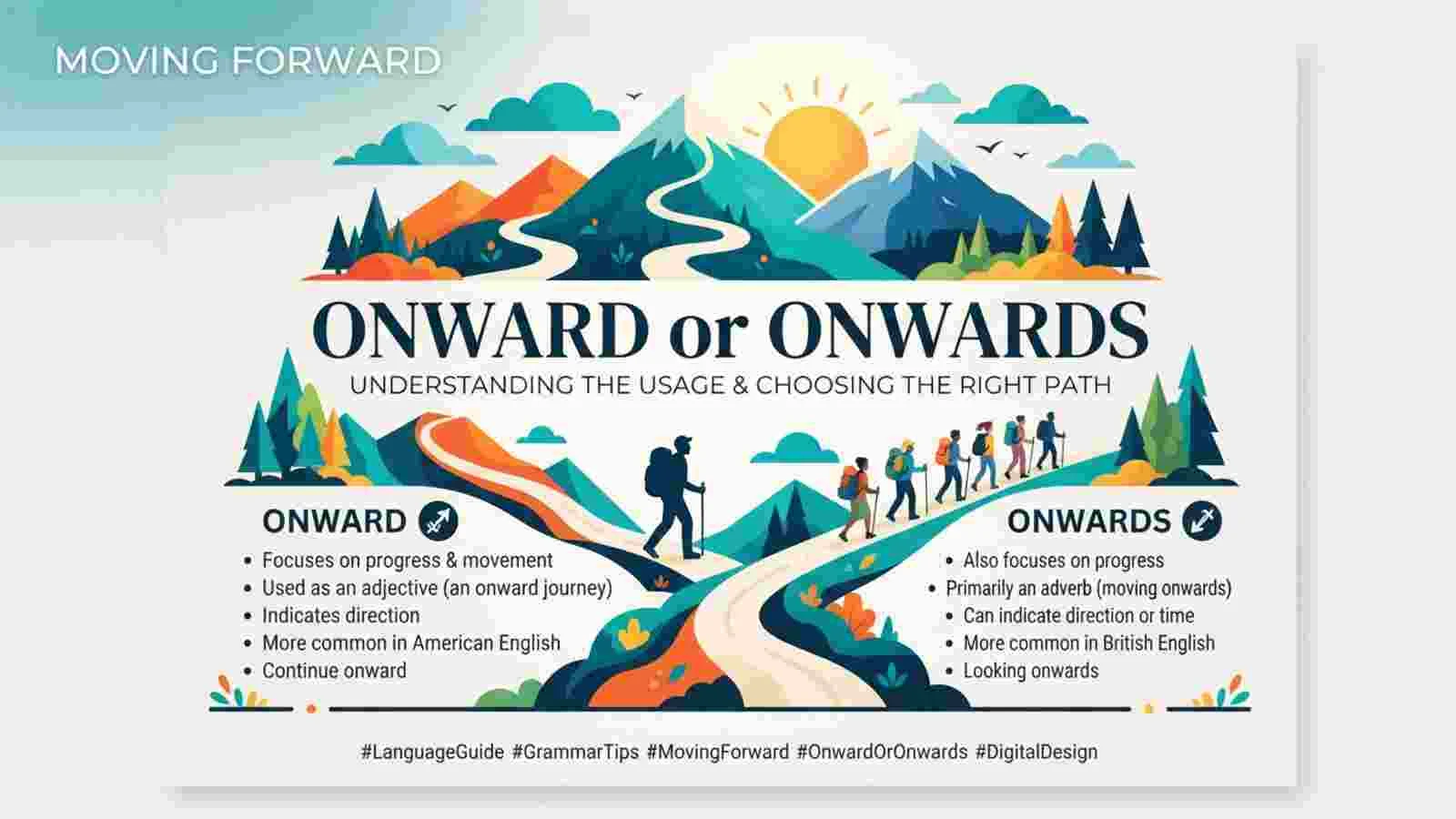
Both onward and onwards are correct and mean the same thing — moving forward or continuing from a point in ...
Read more