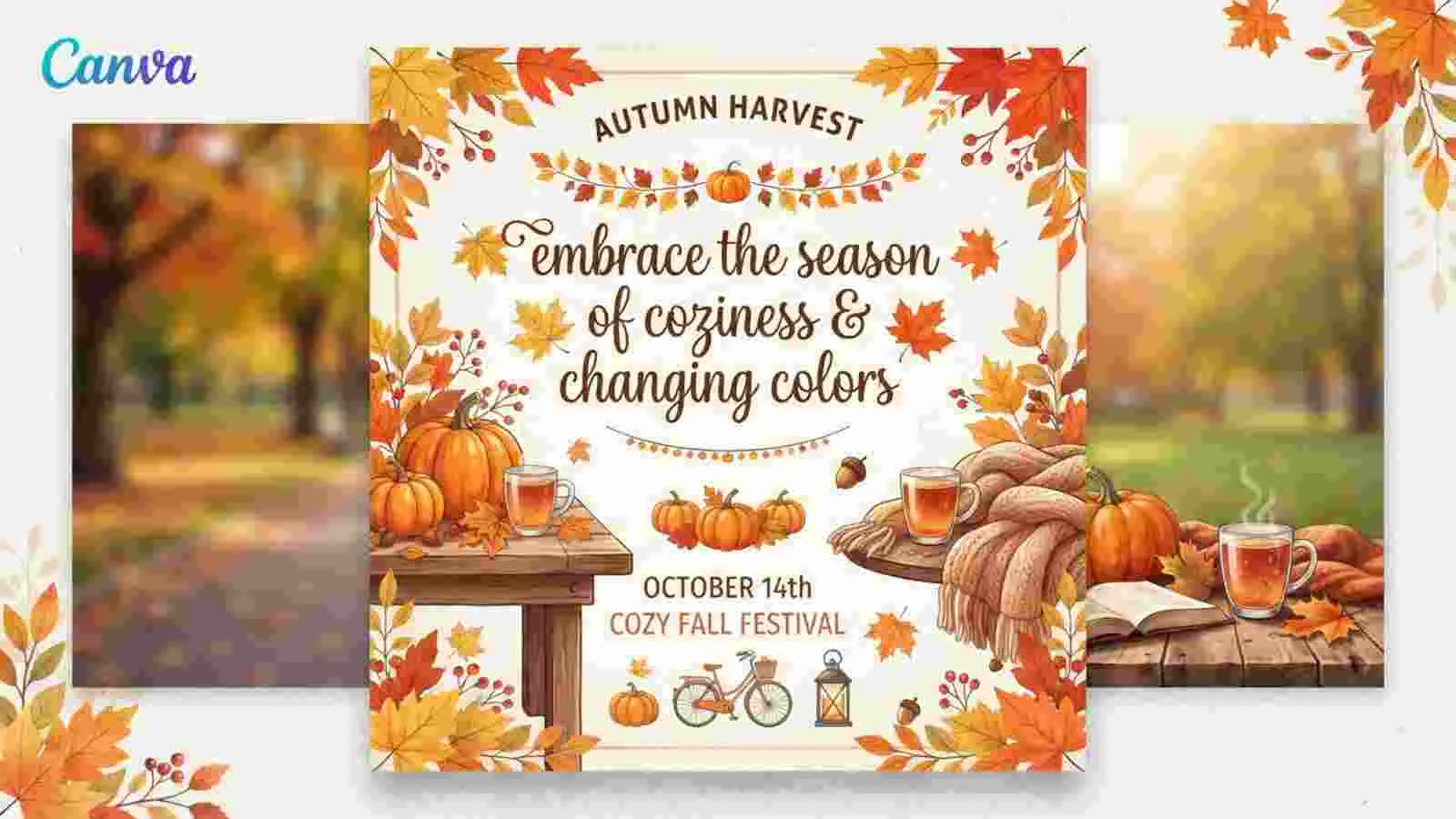
Both autumn and fall are correct and mean the same season (the season between summer and winter). Autumn is the usual word in British English; fall is the usual word in American English.
Have you ever wondered whether to say autumn or fall when talking about the season between summer and winter?
Both words are correct, but the one you choose may depend on where you live. In the United States, people often say fall.
In the United Kingdom, autumn is more common. This small difference can confuse English learners, writers, and people who want to use the right words in their work.
The good news is that you do not need to learn two different meanings. Both words describe the same season.
During this time, the weather gets cooler, leaves change color, and many trees lose their leaves. It is also a season for warm clothes, hot drinks, and beautiful views.
People search for autumn or fall to learn which word is correct, understand their history, and know which term to use in writing.
This guide explains the meaning, origin, regional differences, and common mistakes linked to both words.
You will also find simple examples, a comparison table, and answers to common questions. By the end, you will know when to use each word with confidence.
Autumn or Fall – Quick Answer
Autumn and fall mean the same season. Both refer to the period between summer and winter.
- Autumn: More common in British English and widely used in formal writing around the world.
- Fall: More common in American English and often used in everyday speech.
Examples:
- British English: Autumn is my favorite season.
- American English: Fall is my favorite season.
Both sentences are correct. The main difference is regional preference, not meaning or grammar.
The Origin of Autumn and Fall
The words autumn and fall have different histories. However, both became names for the same season.
Where Does the Word Autumn Come From?
The word autumn came into English through Old French, from the Latin word autumnus. It has been used in English since the late Middle Ages.
Over time, autumn became a common name for the season when temperatures begin to drop and leaves change color. It later became the preferred term in British English and remains common in many other English-speaking countries.
Where Does the Word Fall Come From?
The word fall comes from the Old English verb feallan, which means to fall or drop. The phrase fall of the leaf was once used to describe the season when leaves fall from trees.
People gradually shortened this phrase to fall. The word became especially popular in North America.
Today, both words remain correct. Their different histories explain why English speakers use different names for the same season.
British English vs American English Spelling
Unlike words such as colour and color, autumn and fall are not different spellings of one word. They are two separate words with the same seasonal meaning.
British and American English simply prefer different terms.
| Feature | British English | American English |
| Common term | Autumn | Fall |
| Meaning | Season between summer and winter | Season between summer and winter |
| Everyday use | Autumn weather | Fall weather |
| Common phrase | Autumn leaves | Fall leaves |
| Seasonal activities | Autumn walks | Fall festivals |
| Formal writing | Autumn is common | Fall is also correct |
| Grammar | Noun | Noun |
Examples in British English
- Autumn brings cooler days.
- The autumn leaves look beautiful.
- We enjoy walking in the park during autumn.
Examples in American English
- Fall brings cooler days.
- The fall leaves look beautiful.
- We enjoy walking in the park during fall.
Both sets of examples are grammatically correct. The choice depends mainly on your audience and writing style.
Which Spelling Should You Use?
Since autumn and fall are both correct, your choice should depend on who will read your writing.
For American Readers
Use fall when writing for a general American audience. It sounds natural in daily conversation, blogs, school work, and news stories.
Example: Fall is a great time to visit New England.
For British Readers
Use autumn when writing for readers in the United Kingdom. It is the more common choice in British English.
Example: Autumn is a lovely time to explore the countryside.
For Commonwealth Countries
In countries such as Australia and New Zealand, autumn is generally the more common term. It is also widely understood in other Commonwealth settings.
Example: The weather becomes cooler in autumn.
For Global Websites and SEO Content
If your website targets readers around the world, both words can help people find your content. Choose one as your main term and use the other naturally when it fits the sentence.
For example, an article titled Autumn or Fall: What Is the Difference? can serve readers from both the United States and the United Kingdom.
Do not switch between the terms without a reason if your article follows one regional style.
Common Mistakes with Autumn or Fall
Although both words are simple, writers sometimes use them incorrectly.
Mistake 1: Thinking One Word Is Wrong
Incorrect: Fall is not a real English word for the season.
Correct: Fall is a common American English term for the season.
Both words are correct.
Mistake 2: Using the Words as Different Seasons
Incorrect: Autumn comes before fall.
Correct: Autumn and fall refer to the same season.
There is no separate season called fall after autumn.
Mistake 3: Forgetting Capitalization Rules
Incorrect: I love Autumn.
Correct: I love autumn.
Season names are usually lowercase in English unless they appear at the beginning of a sentence or in a proper name.
Mistake 4: Using the Wrong Regional Preference
A writer may use fall in a British publication where autumn would sound more natural. This is not a grammar error, but it may make the writing feel less local.
Tip: Follow the style used by your target publication or audience.
Mistake 5: Assuming the Words Have Different Meanings in Every Context
In seasonal contexts, the words mean the same thing. However, fall has other meanings, such as dropping down or a decline.
Example: The fall of the tower shocked everyone.
Here, fall does not refer to a season.
Autumn or Fall in Everyday Examples
Both words work in many types of writing. Here are examples for different situations.
In Emails
British English: I hope we can arrange a meeting this autumn.
American English: I hope we can arrange a meeting this fall.
Both are polite and clear.
In News Articles
British English: Autumn temperatures are expected to drop next week.
American English: Fall temperatures are expected to drop next week.
News writers usually follow the regional style of their publication.
On Social Media
- Hello, autumn!
- Hello, fall!
- Autumn days and cozy nights.
- Fall leaves make every walk special.
Both terms work well in captions, hashtags, and seasonal posts.
In Formal Writing
British English: The study began in autumn and ended in winter.
American English: The study began in fall and ended in winter.
Use the term that matches your institution’s or publication’s style guide.
In Everyday Conversation
- Do you like autumn?
- Do you like fall?
Both questions are correct. Your choice will often reflect the English variety you speak.
Autumn or Fall – Google Trends and Usage Data
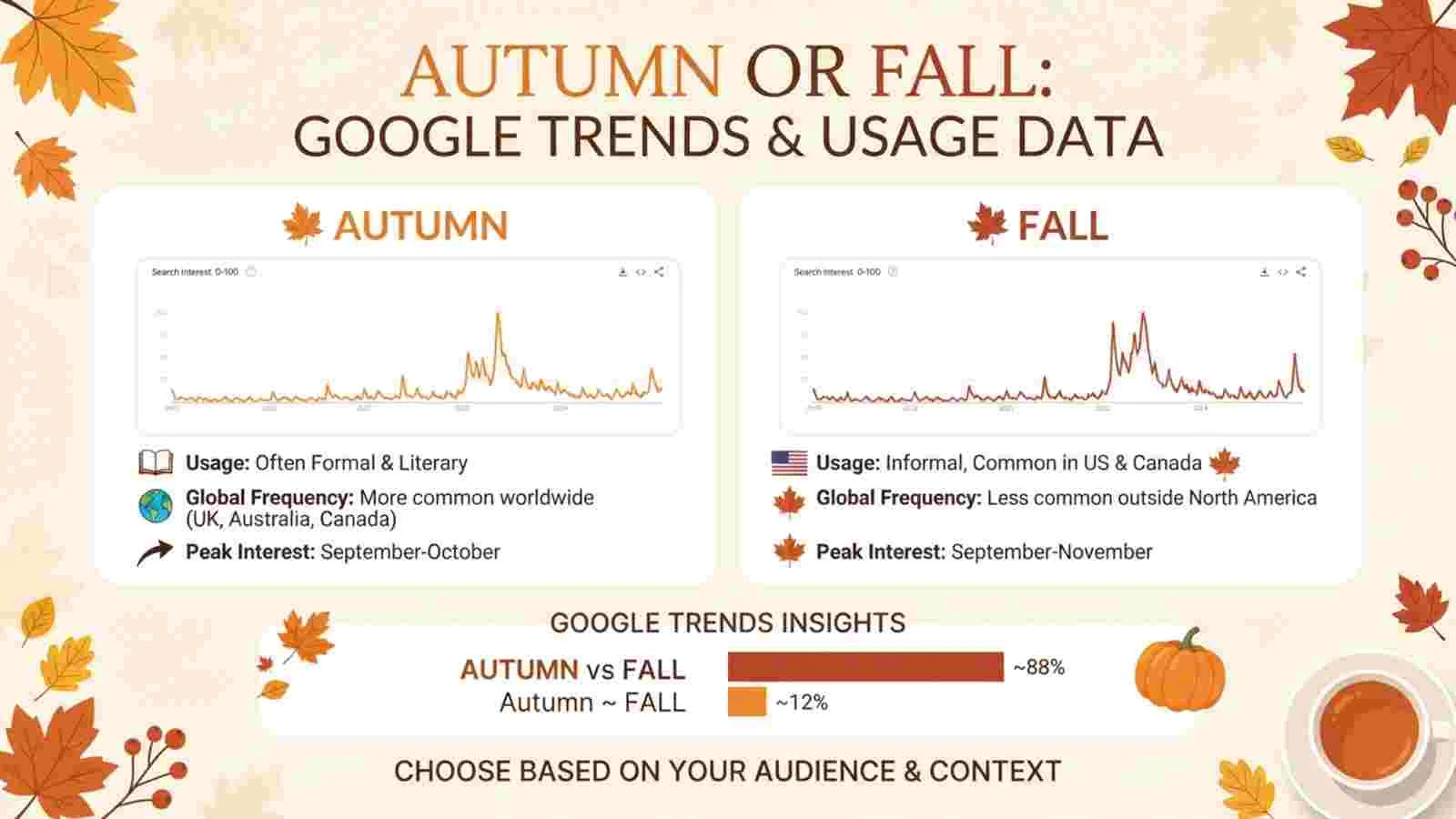
Search interest in autumn and fall can vary by country, season, and topic. The terms may refer to the weather, clothing, travel, school schedules, or seasonal activities.
In general, these regional patterns are useful:
- United States: Fall is widely used in everyday speech and seasonal searches.
- United Kingdom: Autumn is the more common everyday term.
- Australia and New Zealand: Autumn is generally preferred.
- Canada: Both terms are understood, and usage can vary by context and region.
- International English: Both words are widely understood.
What About Google Trends?
Google Trends compares relative search interest over time. It does not show the exact total number of searches for a term.
To compare the words fairly, select the same time range, search type, and geographic location. Compare autumn and fall separately in the United States, United Kingdom, Australia, and Canada.
Keep in mind that fall can also refer to falling, a decline, or other events. This can affect its search data. Therefore, a higher search-interest score does not always mean that more people are searching for the season itself.
For SEO, use the main term that fits your target country. Include the alternative in a natural way when it helps readers understand the difference.
Autumn and Fall: Comparison Table
| Comparison Point | Autumn | Fall |
| Meaning | Season between summer and winter | Season between summer and winter |
| Word history | From Latin through French | From the idea of falling leaves |
| US usage | Common and understood | Generally preferred |
| UK usage | Generally preferred | Understood, less common |
| Australia and New Zealand | Generally preferred | Understood |
| Formal writing | Widely accepted | Widely accepted |
| SEO use | Useful for international and British audiences | Useful for American audiences |
Frequently Asked Questions
1. Is autumn or fall correct?
Both are correct. Autumn is more common in British English, while fall is more common in American English.
2. Do autumn and fall mean the same thing?
Yes. Both words describe the season between summer and winter.
3. Why do Americans say fall instead of autumn?
Fall developed from the phrase fall of the leaf, which described leaves dropping from trees. It became especially common in North America.
4. Do British people say fall?
British people understand the word fall, but autumn is generally more common in everyday British English.
5. Which word should English learners use?
Learn both words. Use autumn when following British English and fall when following American English.
6. Is autumn more formal than fall?
Autumn can sound more traditional or formal to some readers, but both words are acceptable in formal writing. The audience and context matter more than formality alone.
7. Which word is better for SEO?
Neither word is always better. Use autumn for content targeting British or other audiences that prefer it, and fall for content targeting American readers. Check keyword data for your target country before making a final choice.
8. How do you spell autumn?
A-U-T-U-M-N — autumn. Remember: the final ‘n’ is silent.
Conclusion
Choosing between autumn and fall is easy once you understand their meaning and regional use.
Both words describe the same season, when summer ends, temperatures cool, and many trees lose their leaves.
Neither word is wrong, and you can use either one in correct English.
The main difference is regional preference. Autumn is more common in British English and in countries such as Australia and New Zealand.
Fall is generally preferred in American English. Both are understood in many parts of the world.
If you write for a specific audience, follow the language style that feels most natural to those readers.
Use fall for most American-focused content and autumn for most British-focused content.
For international websites, you can include both terms naturally to help readers understand the difference.
For SEO, remember that search interest depends on the country and context.
Check keyword data before choosing your main phrase, and avoid adding both words too often just to rank higher.
The best choice is the one that makes your writing clear, natural, and useful.
In short, autumn or fall is a choice of regional vocabulary, not a test of right and wrong English.
Continue Reading:
- Teammate vs. Team Mate: Meaning, Spelling, and Usage ( for 2026)
- Onward vs Onwards: Meaning, Difference, and Usage ( for 2026)
- Hooves vs Hoofs: Meaning, Spelling, and Usage ( for 2026)
- Cuter or Cutier: Correct Spelling, Meaning, and Usage ( for 2026)
- Selfs or Selves: Meaning, Grammar, and Examples (for 2026)

Mary Roach is an American science writer and bestselling author known for making unusual and complex scientific topics engaging, accessible, and humorous. Her books include Stiff, Packing for Mars, Gulp, and Fuzz.
Author at Simifind.com, sharing clear, informative content designed to help readers understand interesting topics and everyday questions.


3 thoughts on “Autumn or Fall: Meaning, Usage, and Differences ( for 2026)”