Hey, I want to share something that happened to me recently about Selfs or Selves.
One tiny spelling difference can make a word look right while making your sentence completely wrong.
I was chatting with a friend when I suddenly saw this term pop up, and honestly, I had no clue what it meant at first.
I kept wondering, “Am I missing something here?” It was a bit confusing, and I didn’t want to respond the wrong way.
So, I decided to look into Selfs or Selves and figure out its meaning and context.
After understanding it, I realized how important it is to know these terms to avoid awkward situations in conversations.
I handled it by learning the proper meaning and responding confidently, and now I feel ready whenever I see Selfs or Selves again in chats or social media.
Selfs or Selves – Quick Answer
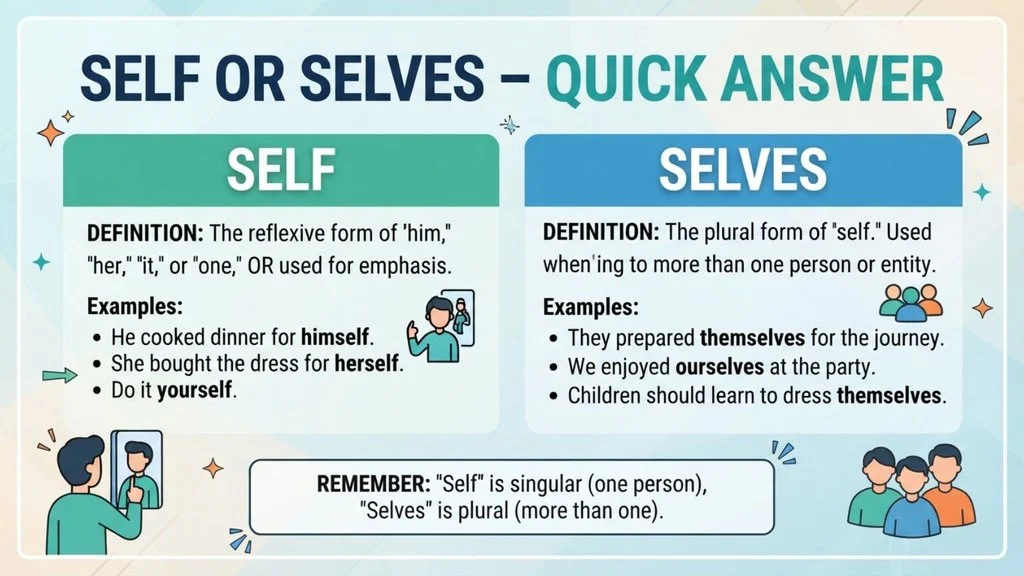
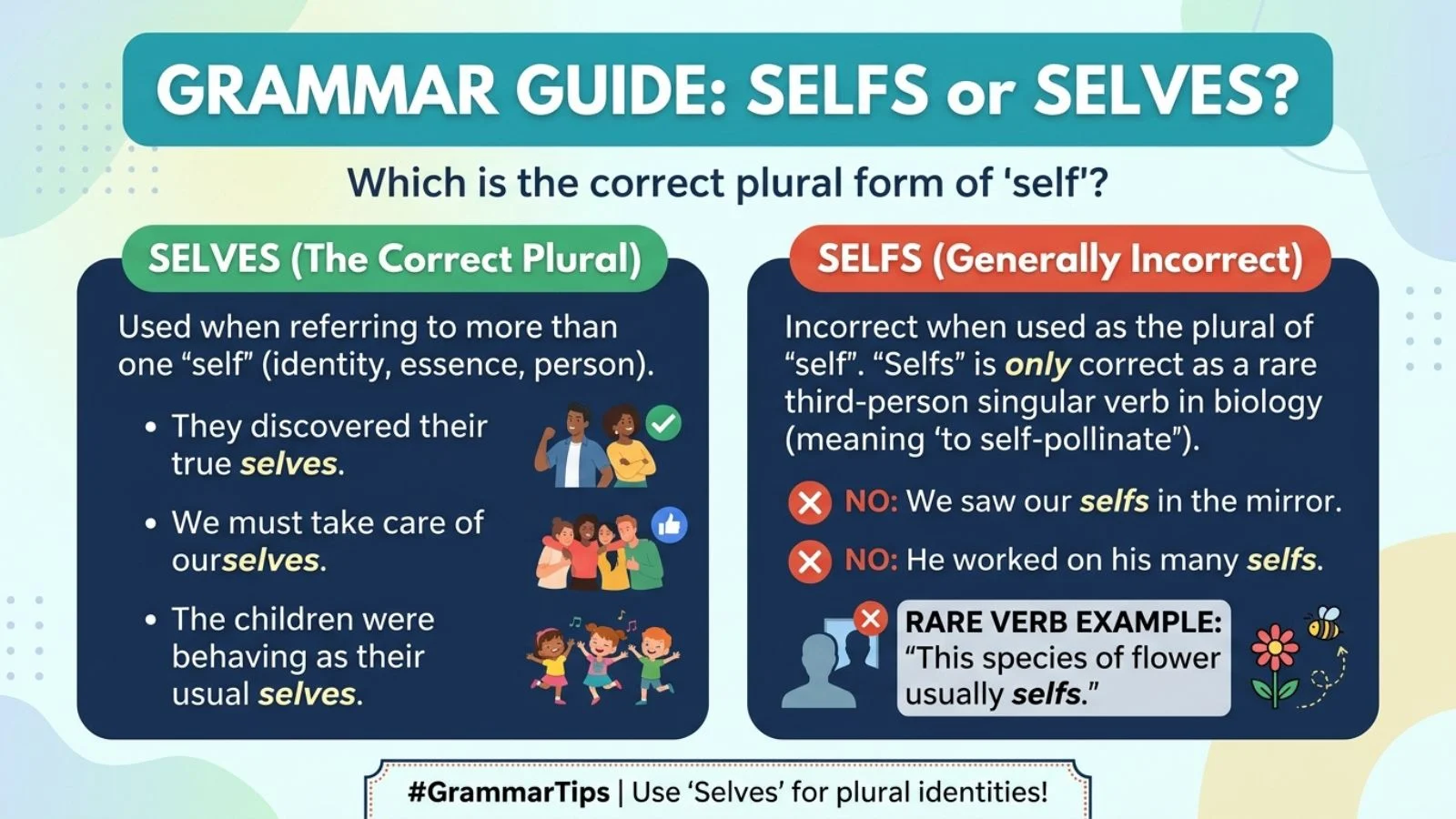
Selves is the correct standard plural of self.
- ✅ selves — correct
- ❌ selfs — incorrect in standard English
Examples
- We should be honest with our selves. ❌
- We should be honest with our selves. ❌
More naturally, with the possessive adjective:
- We should be honest with our selves. ❌
- We should be honest with our selves. ❌
The correct form is:
- We should be honest with our selves. ❌
Actually, the standard spelling is ourselves when referring to “our own selves.”
Other examples:
- They discovered their true selves.
- The children were being their usual selves.
- We should accept our different selves.
- Both characters show different selves in the story.
The important rule is simple: self → selves.
The Origin of Selfs or Selves
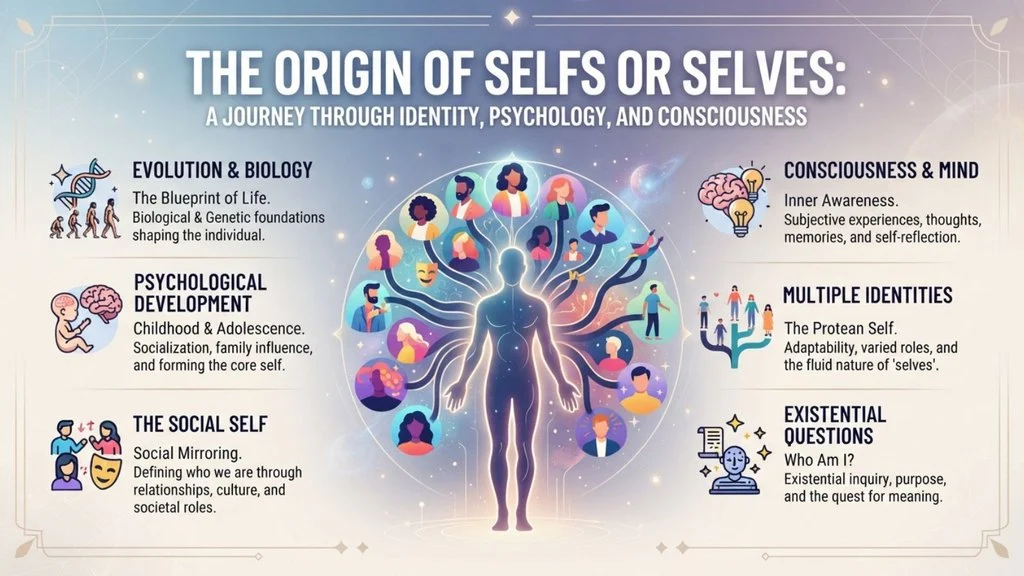
The word self has Old English roots. It developed from Old English forms such as self and sylf, which referred to a person’s own identity or person.
Over time, English developed several irregular plural forms. One important pattern involved nouns ending in -f or -fe.
For some words, the f changed to v before the plural ending:
- self → selves
- wife → wives
- life → lives
- knife → knives
- leaf → leaves
- wolf → wolves
However, English does not apply this rule to every word ending in f.
For example:
- roof → roofs
- belief → beliefs
- chief → chiefs
- chef → chefs
This is why learners cannot always create a plural simply by changing f to v. Each word has its established standard form.
For self, the standard plural has always developed as selves, making selfs nonstandard in modern English.
British English vs American English Spelling
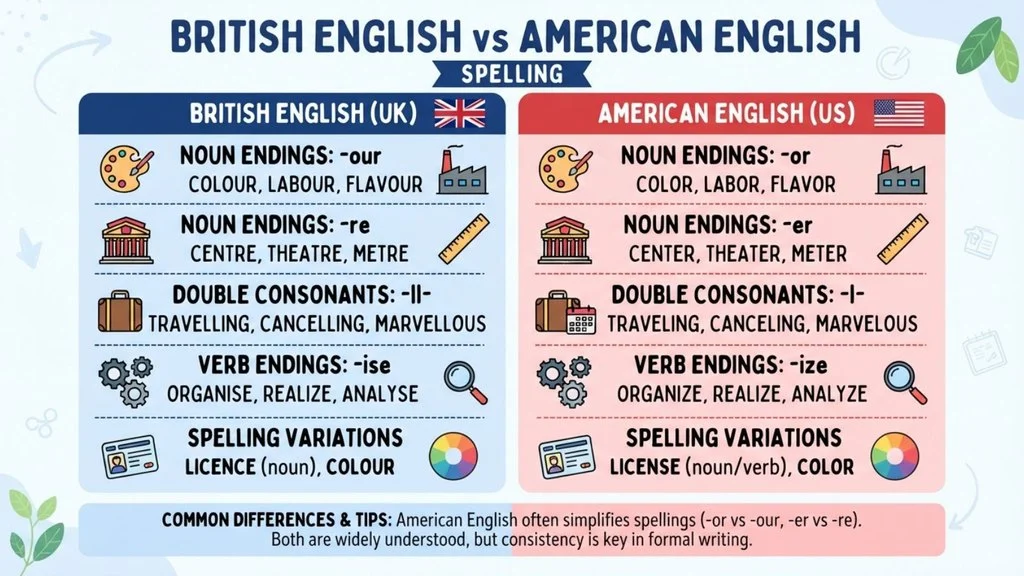
There is no standard British-American spelling difference for this word.
Both British English and American English use:
self → selves
| English variety | Singular | Plural | Correct? |
| American English | self | selves | ✅ |
| British English | self | selves | ✅ |
| Canadian English | self | selves | ✅ |
| Australian English | self | selves | ✅ |
| Formal international English | self | selves | ✅ |
So whether you are writing for readers in the United States, United Kingdom, Canada, Australia, or another English-speaking country, selves is the standard choice.
Examples in Both Varieties
American English:
The students expressed their true selves.
British English:
The students expressed their true selves.
The spelling remains the same.
Which Spelling Should Selfs or Selves Use?
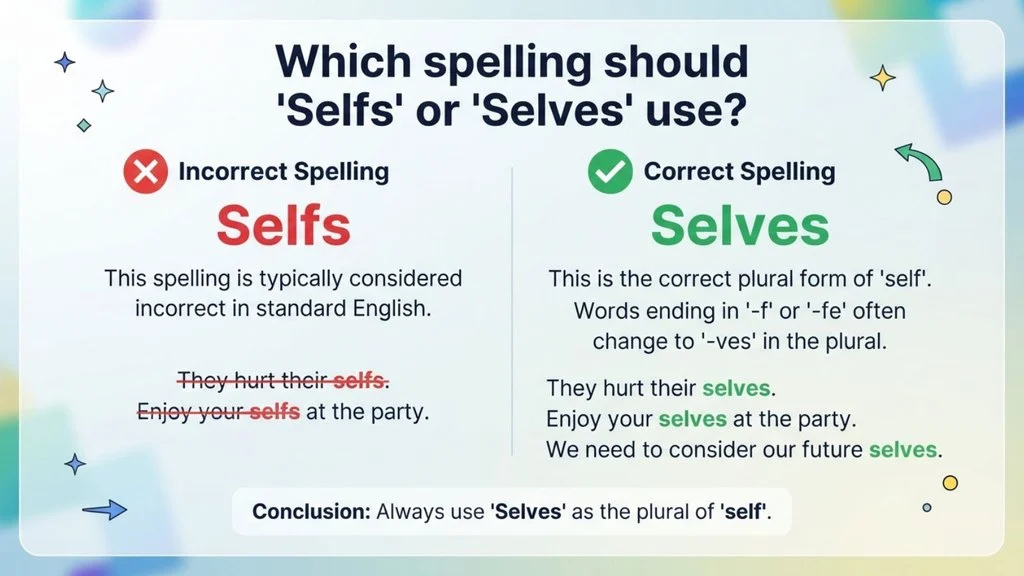
Use selves in standard English.
If you are writing for:
- American readers: use selves
- British readers: use selves
- Canadian readers: use selves
- Australian readers: use selves
- International readers: use selves
- Academic writing: use selves
- Business writing: use selves
There is no need to change the spelling based on the country.
If you see selfs online, it may be a spelling error, an informal form, a typo, or part of a nonstandard usage. In edited English, selves is the safer and correct form.
Common Mistakes with Selfs or Selves
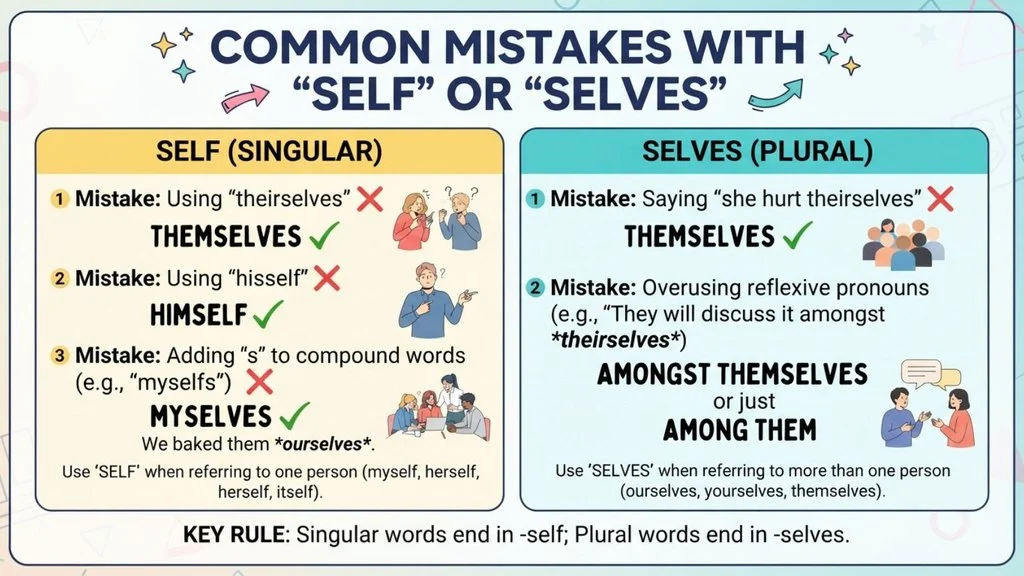
Mistake 1: Using “selfs” as the plural
❌ They showed their real selfs.
✅ They showed their real selves.
Mistake 2: Confusing “selves” with “self”
Use self for one person or one identity:
She discovered her true self.
Use selves for more than one:
They discovered their true selves.
Mistake 3: Writing “yourselfs”
The correct plural reflexive form is yourselves.
❌ You should prepare yourselfs.
✅ You should prepare yourselves.
Mistake 4: Writing “ourselvs”
The correct spelling is ourselves.
❌ We should trust ourselvs.
✅ We should trust ourselves.
Mistake 5: Confusing “selves” with “sales”
These words sound different and have different meanings:
- selves = plural of self
- sales = acts of selling goods or services
Selfs or Selves in Everyday Examples
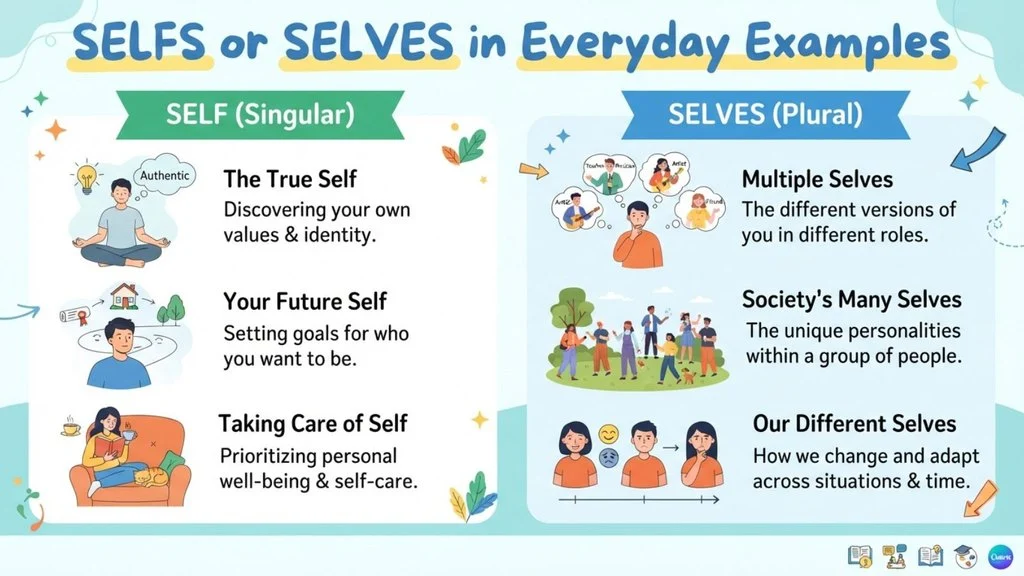
In Emails
Please make sure you introduce your true selves during the team activity.
Formal Writing
People often present different selves in different social settings.
In Academic Writing
The study examined how individuals construct their social selves.
News Writing
The athletes said they were proud of their younger selves.
On Social Media
We are finally becoming our best selves.
In Conversation
We can all be our best selves when we feel comfortable.
In Literature
The characters struggle to understand their different selves.
These examples show that selves works naturally in casual, professional, academic, and creative writing.
Selfs or Selves – Comparison Table
| Form | Meaning | Standard English? | Example |
| self | One person’s identity | ✅ | I want to improve my self. |
| selves | Plural of self | ✅ | They discovered their true selves. |
| selfs | Intended as plural of self | ❌ | Incorrect in standard English |
| yourself | Singular reflexive pronoun | ✅ | Take care of yourself. |
| yourselves | Plural reflexive pronoun | ✅ | Take care of yourselves. |
| ourselves | First-person plural reflexive pronoun | ✅ | We prepared ourselves. |
| themselves | Third-person plural reflexive pronoun | ✅ | They introduced themselves. |
Selfs or Selves – Google Trends & Usage Data
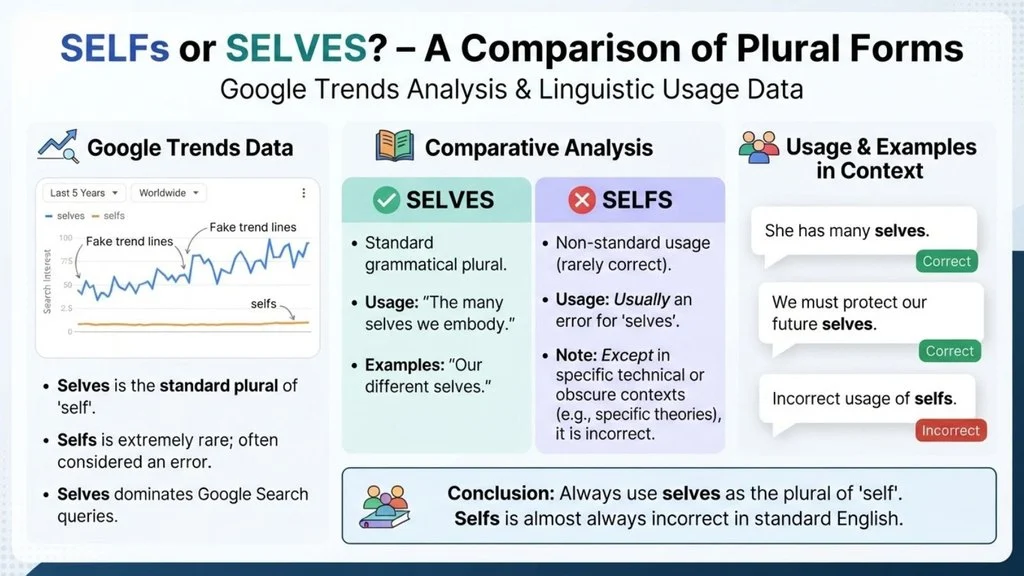
Searches for “selfs or selves” usually come from people checking the correct plural spelling of self. The question is especially useful for English learners because the spelling pattern is not fully predictable.
Search interest can vary by:
- Country
- English-learning activity
- School assignments
- Grammar searches
- Professional writing
- Search-engine wording
- Seasonal academic demand
The important point is that search frequency does not change the spelling rule. Across standard English, selves remains the accepted plural form.
Google Trends can also show differences in search interest between countries and related phrases. However, Trends measures search interest, not whether a spelling is grammatically correct.
FAQs About Selfs or Selves
1. Is “selfs” or “selves” correct?
Selves is the correct standard plural of self.
2. Is “selfs” a real English word?
You may encounter selfs online, but it is not the standard plural form of self. Use selves in normal English writing.
3. What is the plural of self?
The plural of self is selves.
One self → two selves
4. Why does self become selves?
It follows an older English plural pattern in which the f changes to v before the plural ending.
5. Is “selves” used in American English?
Yes. Selves is the standard plural in American English.
6. Is “selves” used in British English?
Yes. British English also uses selves.
7. What is the plural of “yourself”?
The plural is yourselves.
Take care of yourself.
Take care of yourselves.
Conclusion
When choosing between selfs or selves, the answer is clear: selves is the correct standard plural of self. The spelling is the same in American English, British English, Canadian English, Australian English, and standard international English.
The form selves comes from an older English spelling pattern. Similar changes can be seen in words such as life → lives, wife → wives, and knife → knives. However, not every word ending in f follows this pattern, so individual words must be learned carefully.
Use self when referring to one identity and selves when referring to more than one. Also remember related forms such as yourself, yourselves, ourselves, and themselves.
If you are writing an email, essay, article, academic paper, or social media post, choose selves rather than selfs. This simple spelling choice keeps your writing clear, correct, and professional.

Here’s a concise 2-line author bio suitable for Simifind.com:
James Dashner is an American bestselling author best known for The Maze Runner series and other popular young-adult fiction.
On Simifind.com, he shares clear, engaging insights and helpful content for readers interested in books, writing, and popular literature.