Sometimes, one small spelling difference can make you stop and wonder which word is actually correct.
Hey, I want to share something that happened to me recently about Ignitor or Igniter.
Chatting with a friend when I suddenly saw this term pop up, and honestly, I had no clue what it meant at first.
I kept wondering, “Am I missing something here?” It was a bit confusing, and I didn’t want to respond the wrong way.
So, I decided to look into Ignitor or Igniter and figure out its meaning and context.
After understanding it, I realized how important it is to know these terms to avoid awkward situations in conversations.
I handled it by learning the proper meaning and responding confidently, and now I feel ready whenever I see Ignitor or Igniter again in chats, writing, or social media.
Ignitor or Igniter – Quick Answer
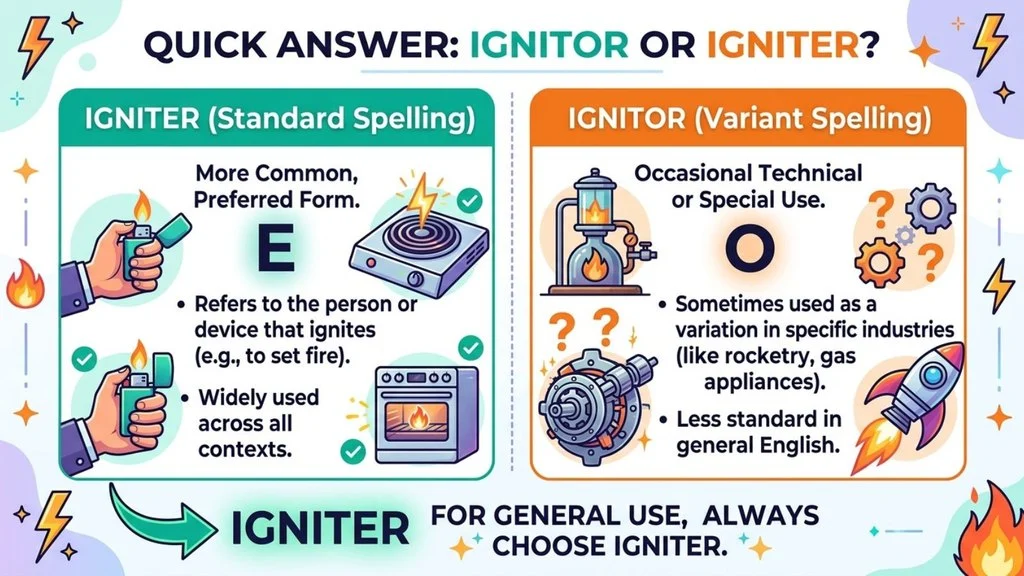
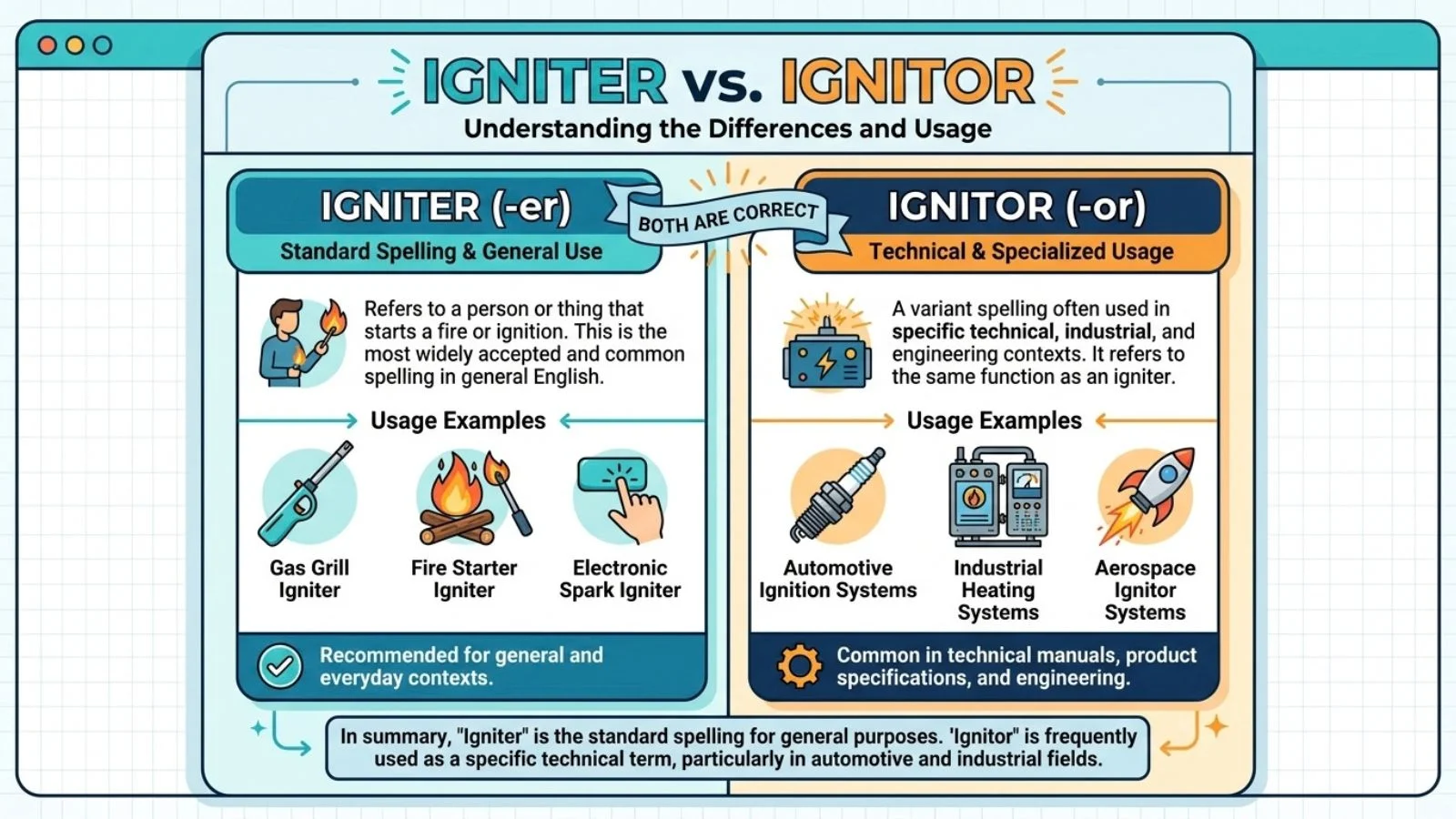
Igniter is generally the more common spelling, while ignitor is also accepted.
Both words mean a device or component that causes ignition.
| Spelling | Status | Common Use |
| Igniter | Correct | Common in American English and technical writing |
| Ignitor | Correct | Used in British English and some technical contexts |
Examples
- The mechanic replaced the faulty igniter.
- The gas stove has an electronic igniter.
- The rocket uses an igniter to start combustion.
- The technician checked the ignitor before starting the machine.
So, if you need one spelling for general modern English, igniter is usually the safer choice.
The Origin of Ignitor or Igniter
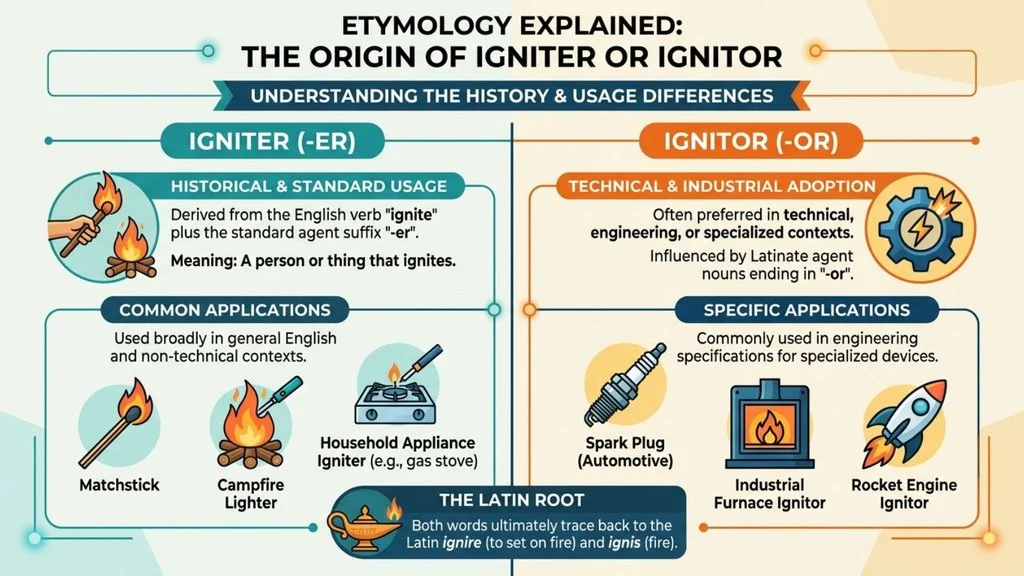
Both igniter and ignitor come from the verb ignite.
The word ignite comes from Latin ignire, meaning “to set on fire” or “to kindle.” It is related to the Latin word ignis, meaning fire.
English often creates nouns for people or things that perform an action by adding a suffix.
For example:
- ignite → igniter
- operate → operator
- calculate → calculator
- decorate → decorator
The spelling igniter follows the common English pattern of adding -er to a verb to describe something that performs an action.
The form ignitor follows another pattern found in English technical vocabulary, where -or is used to create nouns.
This is why both forms developed and continue to appear in written English.
British English vs American English Spelling
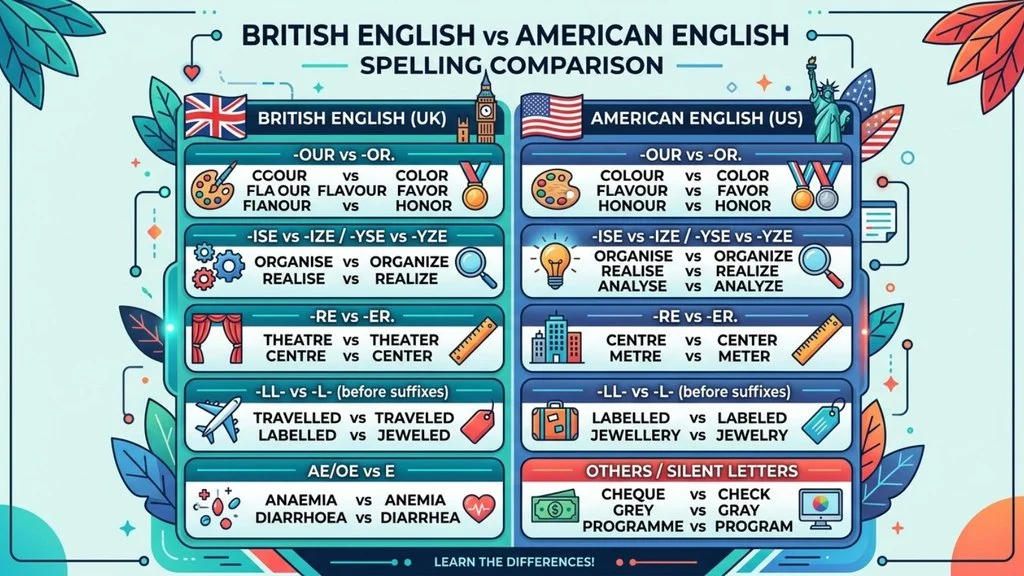
The difference between igniter and ignitor is not a simple rule where one spelling belongs only to Britain and the other belongs only to America. Both forms can be found in different varieties of English.
However, igniter is widely used in American English, particularly in technical, automotive, aerospace, and engineering contexts.
Ignitor also appears in British and Commonwealth English and in specialized technical writing.
| Feature | Igniter | Ignitor |
| Basic meaning | A device that causes ignition | A device that causes ignition |
| Spelling | -er | -or |
| American English | Very common | Also used |
| British English | Used | Also used |
| Technical writing | Very common | Common in some fields |
| General writing | Preferred by many writers | Less common |
Example
American-style technical sentence:
The technician replaced the ignition igniter.
Alternative form:
The technician replaced the ignition ignitor.
Both sentences can be understood, but igniter is often the more familiar choice.
Which Spelling Should Use Ignitor or Igniter ?
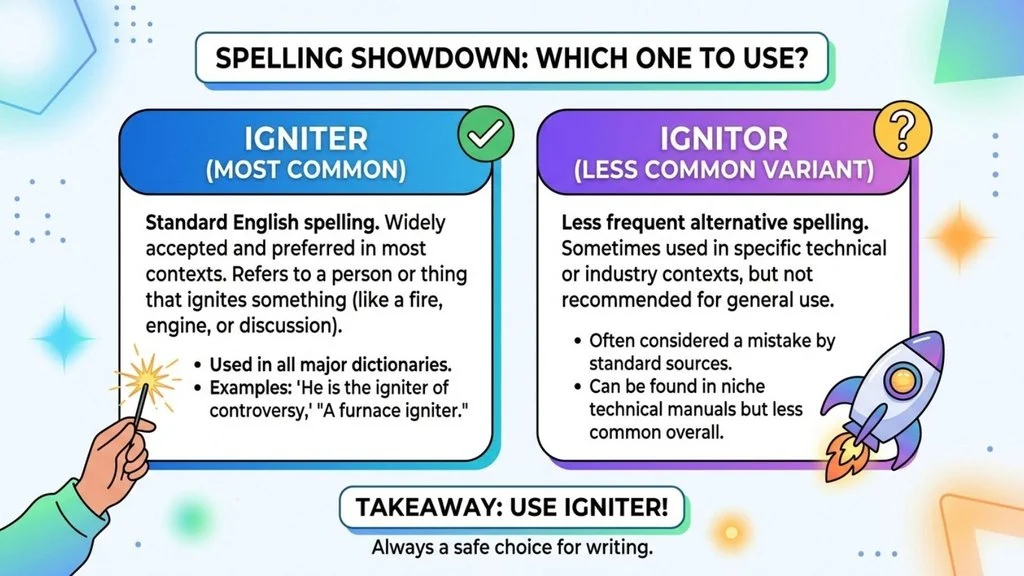
Your choice can depend on your audience and the field in which you are writing.
For American English
Use igniter in most general and technical writing.
For example:
The vehicle’s igniter needs to be replaced.
For British or Commonwealth English
You may encounter both igniter and ignitor. Check the spelling used by the manufacturer, industry, or publication you are following.
For Technical Writing
Consistency is important. If a manual, product catalog, or technical standard uses igniter, keep that spelling throughout your document.
If the official name of a product or component is ignitor, do not change it simply because another spelling is more common.
For Global Websites
If you are writing for an international audience, igniter is often a clear and widely recognized choice. If search traffic matters, consider the exact wording used by your target audience and industry.
Common Mistakes with Ignitor or Igniter
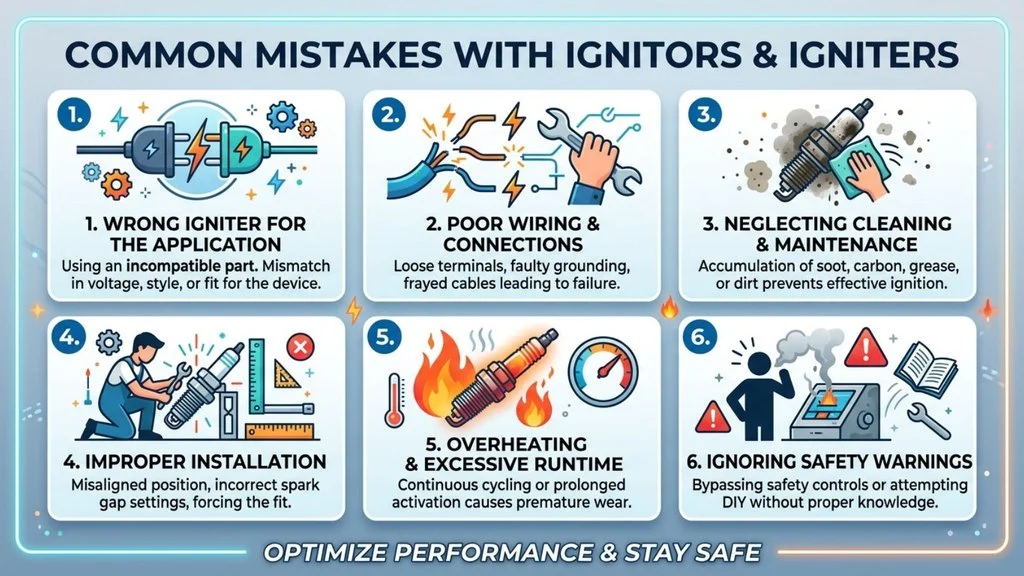
Mistake 1: Assuming One Spelling Is Always Wrong
A common mistake is believing that ignitor is incorrect.
Correction: Both ignitor and igniter are established spellings.
Mistake 2: Changing a Product Name
A manufacturer may officially call a component an ignitor.
Do not rewrite the official product name as igniter.
Mistake 3: Mixing Spellings
Avoid switching between the two forms in the same document without a reason.
For example:
The igniter was tested. The ignitor was then replaced.
If both refer to the same component, choose one spelling and use it consistently.
Mistake 4: Confusing Igniter with Ignition
Igniter is a device or component.
Ignition refers to the process or system of starting combustion.
For example:
The igniter failed.
But:
The ignition system needs repair.
Ignitor or Igniter in Everyday Examples
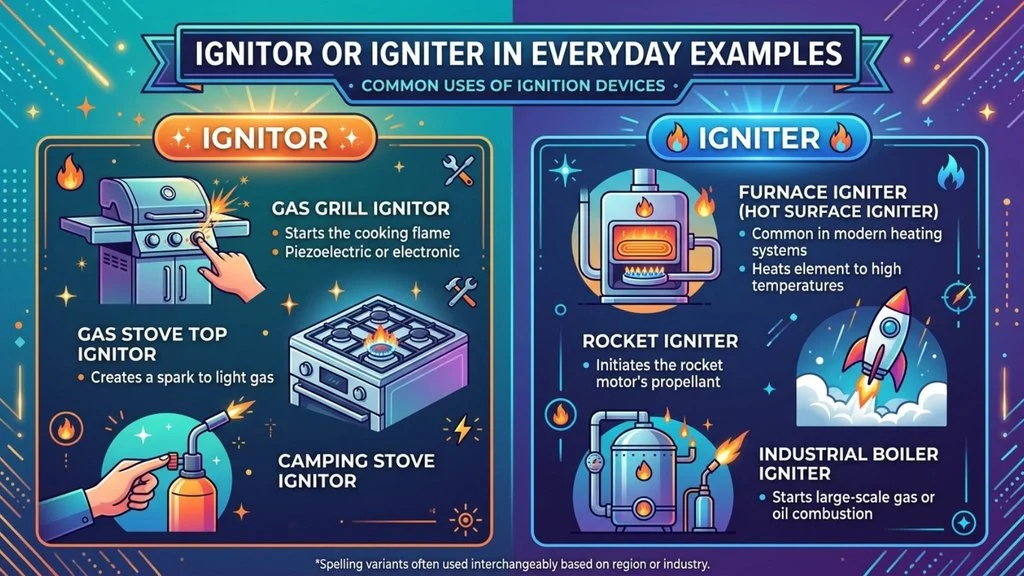
In an Email
The technician confirmed that the igniter needs to be replaced.
Technical Writing
The igniter provides the initial spark required to begin combustion.
In Automotive Writing
A faulty igniter can prevent the engine from starting.
In Product Descriptions
This replacement igniter is designed for compatible heating equipment.
In News Writing
Engineers tested the rocket’s ignition system and igniter before launch.
In Social Media
The new stove igniter works much faster than the old one.
In Formal Writing
The ignition system includes an electronic igniter designed to initiate combustion.
Ignitor or Igniter – Comparison Table
| Word | Meaning | Example |
| Igniter | A device that causes ignition | The igniter failed during testing. |
| Ignitor | A device that causes ignition | The ignitor was replaced. |
| Ignite | To set something on fire | The fuel will ignite quickly. |
| Ignition | The process of starting combustion | The ignition system was inspected. |
| Ignited | Started burning | The fuel ignited immediately. |
| Igniting | Starting to burn | The device is igniting the fuel. |
The key difference is that igniter and ignitor are noun forms referring to something that causes ignition.
Ignitor or Igniter – Google Trends & Usage Data
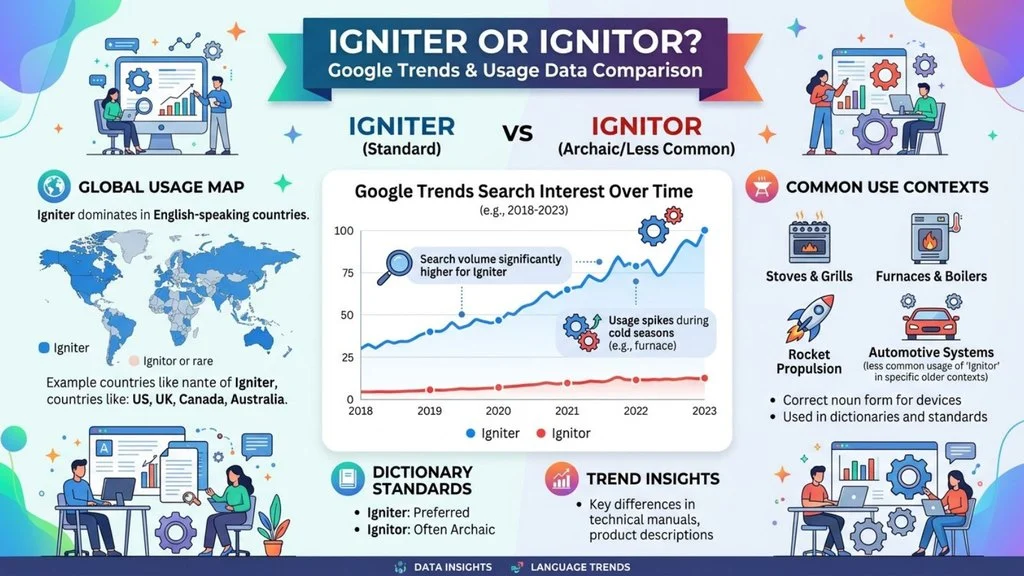
Search interest for spelling variants can change by country, industry, and time. Igniter generally has broad usage because it appears in automotive, engineering, heating, aerospace, and general technical contexts.
Ignitor also has established usage, but its popularity can vary depending on the region and industry.
When researching search behavior, it is useful to compare:
- igniter
- ignitor
- igniter meaning
- ignitor meaning
- igniter replacement
- ignitor replacement
- igniter spelling
- ignitor spelling
For SEO writing, do not assume that a less common spelling is incorrect simply because it receives fewer searches. Search volume reflects user behavior, not necessarily grammatical correctness.
For a website targeting American readers, igniter may be a natural primary keyword. For a British or Commonwealth audience, it can be useful to mention ignitor as an alternative spelling.
FAQs About Ignitor or Igniter
1. Is igniter or ignitor correct?
Both igniter and ignitor are accepted spellings. Igniter is generally more common in modern English.
2. Is igniter the American spelling?
Igniter is widely used in American English, especially in technical and engineering contexts. However, ignitor is not limited to British English.
3. Is ignitor a real word?
Yes. Ignitor is an established English word meaning a device or component that causes ignition.
4. What does igniter mean?
An igniter is a device or component used to start combustion or produce ignition.
5. What is the difference between igniter and ignition?
An igniter is the device that causes ignition. Ignition refers to the process or system involved in starting combustion.
6. Should I use igniter or ignitor in technical writing?
Use the spelling preferred by your industry, manufacturer, technical standard, or target audience. Igniter is a widely recognized choice.
7. Can I use both igniter and ignitor?
Yes, but it is better to choose one spelling for a document when both refer to the same thing. Consistency makes technical writing clearer.
Conclusion
The question of ignitor or igniter does not have a simple “right versus wrong” answer.
Both spellings are established in English and describe a device or component that causes ignition. The main difference is usage and preference rather than meaning.
Igniter is widely used in American English and appears frequently in modern technical writing.
Ignitor is also a valid form and can be found in British, Commonwealth, and specialized technical contexts.
Your choice should depend on your audience, industry, source terminology, and the official spelling used by a manufacturer or technical standard.
If you are writing for a broad international audience, igniter is often the easiest form for readers to recognize.
However, there is no need to treat ignitor as an error. When referring to a specific product or technical component, always follow the official terminology.

Mary Roach is an American science writer and bestselling author known for making unusual and complex scientific topics engaging, accessible, and humorous. Her books include Stiff, Packing for Mars, Gulp, and Fuzz.
Author at Simifind.com, sharing clear, informative content designed to help readers understand interesting topics and everyday questions.