Proving or Prooving: Meaning, Spelling, and Examples (for 2026)
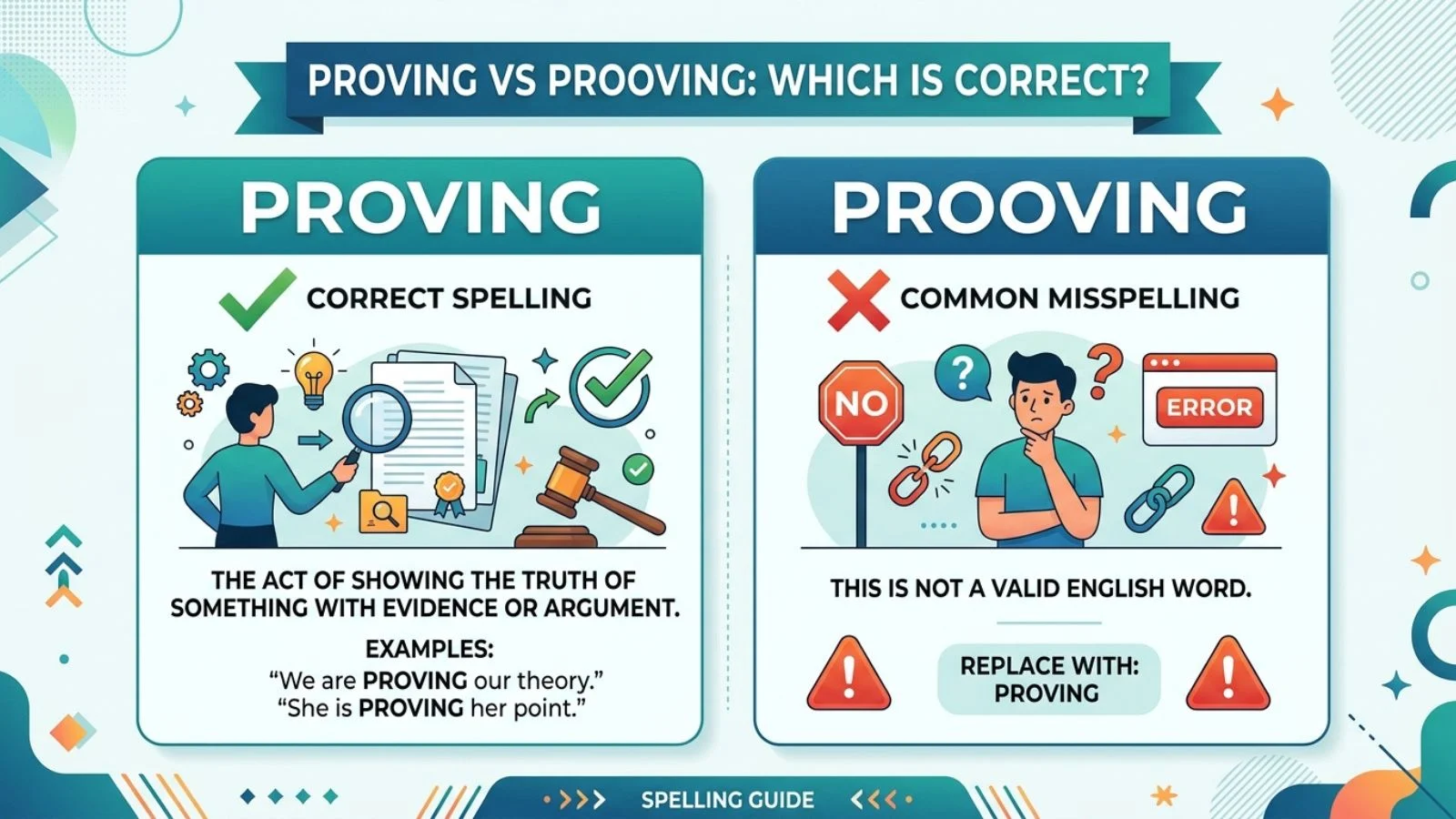
Proving is correct. Prooving is incorrect — it is a common misspelling. Proving is the present participle of prove (showing ...
Read more
Shoutout or Shout Out: Meaning, Spelling, and Usage (for 2026)
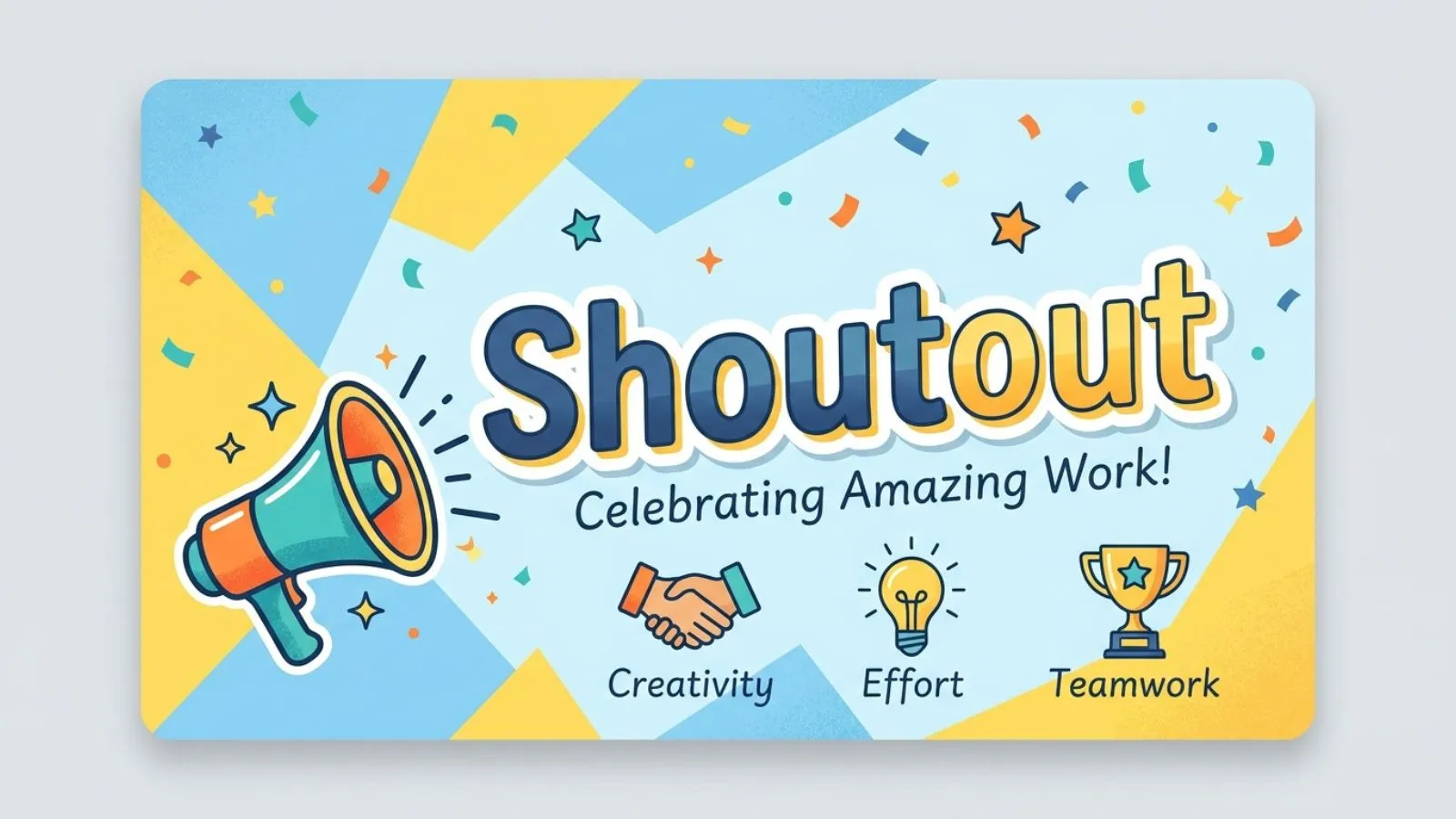
Shoutout (one word) = noun, a public mention or thank-you. Shout out (two words) = verb, to call out or ...
Read more
Workweek or Work Week: Examples, Rules, and Meaning (for 2026)
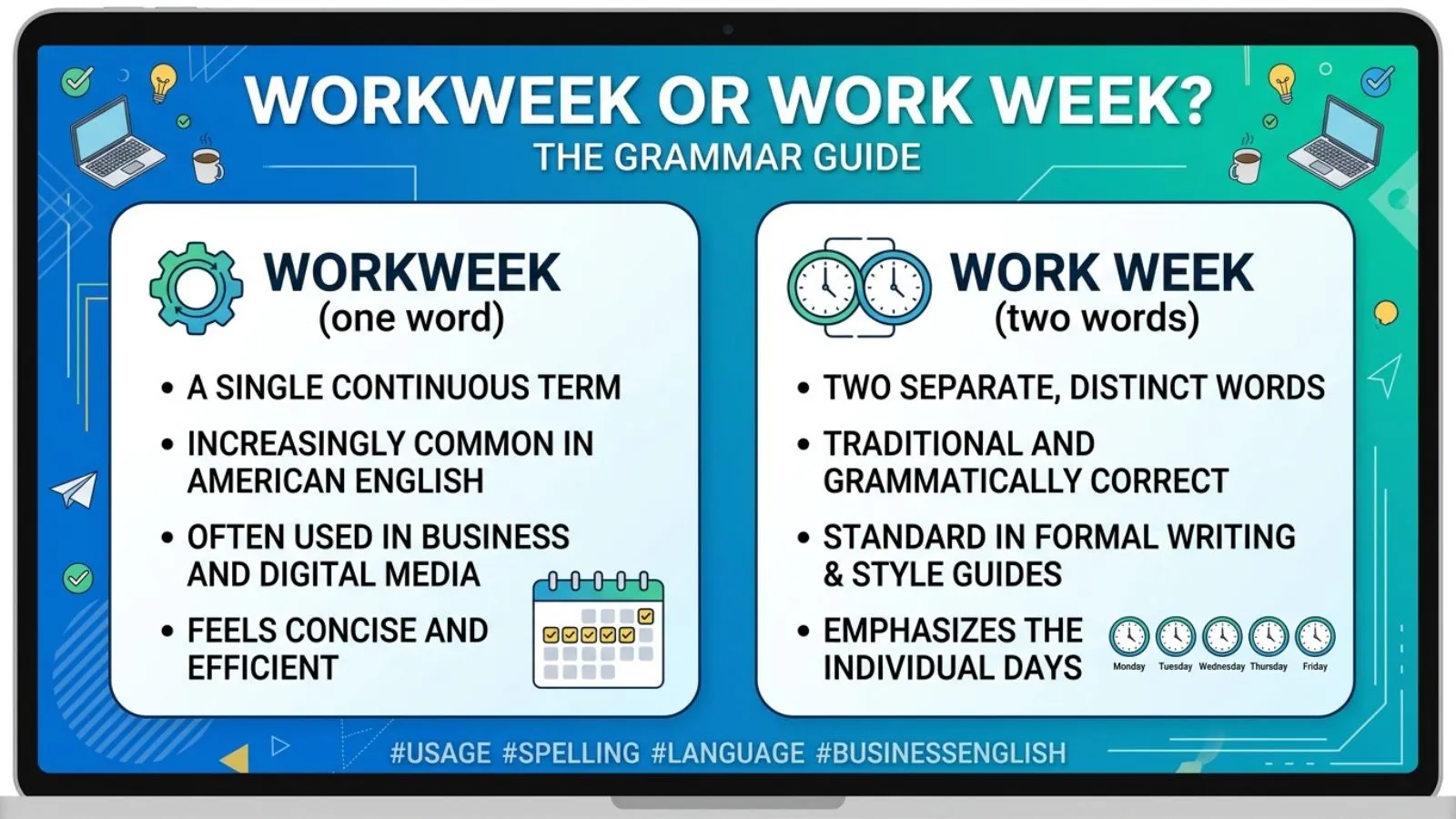
Workweek (one word) is the most common spelling. Work week (two words) is also correct. Both mean the same thing ...
Read more
Withdrawal or Withdraw: Meaning, Spelling, and Usage (for 2026)
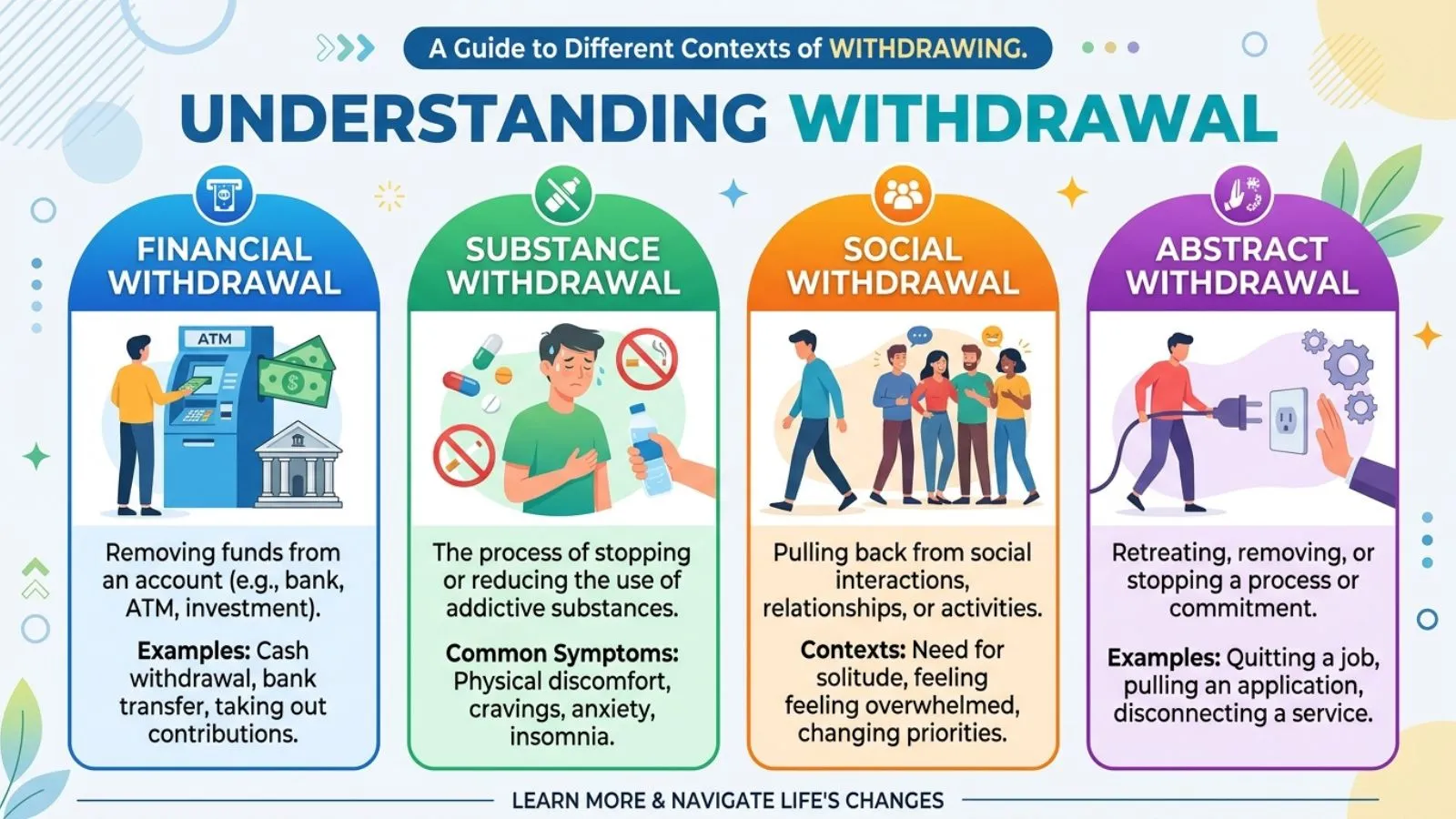
Withdrawal is the noun (the act of taking something away — a cash withdrawal, withdrawal symptoms). Withdraw is the verb ...
Read more
Theirs vs. Their’s: Meaning, Grammar, and Correct Usage (for 2026)
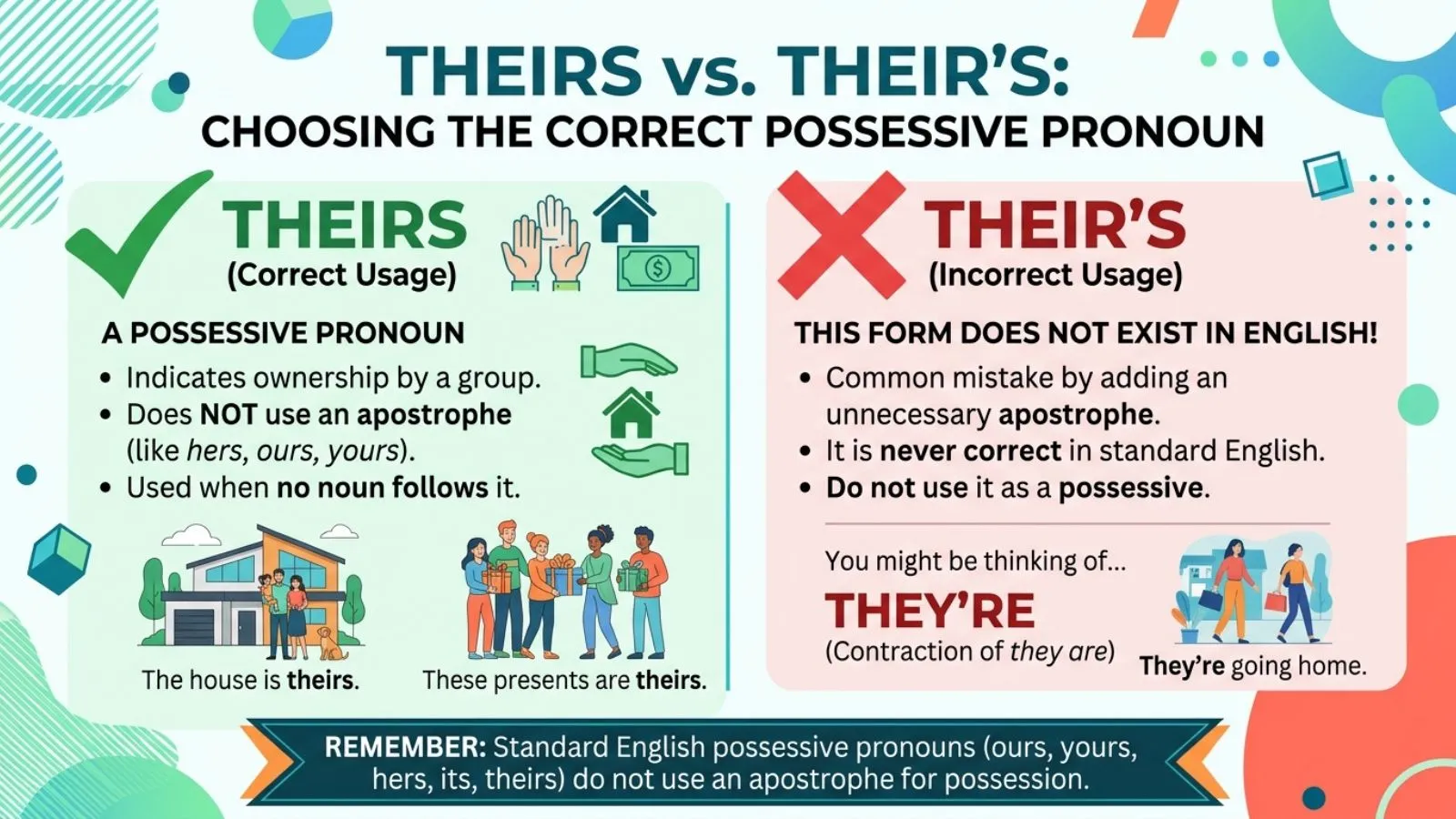
Theirs is correct. Their’s is always wrong. Theirs is a possessive pronoun — it means belonging to them (“That book ...
Read more
I vs Me: Difference, Rules, and Examples (FOR 2026)
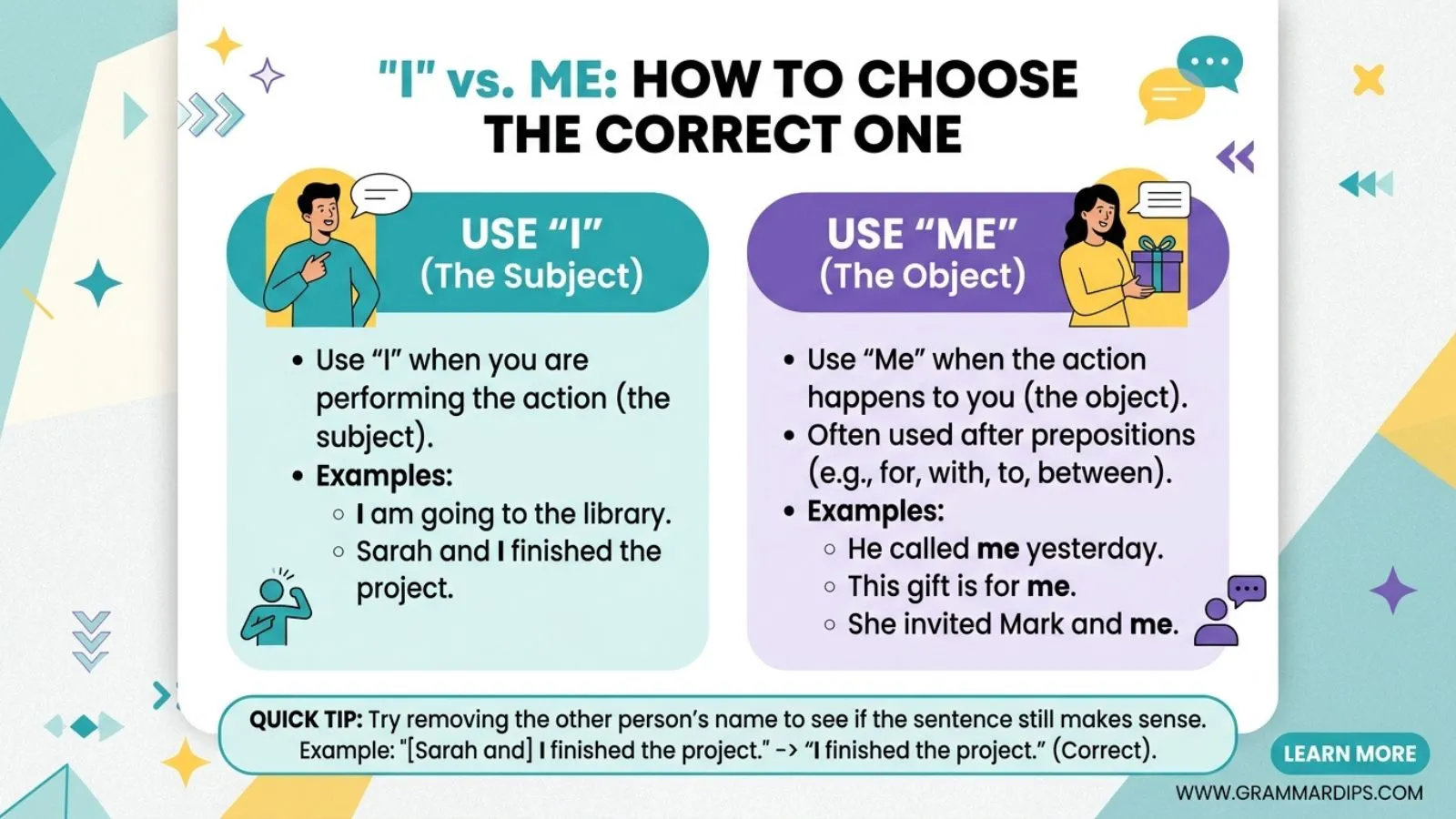
Hey, I want to share something that happened to me recently about “I or Me.” I was chatting with a ...
Read more
Nobodies vs Nobody’s: Meaning, Spelling, and Usage (for 2026)
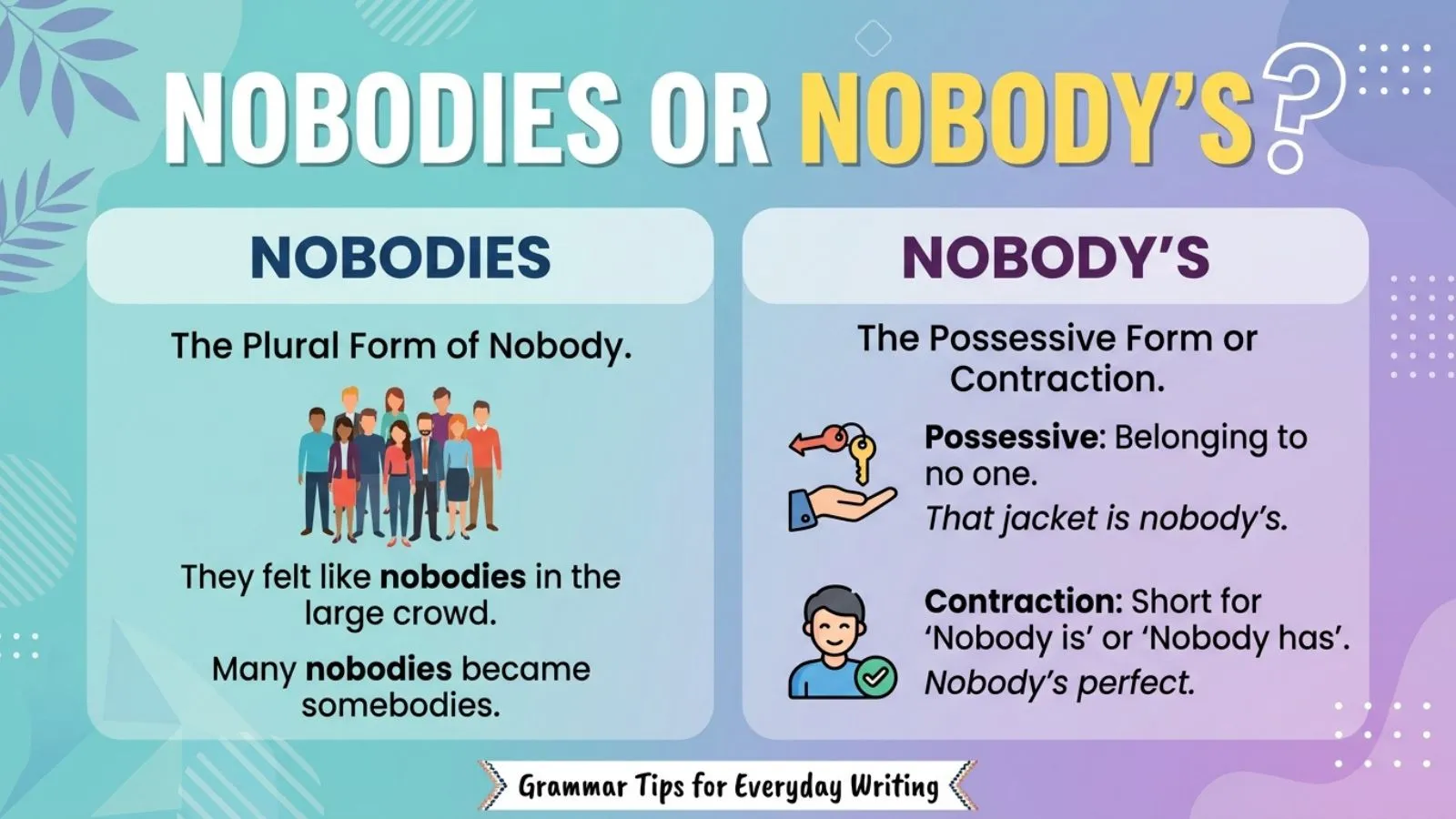
Nobodies is correct. Nobodys is incorrect. Nobodies is the plural of nobody — nobody becomes nobodies (y changes to ies). ...
Read more
Faired or Fared: Spelling, Meaning, and Examples (for 2026)
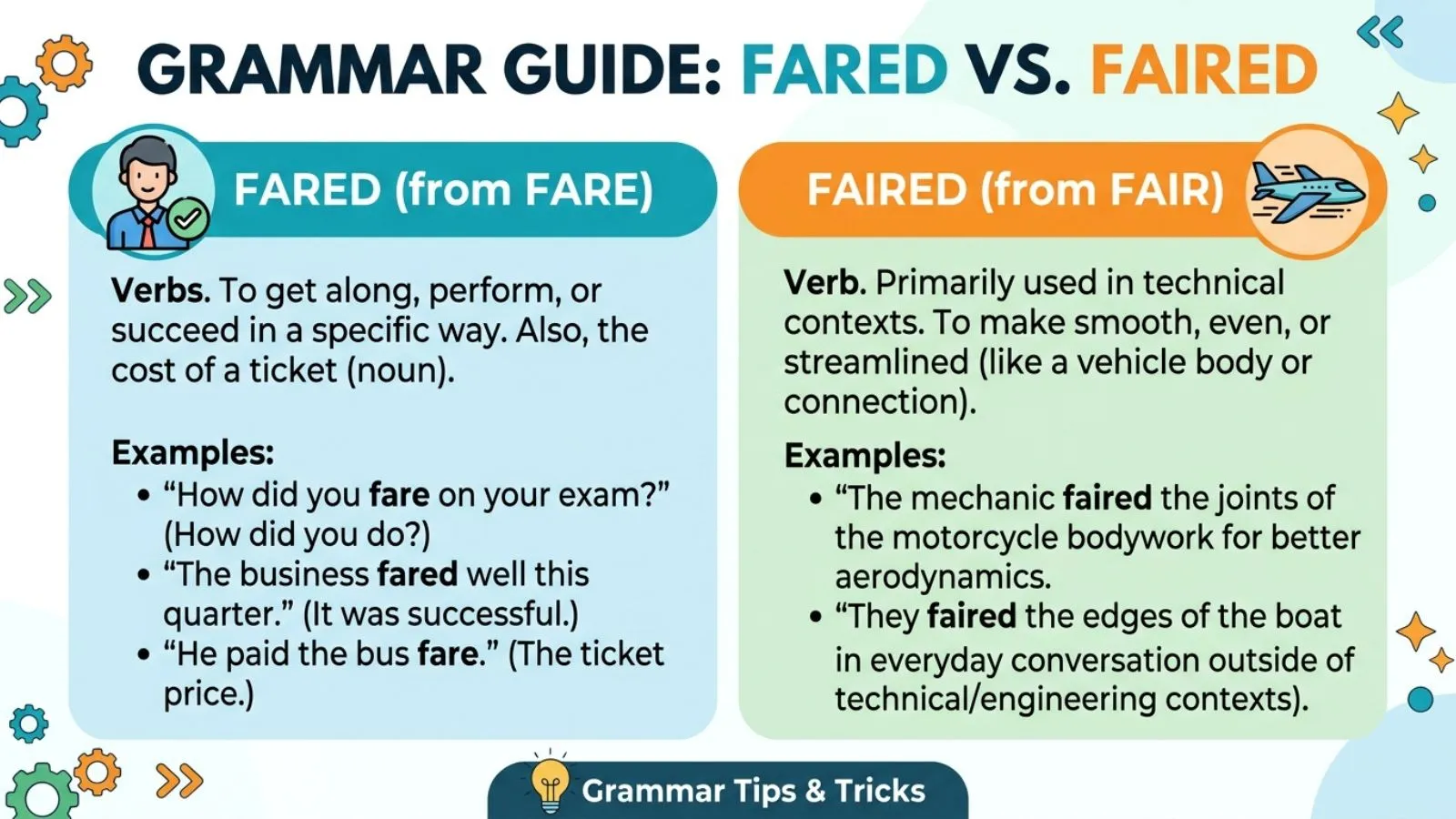
Fared is correct for the past tense of fare — it means how someone or something did, or how a ...
Read more
Baring vs Barring: Definitions, Examples, and Rules (for 2026)
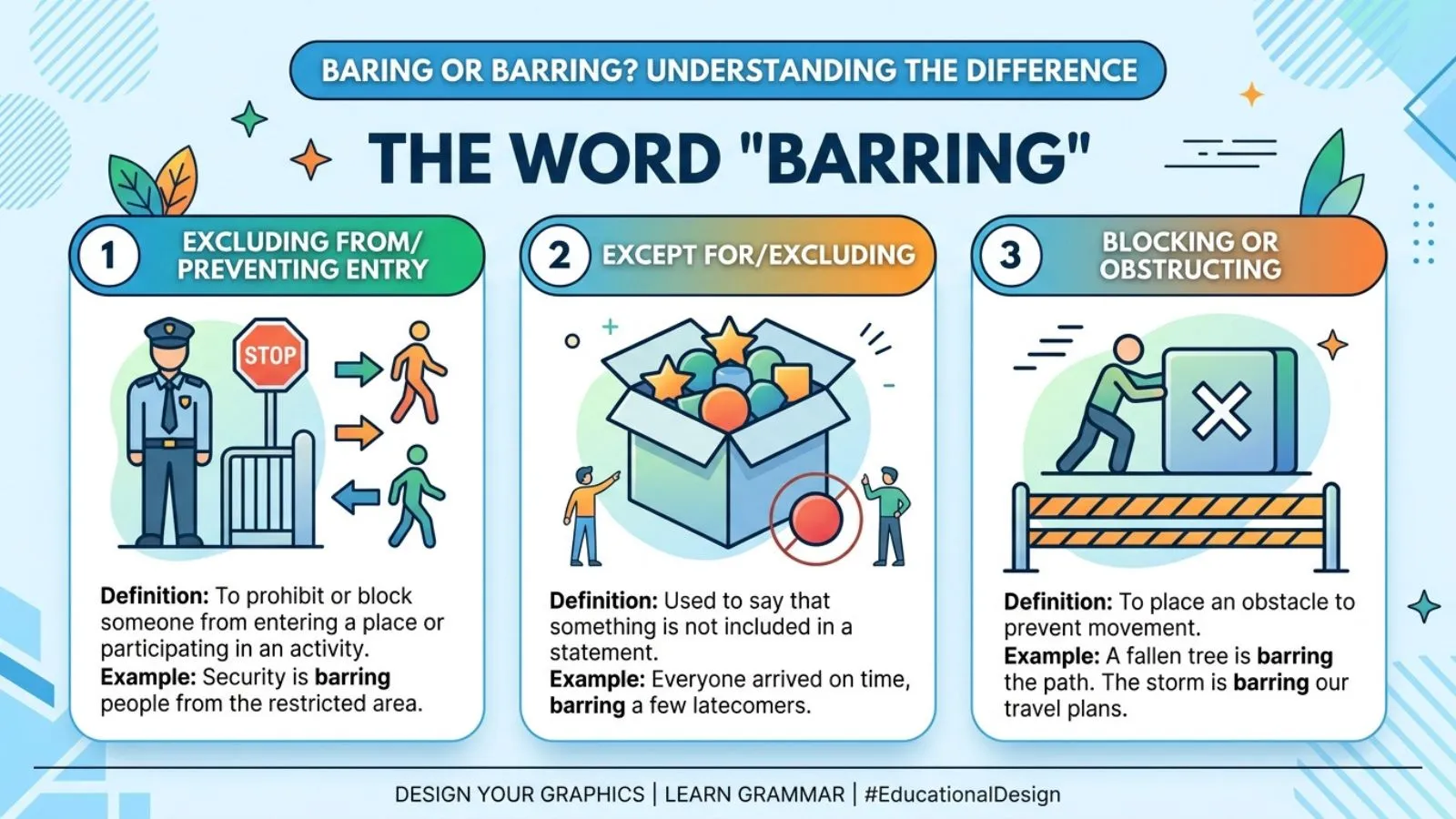
Baring = uncovering/showing. Barring = except for / excluding; also the present participle of bar. Baring is from bare; barring ...
Read more