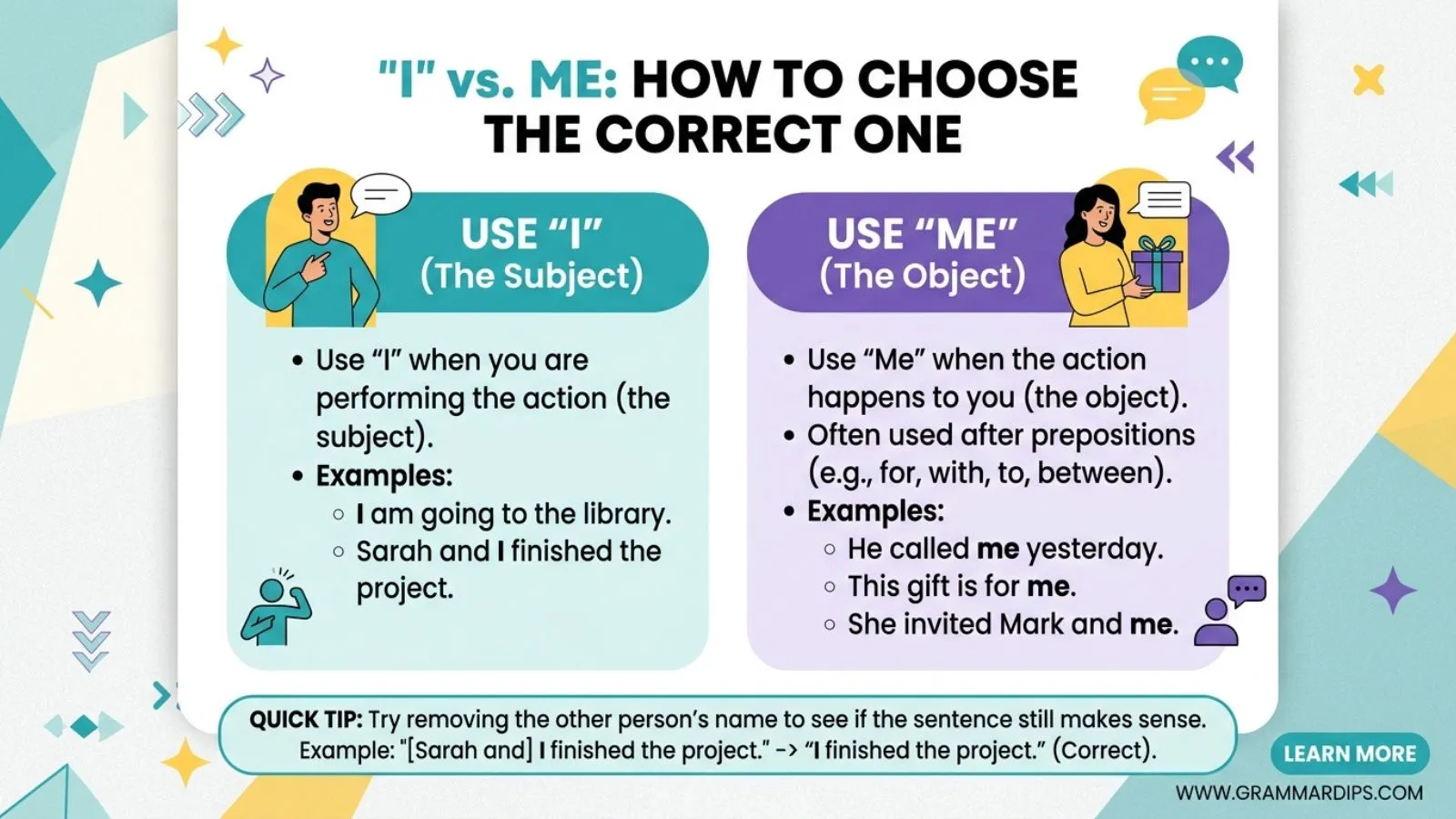
Hey, I want to share something that happened to me recently about “I or Me.”
I was chatting with a friend when I suddenly saw this term pop up, and honestly, I had no clue what it meant at first.
I kept wondering, “Am I missing something here?” It was a bit confusing, and I didn’t want to respond the wrong way.
Have you ever stopped mid-sentence and wondered whether “I” or “me” is the right word to use?
So, I decided to look into I or Me and figure out its meaning and context.
After understanding it, I realized how important it is to know these terms to avoid awkward situations in conversations.
I handled it by learning the proper meaning and responding confidently, and now I feel ready whenever I see I or Me again in chats or social media.
“I or Me” – Quick Answer
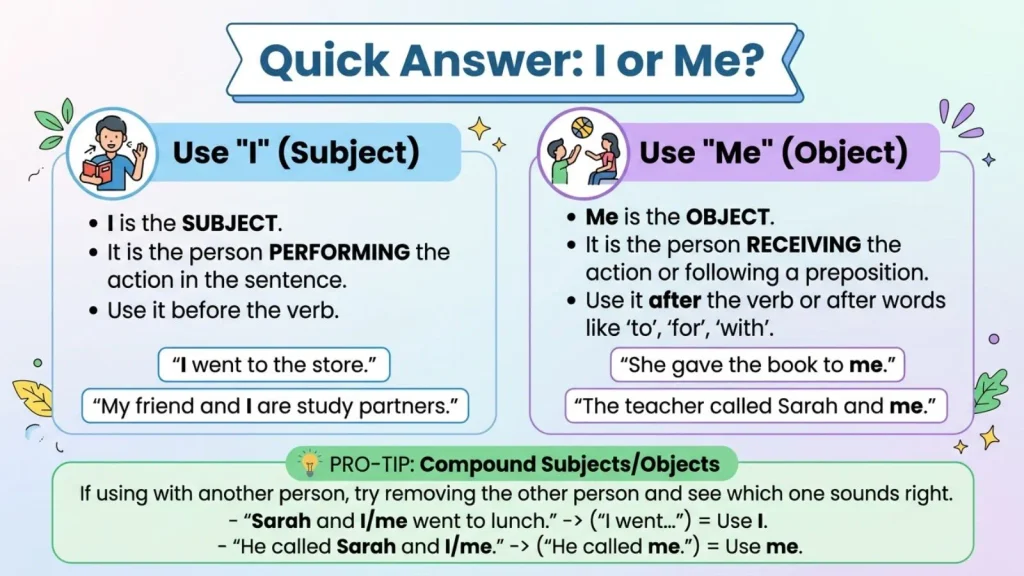
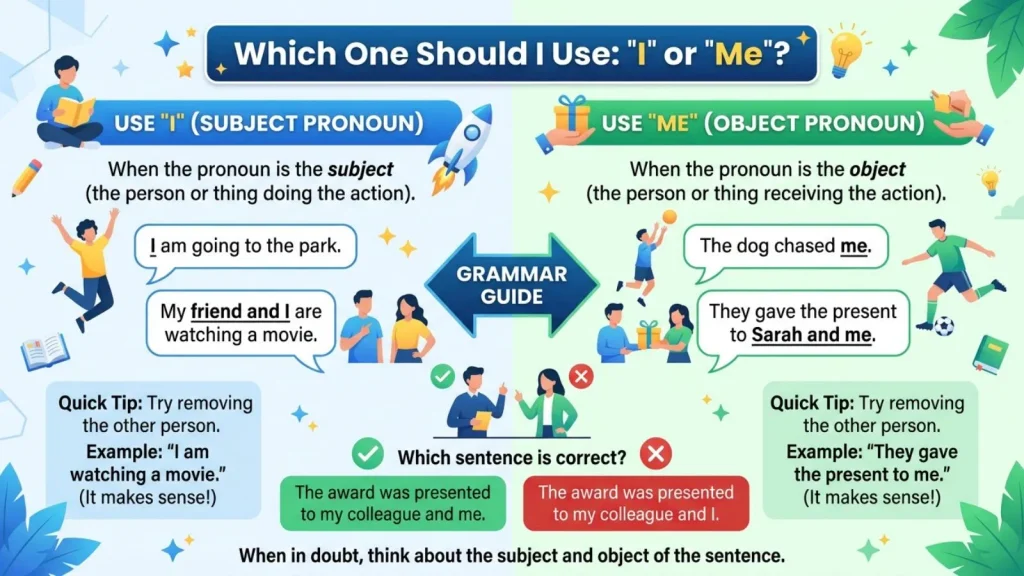
Use “I” when the pronoun is the subject of the sentence (the one doing the action). Use “me” when the pronoun is the object of the sentence (the one receiving the action).
Examples:
- I went to the store. (subject)
- She gave the book to me. (object)
- He and I are going. (subject)
- Please call him and me. (object)
Quick trick: Remove the other person from the sentence. If it still sounds right, you picked the correct word.
- “Him and me are going” → wrong, because “Me is going” sounds wrong.
- “He and I are going” → correct, because “I am going” sounds right.
The Origin of “I” and “Me”
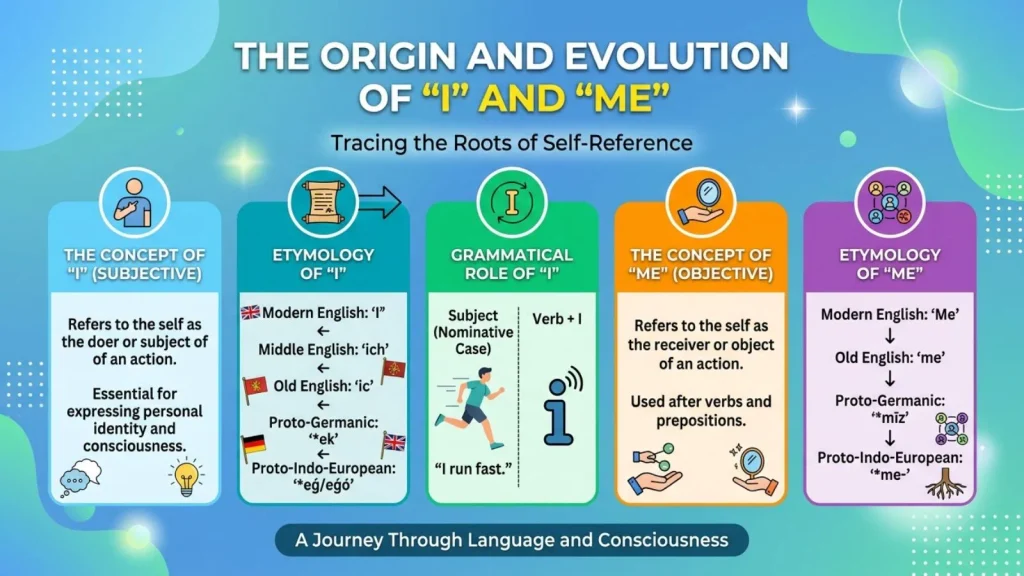
Both words come from Old English. “I” comes from ic, the subject form of the first-person pronoun. “Me” comes from mē, the object form. English is one of the few languages that still keeps this subject-object split for pronouns, even though it dropped most other case endings centuries ago.
This is why “I” and “me” feel like two separate words instead of one word with a suffix. Languages like Latin and German kept many case forms. English simplified almost everything — except pronouns like I/me, he/him, and she/her.
There is no British-versus-American spelling difference here, unlike words such as “colour” and “color.” The confusion with “I or me” is not about spelling. It is about grammar: knowing which form fits the sentence role.
British English vs American English Usage
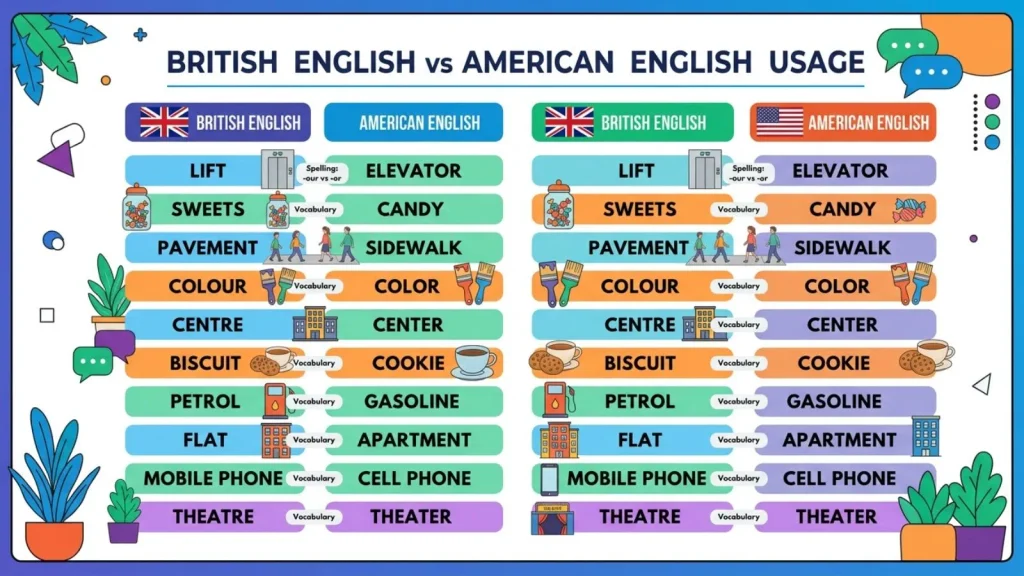
Since “I” and “me” are spelled the same everywhere, the real difference is in style and formality, not spelling. Both British and American English follow the same subject/object rule. But everyday speech habits differ slightly.
| Feature | British English | American English |
| Spelling of “I” | I | I |
| Spelling of “me” | me | me |
| Formal rule | Same subject/object rule | Same subject/object rule |
| Casual speech habit | “Me and my mate went out” is common in informal speech | “Me and my friend went” is also common informally |
| Hypercorrection | “Between you and I” heard often in formal-sounding speech | “Between you and I” also common, seen as overcorrection |
| Written/formal standard | “My friend and I went” | “My friend and I went” |
The rule is identical worldwide. The only real difference is how often people bend the rule in casual talk.
Which One Should Use “I” or “Me” ?
For formal writing (emails, reports, essays): Always follow the subject/object rule. Use “I” as the subject and “me” as the object, no exceptions.
For casual speech and texting: Native speakers often relax the rule. “Me and Sam are here” is common and understood, though not textbook correct.
For global learners of English: Learn the rule first. Use “I” for subjects and “me” for objects. Save casual slips for later, once the rule feels natural.
For business or academic writing worldwide: Stick to the strict rule. It signals professionalism in the US, UK, Canada, Australia, and every English-speaking region.
Common Mistakes with “I” and “Me”
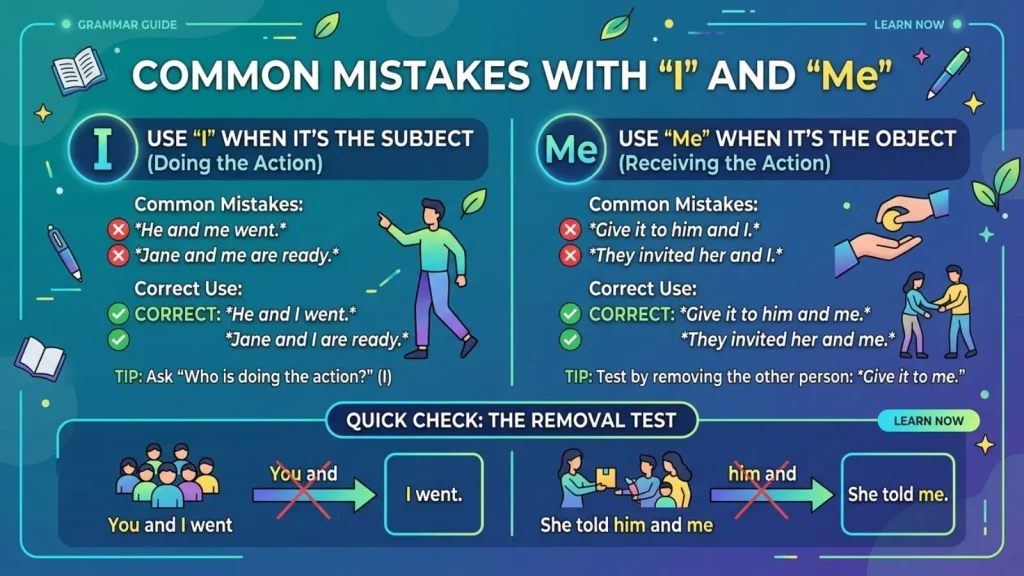
Mistake 1: “Between you and I” Correct: “Between you and me.” “Between” is a preposition, so it needs the object form, “me.”
Mistake 2: “Me and him went to the game.” Correct: “He and I went to the game.” Both pronouns are subjects here.
Mistake 3: “The teacher gave the award to Sam and I.” Correct: “The teacher gave the award to Sam and me.” “To” is a preposition, so use “me.”
Mistake 4: Putting “I” or “me” first. Correct order is polite and standard: “Sam and I” or “Sam and me,” never “I and Sam.”
Mistake 5: Overcorrecting out of fear. Many people say “I” everywhere because they think it sounds smarter. This creates new errors like “Give it to Jake and I.”
“I” or “Me” in Everyday Examples
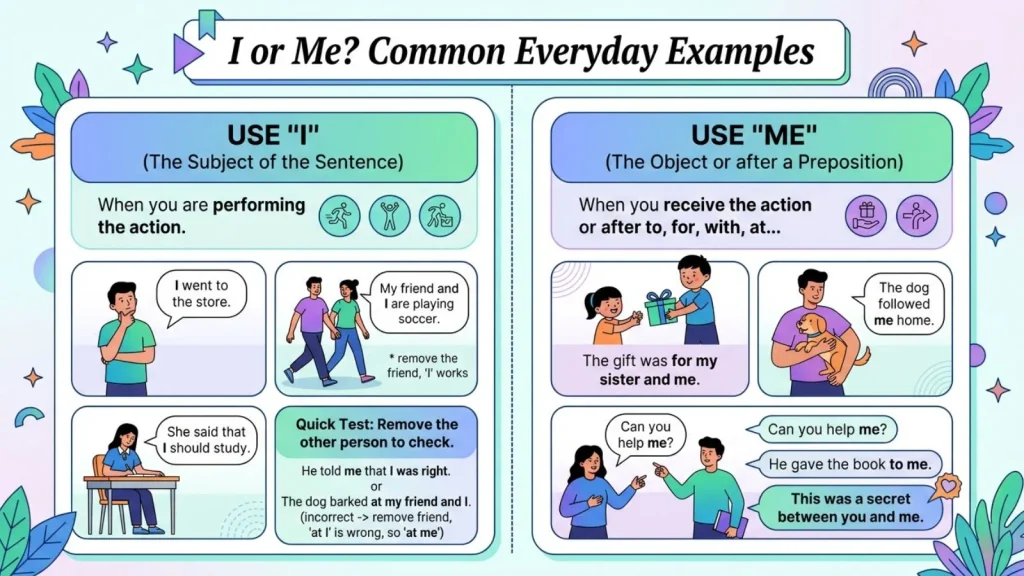
In emails: “Please send the file to Maria and me by Friday.”
News writing: “The mayor and I discussed the new budget plan.”
In social media posts: “Me and my dog went for a walk today.” (casual, common online, not strictly formal)
In formal writing: “The committee thanked my colleague and me for our work.”
In conversation: “Can you and I talk later?” (subject) vs. “Can you talk to him and me later?” (object)
“I or Me” – Search Trends and Usage Data
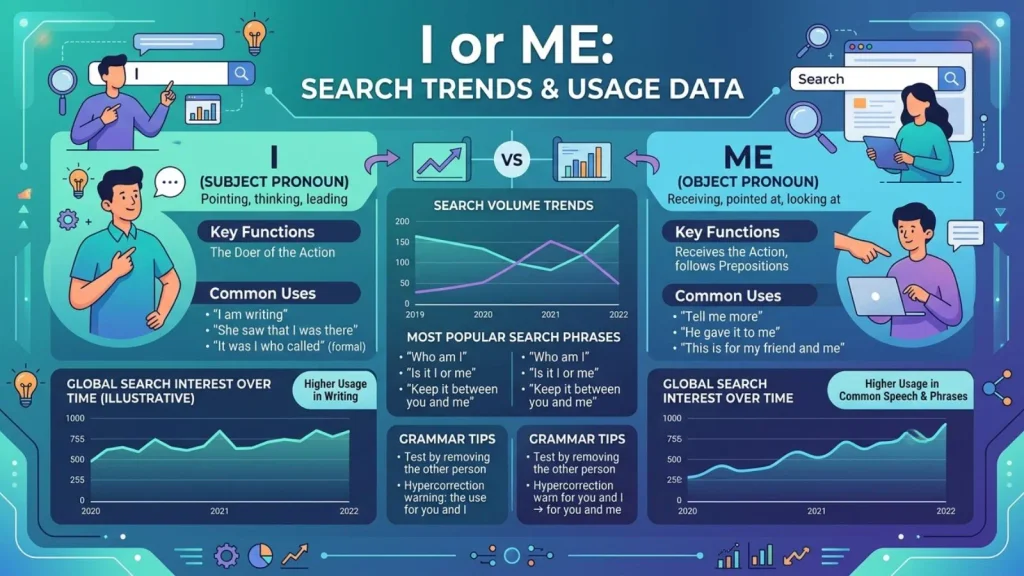
Searches for “I or me” spike during back-to-school months and around grammar-check tool usage, showing that students and writers look this up while editing real sentences. The US and UK show the highest search volume, since both countries emphasize grammar rules in schools and workplaces.
Search data also shows related queries like “between you and I or me” and “him and I or him and me” trending alongside the main keyword. This tells us people are not just curious about theory — they are checking specific sentences they are writing right now, in emails, essays, or messages.
Keyword Variation Comparison
| Phrase | Correct Form | Why |
| “You and I” (subject) | Correct | Both are subjects of the verb |
| “You and me” (object) | Correct | Both are objects of the verb |
| “Between you and I” | Incorrect | “Between” needs the object form “me” |
| “Me and you” (as subject) | Informal, not standard | Subject form should be “You and I” |
| “Him and I” (as object) | Incorrect | Should be “Him and me” |
| “He and I” (as subject) | Correct | Both are subjects |
Frequently Asked Questions
1. Is “between you and I” ever correct?
No. “Between” is a preposition and always takes the object form. The correct phrase is “between you and me.”
2. How do I know if a pronoun is a subject or object?
Ask what is doing the action versus what is receiving it. The doer is the subject (“I”). The receiver is the object (“me”).
3. Is “me and my friends” ever acceptable?
It is common in casual speech but not correct in formal writing. Use “My friends and I” in professional or academic contexts.
4. Why do people say “and I” even when it’s wrong?
This is called hypercorrection. People think “I” sounds more proper, so they overuse it, even in object positions.
5. Does British English have different rules for “I” and “me”?
No. British and American English follow the same subject/object rule. Only casual speech habits differ slightly.
6. What is the easiest trick to check my sentence?
Remove the other name or pronoun and read the sentence alone. If it still sounds correct, you chose the right word.
7. Is it “just between us” or “just between we”?
It is “just between us.” Like “me,” the word “us” is an object form, and “between” always takes object pronouns.
Conclusion
The choice between “I” and “me” comes down to one simple rule: use “I” for the subject of a sentence and “me” for the object. This rule stays the same in British English, American English, and every other English-speaking region. There is no spelling difference to worry about — only a grammar role to identify.
The fastest way to check your sentence is to remove the other person and read it alone. If “I” or “me” sounds right by itself, you have your answer. Watch out for common traps like “between you and I,” which should always be “between you and me.”
For formal writing, always follow the strict rule. In casual conversation and social media, people often relax it, and that is normal. Once you understand the subject-versus-object logic behind “I” and “me,” you will never have to guess again. Practice with real sentences from your own emails and messages, and the correct choice will soon feel automatic.

Mary Roach is an American science writer and bestselling author known for making unusual and complex scientific topics engaging, accessible, and humorous. Her books include Stiff, Packing for Mars, Gulp, and Fuzz.
Author at Simifind.com, sharing clear, informative content designed to help readers understand interesting topics and everyday questions.