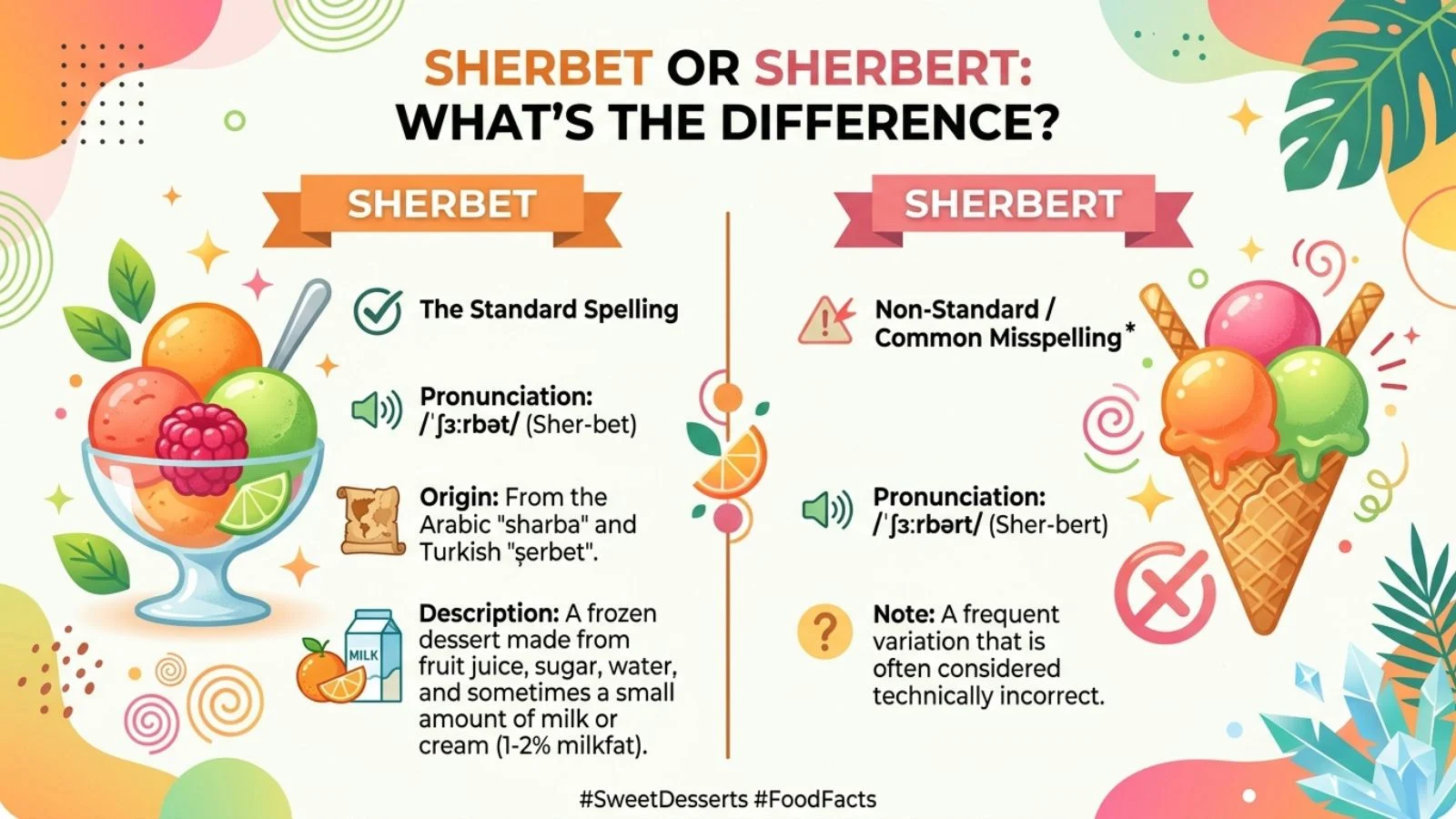
Have you ever wondered whether the correct word is sherbet or sherbert when talking about this sweet, fruity frozen treat?
Hey, I want to share something that happened to me recently about Sherbet or Sherbert.
I was chatting with a friend when I suddenly saw this term pop up, and honestly, I had no clue what it meant at first.
I kept wondering, “Am I missing something here?” It was a bit confusing, and I didn’t want to respond the wrong way.
So, I decided to look into sherbet or sherbert and figure out its meaning and context.
After understanding it, I realized how important it is to know these terms to avoid awkward situations in conversations.
I handled it by learning the proper meaning and responding confidently, and now I feel ready whenever I see sherbet or sherbert again in chats or social media.
Sherbet or Sherbert – Quick Answer
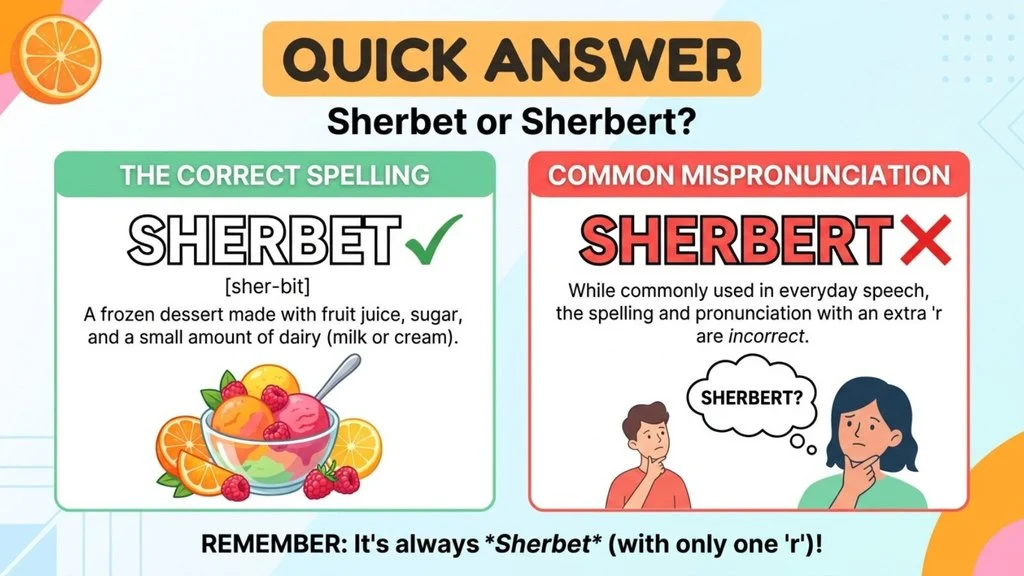
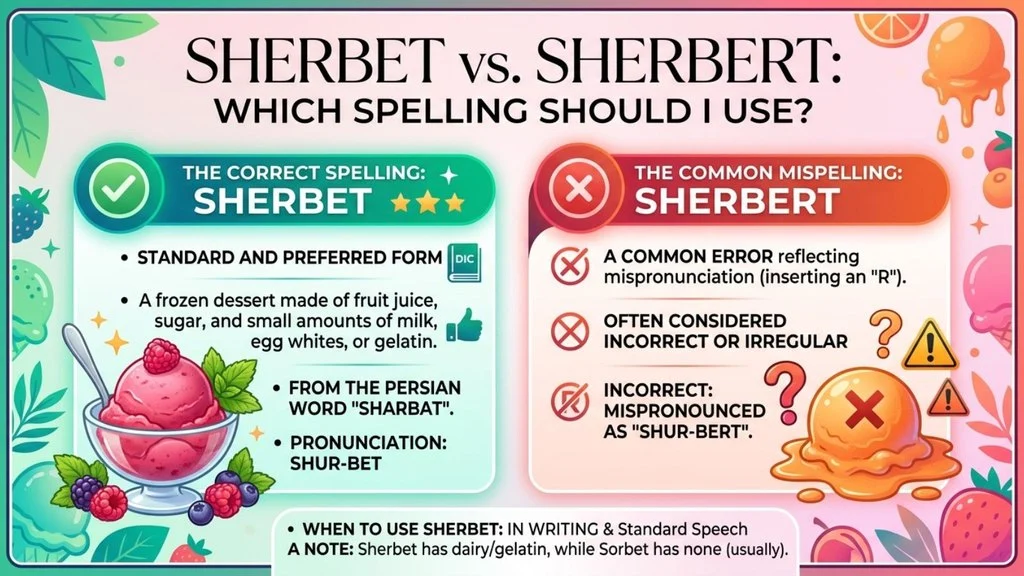
Sherbet is the preferred and standard spelling in most formal English writing.
Sherbert is a common variant spelling, especially in American usage, but many style guides and dictionaries still consider it nonstandard or less preferred.
Examples
- Correct/preferred: I ordered a lemon sherbet.
- Common variant: I ordered a lemon sherbert.
- Formal writing: The restaurant serves raspberry sherbet.
- Casual speech: Some people pronounce it as sherbert.
The extra “r” in sherbert is mainly linked to a common pronunciation and spelling variation. It does not represent a different standard dessert.
Quick comparison
| Spelling | Status | Best use |
| sherbet | Standard/preferred | Formal and everyday writing |
| sherbert | Common variant | Informal usage and some dictionaries |
| sorbet | Different word | A related frozen dessert, usually without dairy |
So, if you are unsure, choose sherbet.
The Origin of Sherbet
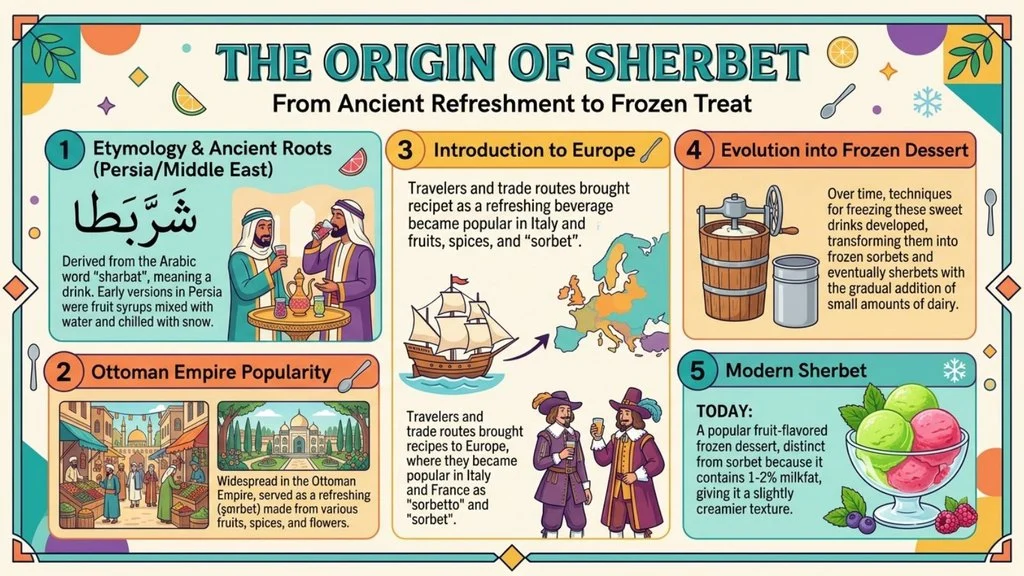
The history of sherbet is much older than the modern frozen dessert.
The English word came through Ottoman Turkish şerbet, from Persian sharbat, and ultimately from Arabic sharba, meaning “a drink.” The Arabic root is connected with shariba, meaning “he drank.”
Originally, sherbet was not a frozen dessert. It referred to a sweet, cooling drink made with fruit juice, water, sugar, and sometimes other flavorings. It was traditionally served cold and could be cooled with snow.
Over time, the meaning changed as the word moved into European languages and English.
Historical English spellings included forms such as sorbet, zerbet, cherbet, and sherbet. The form sherbert is also very old, with evidence dating back to the 1670s.
This history helps explain why people sometimes use different spellings and pronunciations today.
The related word sorbet also has a connection to this history. English first used sorbet for a cooling drink and later adopted the French form for a frozen dessert.
British English vs American English Spelling
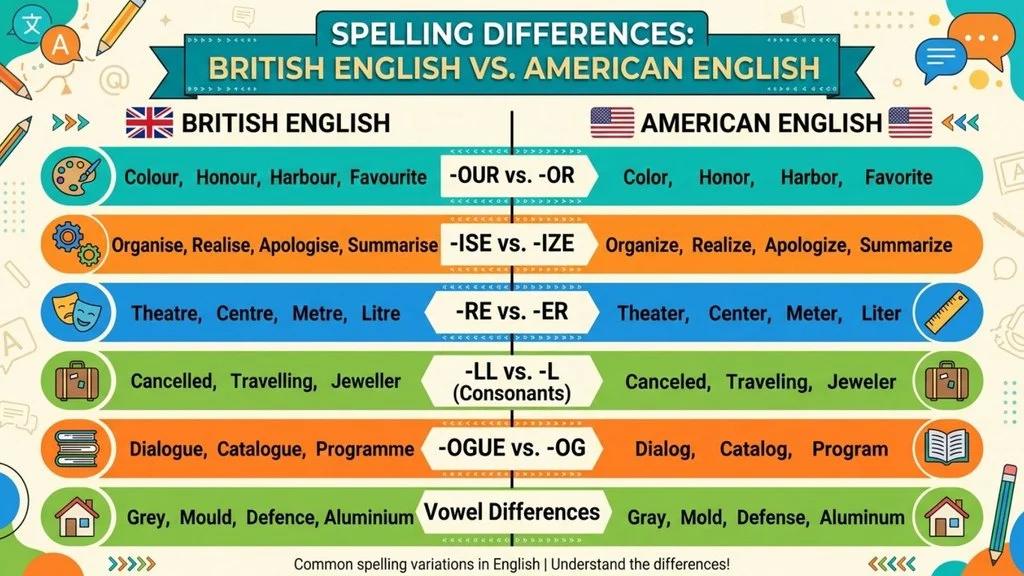
The spelling itself is usually not divided into a simple British-versus-American rule.
In both varieties, sherbet is the main spelling. However, the meaning can change by region.
In American English, sherbet commonly refers to a frozen fruit dessert made with fruit juice or purée, sugar, and often some milk or cream.
In British English, sherbet can mean a sweet, fizzy powder eaten as candy or mixed with water. It can also have other regional meanings.
British vs American comparison
| Feature | American English | British English |
| Preferred spelling | sherbet | sherbet |
| Common dessert meaning | Frozen fruit dessert | Can refer to frozen dessert, depending on context |
| Another meaning | Less common | Fizzy sweet powder |
| Sherbert | Common variant | Less accepted |
| Sorbet | Related frozen dessert | Often used for a fruit-based water ice |
So, the main difference is often meaning and pronunciation, not a separate American or British spelling rule.
Which Spelling Should Use Sherbet or Sherbert ?
If you are writing for a general audience, use “sherbet.”
It is the safest choice because it is widely recognized and is the standard dictionary form.
For American English
Use sherbet in:
- School assignments
- Business writing
- Articles
- Menus
- Emails
- Formal documents
- SEO content
You may hear people say sherbert, but the standard written form remains sherbet.
For British English
Use sherbet when referring to the British word, but remember that readers may understand it as fizzy sweet powder rather than the American-style frozen dessert.
If you mean the frozen dessert commonly called sorbet in Britain, using sorbet may be clearer. Collins specifically notes that British English can use sorbet for the frozen dessert.
For international writing
Choose sherbet unless you are quoting someone or discussing the variant spelling.
It is the clearest and most widely recognized option.
Common Mistakes with Sherbet or Sherbert
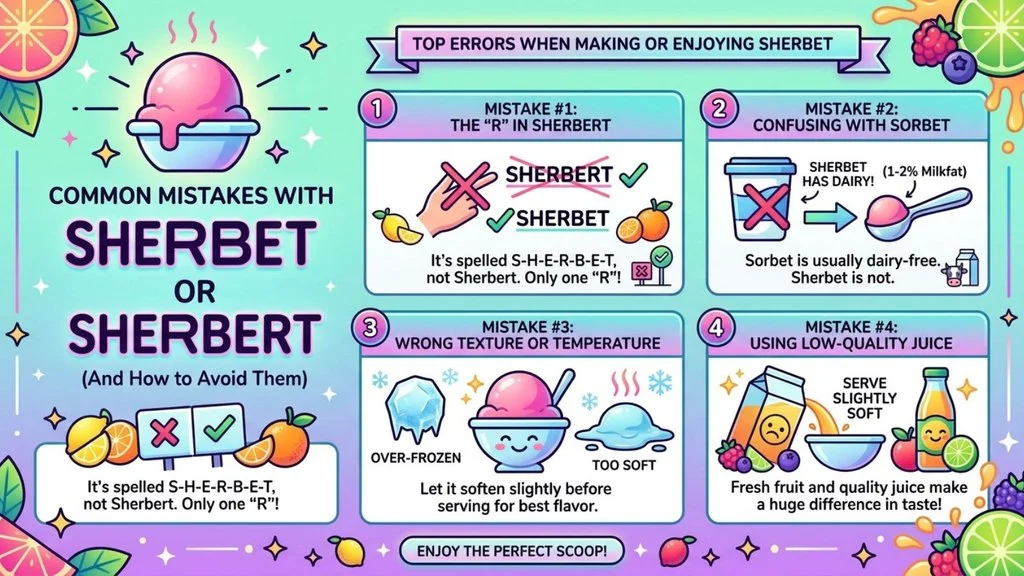
1. Adding an extra “r”
The most common mistake is writing:
Sherbert
instead of:
Sherbet
The extra r probably feels natural because many speakers pronounce the word with an extra “r” sound. However, pronunciation does not always determine standard spelling.
2. Treating sherbet and sorbet as exactly the same
They are related, but they can describe different products.
In American usage, sherbet may contain milk or cream, while sorbet is generally made without dairy.
3. Assuming sherbet always means a frozen dessert
This can cause confusion in British English.
In Britain, sherbet can refer to a sweet, fizzy powder.
4. Using “sherbert” in formal writing
Although dictionaries recognize sherbert as a variant in some contexts, sherbet is the better choice for professional and academic writing.
5. Assuming everyone pronounces it the same way
Pronunciation varies. Cambridge gives both pronunciations in its American English entry, including forms with and without the extra “r” sound.
Sherbet or Sherbert in Everyday Examples
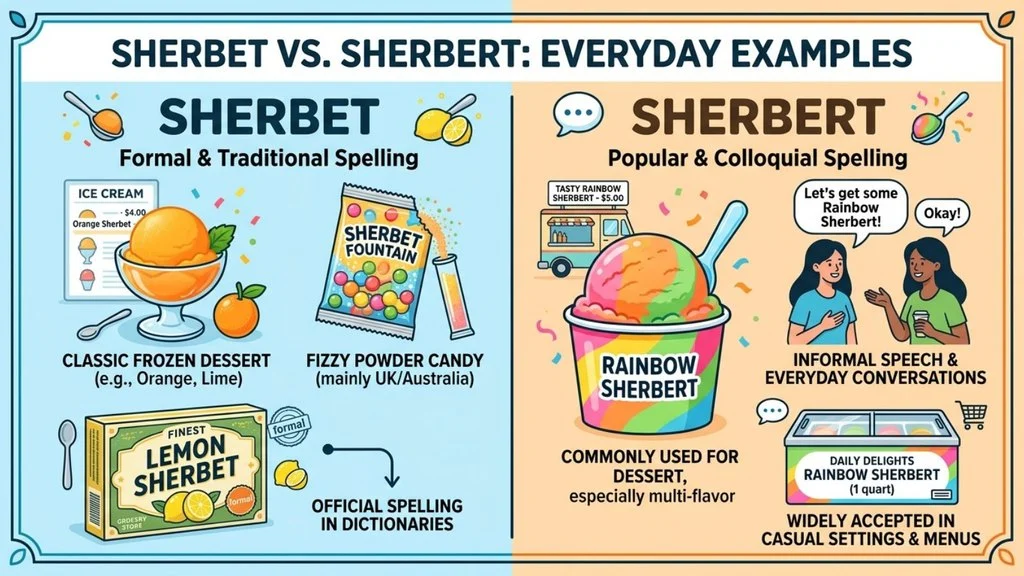
Knowing the preferred spelling becomes easier when you see it in real sentences.
In an email
We will serve lemon sherbet after dinner.
In a restaurant menu
Fresh raspberry sherbet with seasonal fruit.
In a news article
The company introduced a new orange sherbet flavor for summer.
In social media
This homemade lime sherbet is perfect for a hot day!
In formal writing
The dessert contains fruit juice, sugar, and a small amount of dairy.
When discussing the spelling
Many people write “sherbert,” but “sherbet” is the preferred spelling.
Talking about British usage
In British English, sherbet can refer to a fizzy powdered sweet.
These examples show why context matters. The same word can have different regional meanings.
Sherbet or Sherbert – Google Trends & Usage Data

Search interest around “sherbet” and “sherbert” reflects the same basic language question: people often search for the spelling because the extra r is common in pronunciation.
However, Google Trends does not provide a permanent dictionary-style measure of whether a spelling is “correct.” Search volume can change with seasons, recipes, food trends, regional interest, and user behavior.
The stronger language evidence comes from dictionaries and usage sources. Sherbet is consistently presented as the main dictionary entry, while sherbert is treated as a variant or alternative form by some dictionaries.
Regional meaning also affects searches:
- United States: searches often relate to the frozen fruit dessert.
- United Kingdom: searches may relate to fizzy sherbet powder or the frozen dessert.
- Australia: sherbet can have additional regional meanings, including an informal reference to beer in some dictionaries.
- International audiences: searches may compare sherbet, sherbert, and sorbet.
For SEO and professional content, sherbet should normally be the primary keyword, while sherbert can be included naturally as the common variant.
Sherbet vs Sherbert vs Sorbet: Comparison Table
| Word | Standard status | Common meaning | Example |
| Sherbet | Preferred spelling | Fruit-based frozen dessert or regional drink/powder | I bought lemon sherbet. |
| Sherbert | Variant spelling | Same basic word as sherbet | Some people write sherbert. |
| Sorbet | Standard separate word | Frozen fruit dessert, usually without dairy | We ordered mango sorbet. |
| Sharbat | Original-related form | Sweet fruit drink in South Asian/Middle Eastern contexts | She prepared rose sharbat. |
The connection between sherbet, sorbet, and related forms comes from a long history of borrowing across Arabic, Persian, Turkish, French, Italian, and English.
FAQs About Sherbet or Sherbert
1. Is “sherbet” or “sherbert” correct?
Sherbet is the preferred standard spelling. Sherbert is a recognized variant in some dictionaries but is often considered nonstandard in careful writing.
2. Why do people say “sherbert”?
The extra r is a common pronunciation variant, and that pronunciation has influenced the spelling sherbert.
3. Is sherbert a misspelling of sherbet?
In many formal contexts, sherbert is treated as a nonstandard spelling of sherbet. However, some dictionaries recognize it as an alternative form.
4. What is the correct spelling in American English?
Sherbet is the safest and preferred spelling in American English.
5. What is the difference between sherbet and sorbet?
In American English, sherbet can contain a small amount of dairy, while sorbet generally does not contain dairy.
6. Is “sherbet” a British word?
Yes. British English uses sherbet, but its meaning can differ. It may refer to a fizzy powdered sweet rather than the frozen dessert familiar to many Americans.
7. How should I spell it in formal writing?
Use sherbet. It is the clearest choice for academic, professional, business, and SEO writing.
Conclusion:
When choosing between sherbet or sherbert, the easiest answer is to use sherbet. It is the standard spelling and the safest option for formal and professional English. Sherbert is a common variant that appears in dictionaries and everyday speech, especially in American usage, but it is still less preferred in careful writing.
The confusion exists because people often pronounce the word with an extra r sound. Over time, that pronunciation helped make sherbert a familiar spelling. The word also has a fascinating history, traveling into English through Turkish and Persian from Arabic and originally referring to a sweet, cooling drink.
Regional meaning matters too. American readers often think of a frozen fruit dessert, while British readers may associate sherbet with a fizzy sweet powder. Sorbet is another related word and usually refers to a frozen dessert without dairy.
So, for school, business, articles, menus, and professional communication, remember one simple rule: when in doubt, choose sherbet.
Continue Reading:
- Wintry vs. Wintery: Meaning, Spelling, and Usage (for 2026)
- Workweek or Work Week: Examples, Rules, and Meaning (for 2026)
- Withdrawal or Withdraw: Meaning, Spelling, and Usage (for 2026)

Mary Roach is an American science writer and bestselling author known for making unusual and complex scientific topics engaging, accessible, and humorous. Her books include Stiff, Packing for Mars, Gulp, and Fuzz.
Author at Simifind.com, sharing clear, informative content designed to help readers understand interesting topics and everyday questions.







1 thought on “Sherbet or Sherbert: Meaning, Spelling, and Usage (for 2026)”