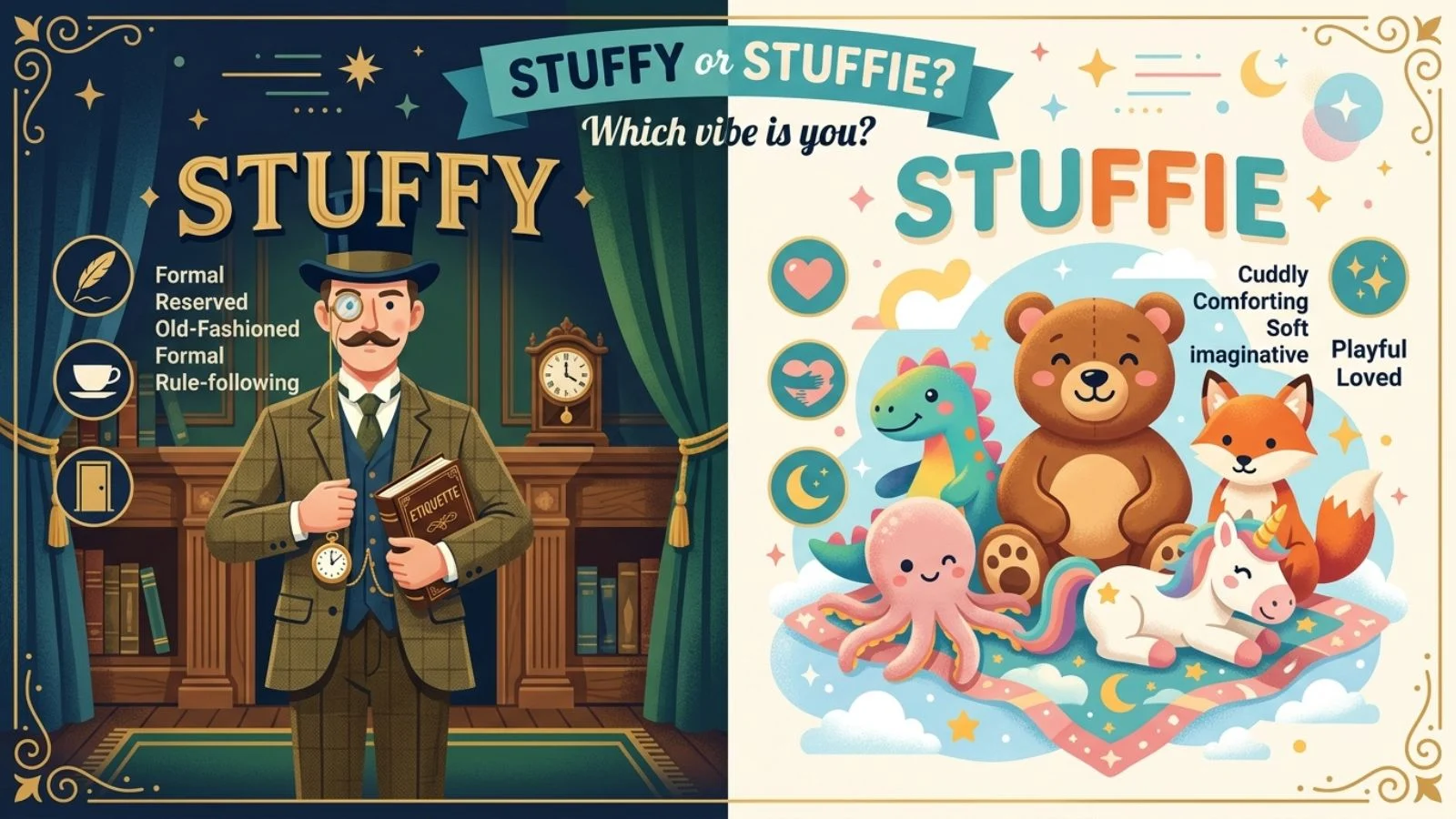
Hey, I want to share something that happened to me recently about Stuffy or Stuffie.
If you’ve ever wondered whether “stuffy” and “stuffie” mean the same thing, you’re not alone.
I was chatting with a friend when I suddenly saw this term pop up, and honestly, I had no clue what it meant at first.
I kept wondering, “Am I missing something here?” It was a bit confusing, and I didn’t want to respond the wrong way.
So, I decided to look into Stuffy or Stuffie and figure out its meaning and context.
After understanding it, I realized how important it is to know these terms to avoid awkward situations in conversations.
I handled it by learning the proper meaning and responding confidently, and now I feel ready whenever I see Stuffy or Stuffie again in chats or social media.
Stuffy or Stuffie – Quick Answer
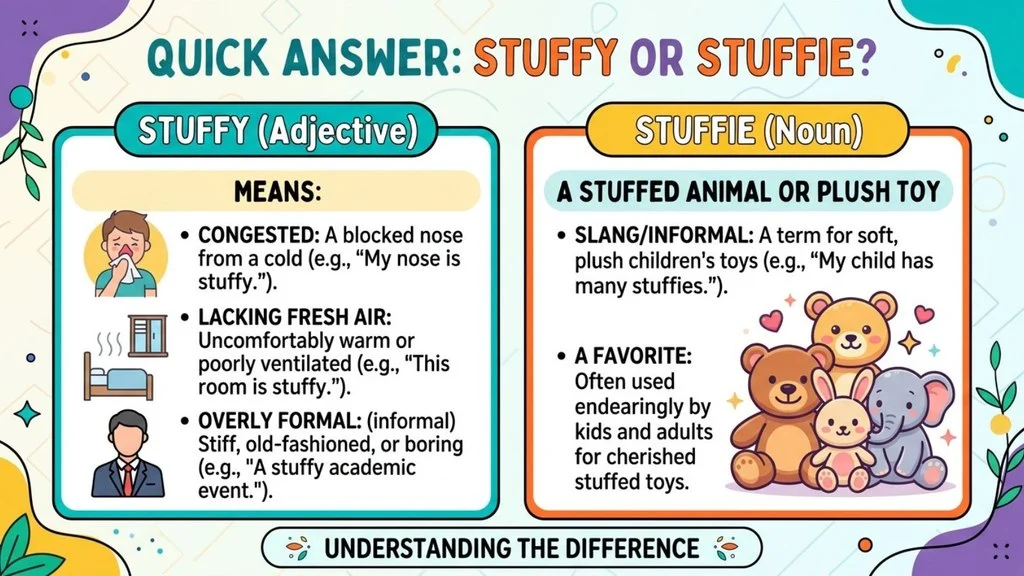
Both spellings are used, but they mean slightly different things depending on context.
- Stuffie is the most common spelling for a stuffed animal or plush toy. Example: “My daughter sleeps with her favorite stuffie every night.”
- Stuffy usually means something else. As an adjective, it means stale, airless, or boring. Example: “The room felt stuffy after the meeting.” As slang for a plush toy, “stuffy” also appears, mostly in casual speech and some regions.
Short version: if you mean a plush toy, “stuffie” is the safer, clearer spelling. “Stuffy” as a noun is informal and can be confused with the adjective.
The Origin of Stuffy or Stuffie
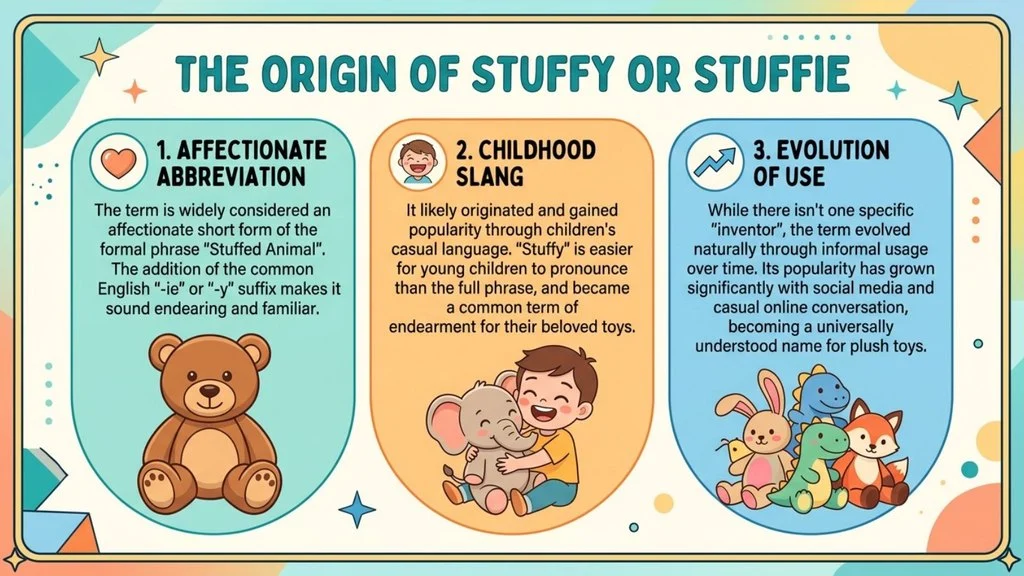
The word comes from “stuffed animal,” a toy filled with soft material. Over time, people shortened the phrase in casual speech. Kids and parents needed a quick, friendly word. “Stuffie” grew from that shortening, with the “-ie” ending common in informal English nouns, like “doggie” or “birdie.”
“Stuffy” already existed as a word, but only as an adjective describing stale air or a dull person. Some English speakers later used “stuffy” loosely as slang for a stuffed toy, mostly by dropping the “ed animal” and adding a “y” instead of “ie.”
This is why spelling differs. The word was never standardized by a dictionary first. It grew from everyday speech, spread through parenting forums, toy brands, and social media, and picked up two competing spellings along the way.
British English vs American English Spelling
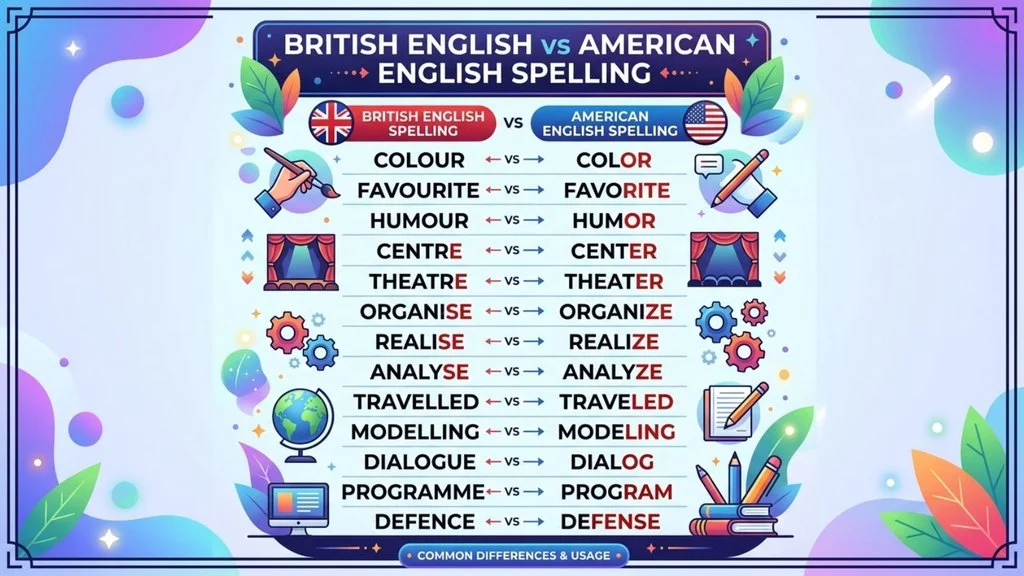
English spelling often splits along regional lines, and this word is no exception. The “-ie” ending is more common in British and Commonwealth English for cute, informal nouns. The “-y” ending is more common in casual American slang, though it overlaps with an existing word.
| Spelling | Common Region | Common Meaning | Formality |
| Stuffie | US, Canada, UK, Australia | Plush toy | Informal, widely accepted |
| Stuffy | Mixed, mostly US slang | Plush toy (slang) or stale/dull (standard) | Informal, sometimes confusing |
| Stuffed animal | Global | Plush toy | Formal, always correct |
| Stuffed toy | UK, Commonwealth | Plush toy | Formal, always correct |
Which Spelling Should Use Stuffy or Stuffie ?
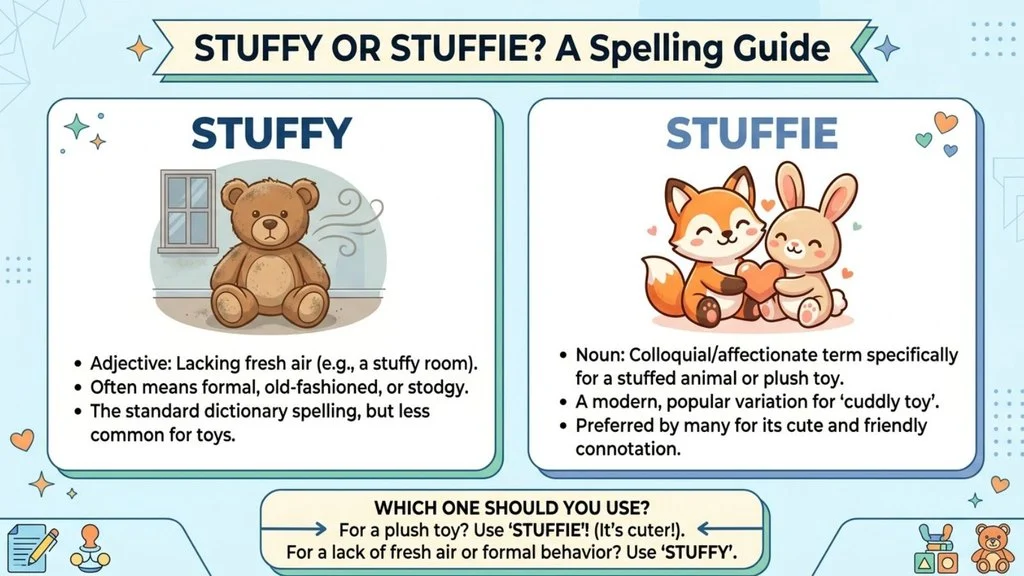
Your audience decides the best choice.
- US audience: “Stuffie” is widely understood and searched. Avoid “stuffy” as a noun in formal writing, since readers may think of the adjective instead.
- UK and Commonwealth audience: “Stuffie” is also common, especially in parenting and toy communities. “Stuffed toy” remains the standard formal term.
- Global or mixed audience: Use “stuffed animal” or “stuffed toy” for clarity. These terms have no double meaning and work in every region.
- Casual, social, or brand voice: “Stuffie” is friendly, modern, and search-friendly. It performs well in blog titles, product names, and social captions.
Common Mistakes with Stuffy or Stuffie
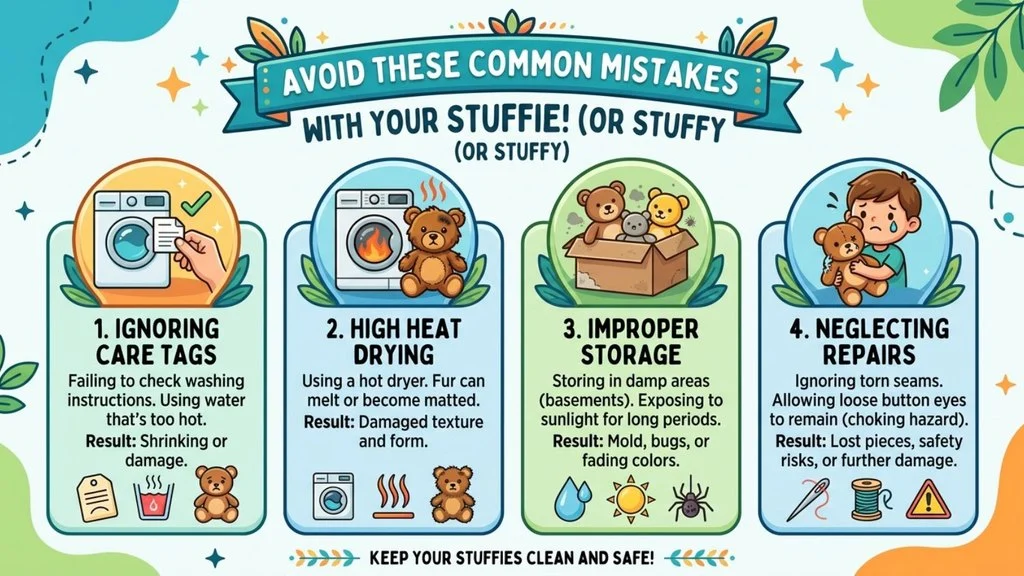
- Using “stuffy” as a noun in formal writing. It reads as the adjective first. Fix: use “stuffie” or “stuffed animal.”
- Mixing spellings in the same piece of content. Pick one spelling and stay consistent for SEO and clarity.
- Assuming “stuffy” is always wrong. It is not wrong, just less clear and less standard as a noun.
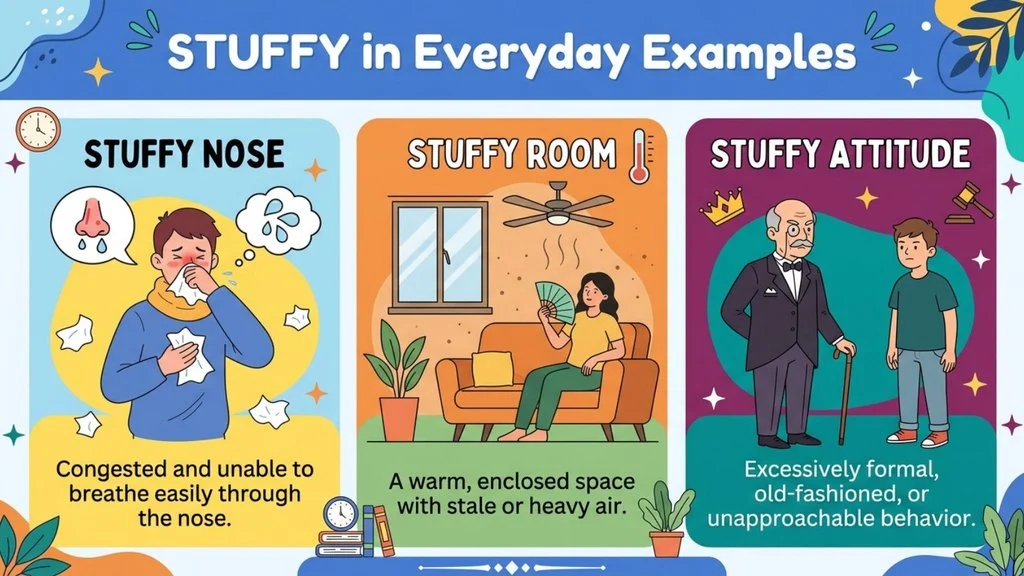
- Forgetting the adjective meaning. “The room was stuffy” has nothing to do with toys. Context matters.
- Ignoring regional audience. A US parenting blog and a UK toy shop may expect different spellings.
- Skipping the formal term entirely. Product titles and legal or business copy should default to “stuffed animal” or “stuffed toy.”
Stuffy or Stuffie in Everyday Examples
- Email: “Please remember to pack Emma’s stuffie for the sleepover.”
- News headline: “Local Shop Sells Handmade Stuffed Animals for Charity.”
- Social media caption: “New stuffie just dropped 🧸 #plushie #stuffie”
- Formal writing: “The product line includes a range of stuffed toys designed for toddlers.”
- Casual chat: “She won’t sleep without her stuffy.”
Notice how formal writing avoids both slang spellings entirely, while casual and social content leans on “stuffie” for warmth and personality.
Stuffy or Stuffie – Google Trends & Usage Data
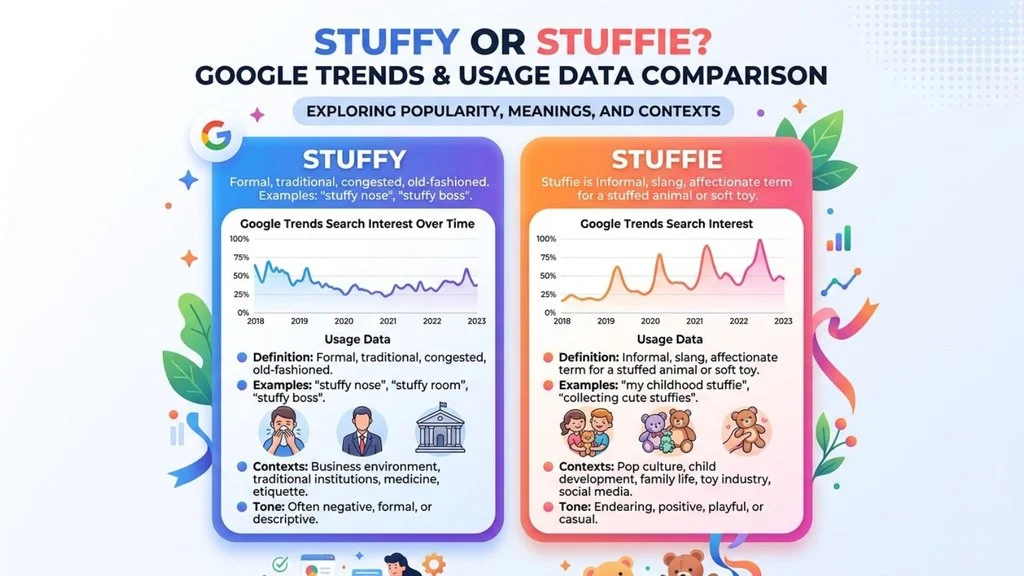
Search interest for this word has grown alongside the rise of parenting content, toy unboxing videos, and plush collector communities online. “Stuffie” tends to dominate search volume across most English-speaking countries, especially in the US and Canada, where it appears often in parenting blogs and toy retail listings.
“Stuffy” also gets meaningful search volume, but a large share of that traffic relates to the adjective meaning, such as a stuffy nose or a stuffy room. This overlap makes “stuffie” the clearer choice for SEO if your content is specifically about plush toys, since it avoids competing with unrelated search intent.
Formal terms like “stuffed animal” carry the highest overall search volume globally, since they are the neutral, dictionary-recognized standard.
Keyword Variation Comparison Table
| Term | Best Use Case | SEO Strength | Tone |
| Stuffie | Blogs, social media, product names | Strong for toy-specific searches | Casual, warm |
| Stuffy | Casual speech, some regional slang | Weak, overlaps with adjective | Very informal |
| Stuffed animal | Formal writing, global content | Strongest overall volume | Neutral, universal |
| Stuffed toy | UK/Commonwealth formal content | Strong regional volume | Neutral, formal |
| Plushie | Collector and fan communities | Strong niche volume | Playful, niche |
FAQs
Is “stuffie” a real word?
Yes. It is an informal but widely recognized term for a stuffed animal, especially in parenting and children’s content.
Is “stuffy” the same as “stuffie”?
Not exactly. “Stuffy” is mainly an adjective meaning stale or dull. Some people use it as slang for a plush toy, but this is less standard and can cause confusion.
Which spelling is correct: stuffy or stuffie?
For a plush toy, “stuffie” is the clearer and more accepted spelling. “Stuffy” as a noun is informal slang.
Do British and American English spell this word differently?
Both regions commonly use “stuffie” for plush toys. The bigger difference is that British English favors “stuffed toy” in formal contexts, while American English favors “stuffed animal.”
Can I use “stuffy” in a blog post about plush toys?
You can, but expect some reader confusion, since “stuffy” more commonly describes stale air or a dull mood. “Stuffie” is safer for clarity and SEO.
What is the most formal way to say stuffie?
“Stuffed animal” or “stuffed toy” are the standard, dictionary-recognized formal terms.
Why do so many spellings exist for this word?
The word grew from casual speech rather than formal dictionary entries, so different communities and regions developed their own versions before any single spelling became standard.
Conclusion
The choice between “stuffy” and “stuffie” comes down to clarity and audience.
“Stuffie” is the stronger, safer spelling when you mean a plush toy, since it avoids clashing with the older meaning of “stuffy” as stale or dull.
“Stuffy” still appears as casual slang in some regions, but it carries a real risk of confusion, especially in written content.
For formal writing, business copy, or global audiences, “stuffed animal” and “stuffed toy” remain the clearest, most universally understood choices.
For casual, warm, or social content, “stuffie” fits naturally and performs well in search.
The key takeaway: match your spelling to your audience and your tone. Stay consistent within a single piece of content, and default to formal terms when clarity matters most.
With this guide, you now have a clear, simple way to choose the right word every time, without second-guessing spelling or meaning again.

Mary Roach is an American science writer and bestselling author known for making unusual and complex scientific topics engaging, accessible, and humorous. Her books include Stiff, Packing for Mars, Gulp, and Fuzz.
Author at Simifind.com, sharing clear, informative content designed to help readers understand interesting topics and everyday questions.