Sometimes, one small word can change the meaning of an entire sentence—especially when two words sound so similar.
Hey, I want to share something that happened to me recently about Invoke or Evoke.
I was chatting with a friend when I suddenly saw these terms pop up, and honestly, I had no clue which one was correct at first.
I kept wondering, “Am I missing something here?” It was a bit confusing, and I didn’t want to respond the wrong way.
So, I decided to look into Invoke or Evoke and figure out their meanings and context.
After understanding the difference, I realized how important it is to know these terms to avoid awkward situations in conversations.
I handled it by learning the proper meaning and usage, and now I feel ready whenever I see Invoke or Evoke again in chats, writing, or social media.
Invoke or Evoke – Quick Answer
Here’s the short version:
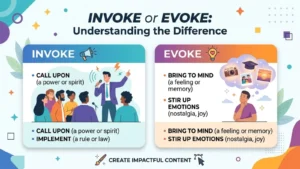
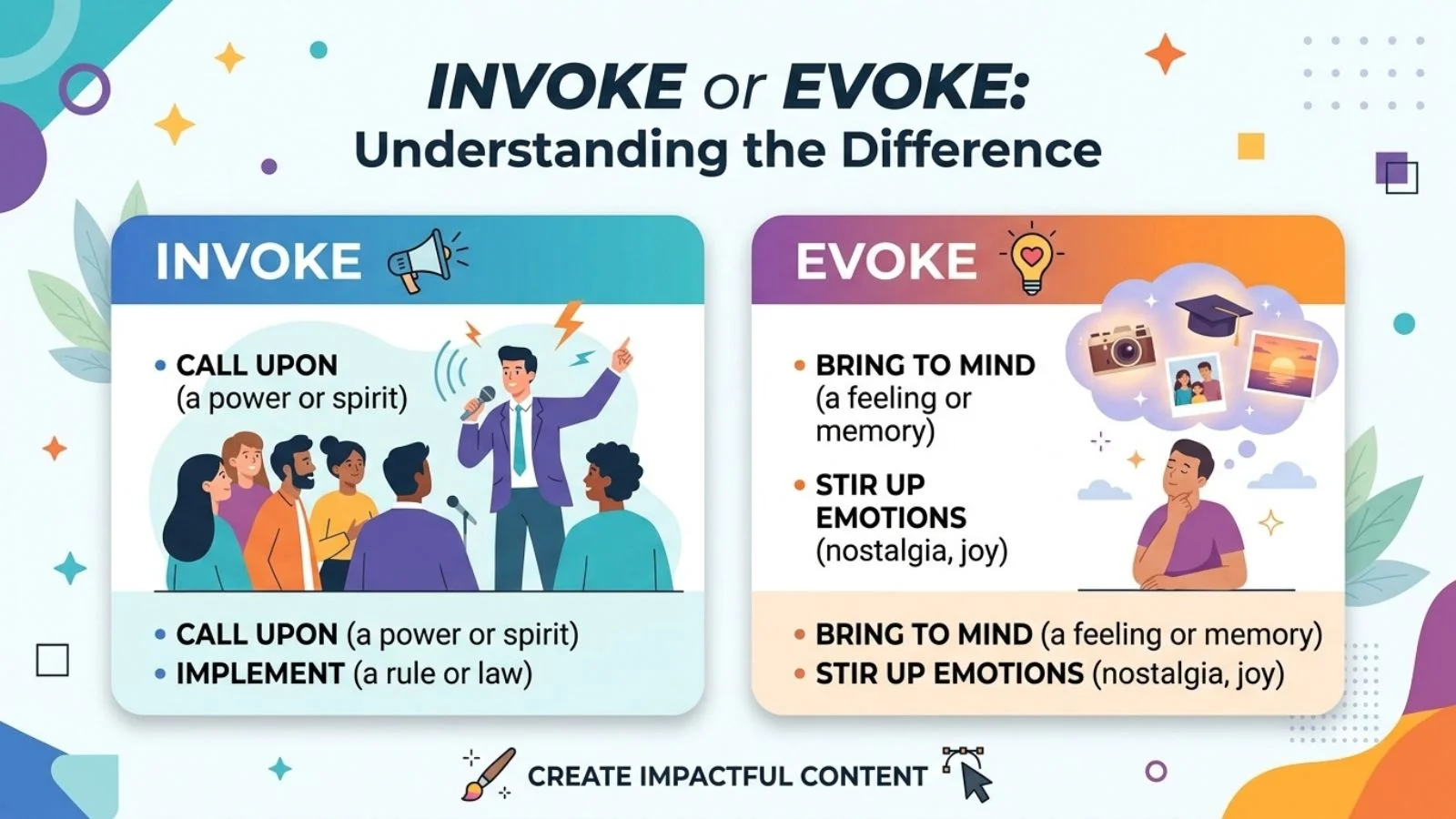
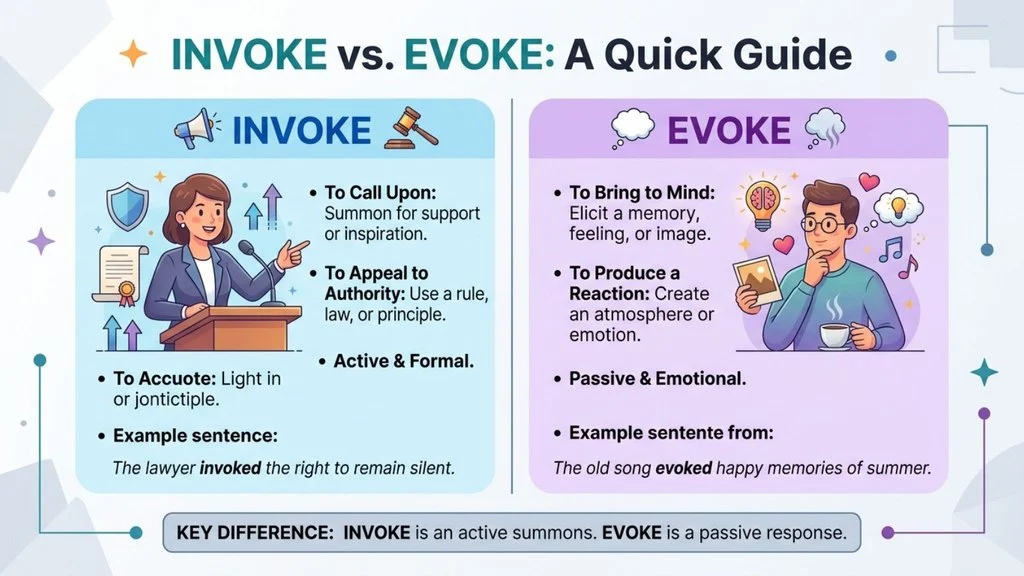
- Invoke means to call on something for help, support, or authority. You invoke a law, a right, a god, or a rule.
- Evoke means to bring up a feeling, memory, or image in someone’s mind. You evoke a memory, a mood, or an emotion.
Quick examples:
- The lawyer invoked the Fifth Amendment.
- The old photograph evoked memories of her childhood.
- The speaker invoked the crowd’s support before the vote.
- The song evoked a feeling of nostalgia.
If you’re calling on power, rules, or authority — use invoke. If you’re stirring up a feeling or a memory — use evoke.
The Origin of Invoke and Evoke
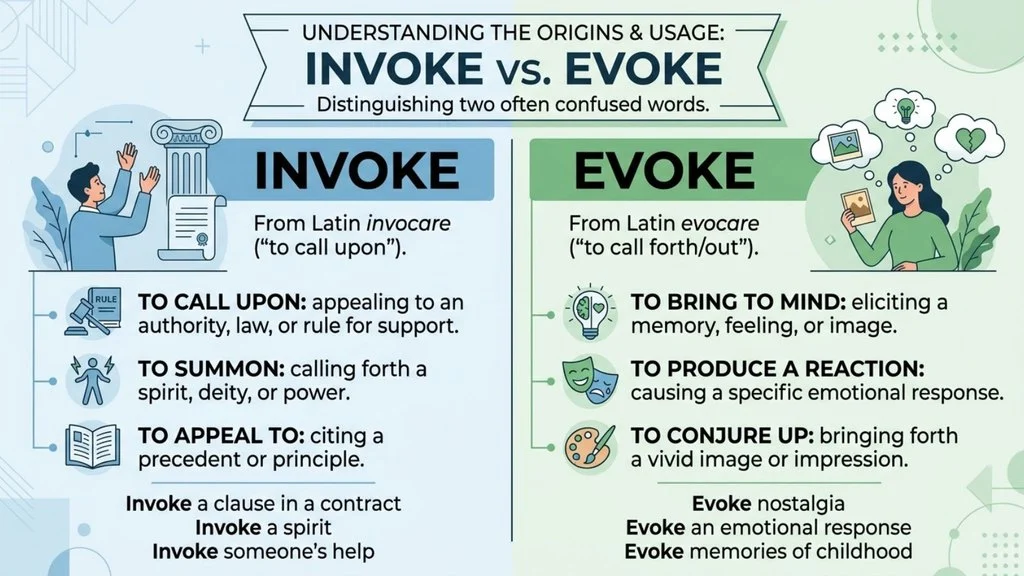
Both words come from the same Latin root: vocare, meaning “to call.”
- Invoke comes from Latin invocare — “in” (upon) + “vocare” (to call). It originally meant to call upon a god or spirit for help. Over time, it expanded to mean calling on laws, rights, or rules.
- Evoke comes from Latin evocare — “e” or “ex” (out) + “vocare” (to call). It meant to call something out, like summoning a spirit. Today it means to draw out a feeling, image, or memory.
Because they share a root, the words feel related — and they are. But the small difference in the Latin prefix (in- meaning “upon” vs e- meaning “out”) explains why one calls something toward you (invoke) and the other calls something out from someone (evoke).
This shared history is exactly why so many writers blur the line between them.
British English vs American English Spelling
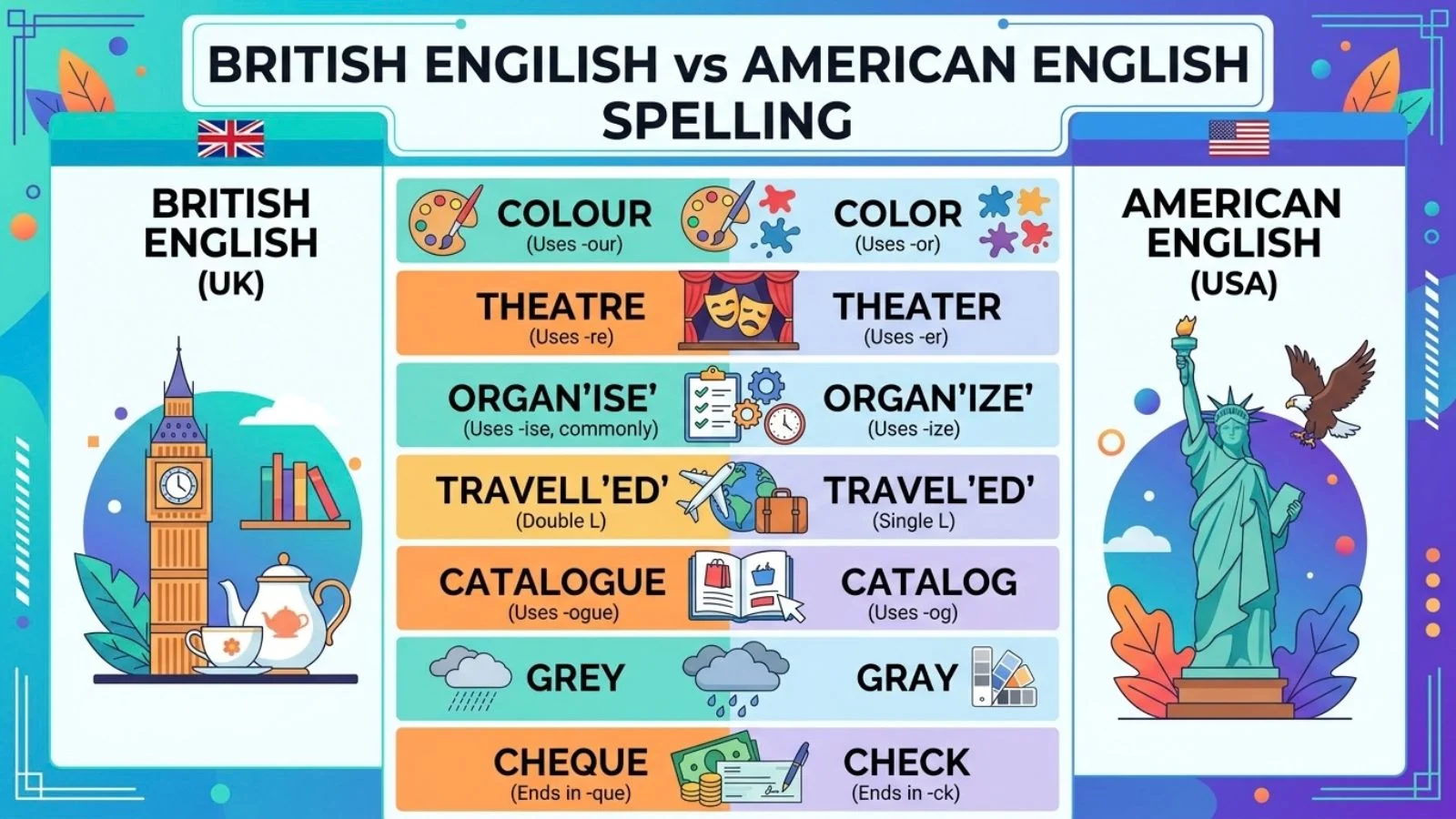
Here’s something worth clearing up: invoke and evoke are spelled the same way in both British and American English. Unlike word pairs such as “color/colour” or “organize/organise,” there is no regional spelling variant for these two words.
The real difference isn’t spelling — it’s meaning. Both US and UK dictionaries define the words identically, and both regions use them the same way in formal and everyday writing.
| Feature | Invoke | Evoke |
| US Spelling | invoke | evoke |
| UK Spelling | invoke | evoke |
| Regional variation | None | None |
| Meaning | Call on for help, support, or authority | Bring up a feeling, memory, or image |
| Common use | Law, rules, rights, authority | Emotion, memory, art, nostalgia |
So if you’ve been searching for a spelling difference, the good news is you don’t need to worry about one. The word you need depends only on your meaning.
Which Spelling Should Use Invoke or Evoke ?
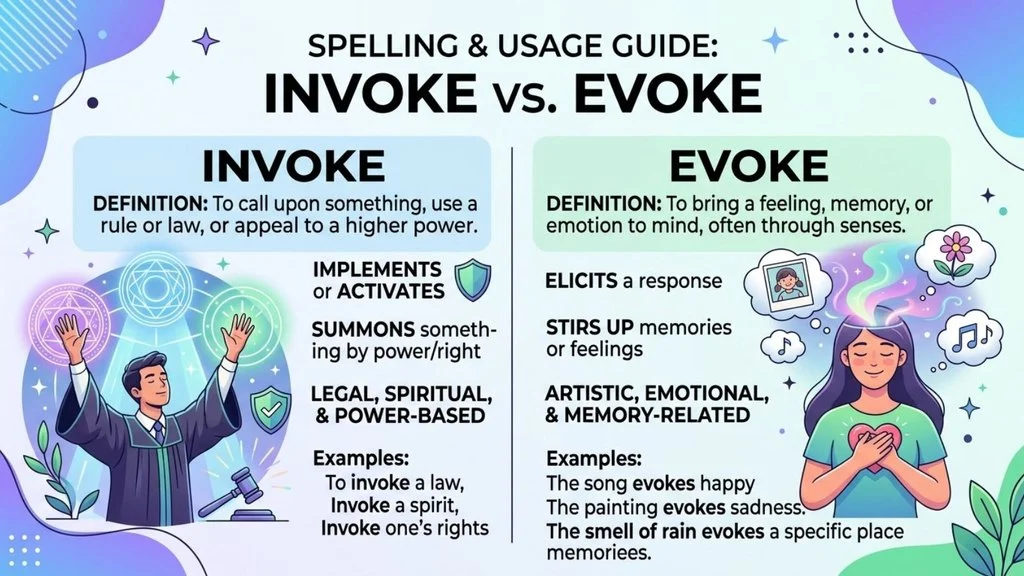
Since spelling isn’t the issue, the real question is: which word fits your sentence?
For US, UK, and Commonwealth writers alike:
- Use invoke when you’re referring to authority, rules, laws, rights, or formal permission. Example: “The company invoked its right to cancel the contract.”
- Use evoke when you’re describing a feeling, memory, mood, or image being brought to mind. Example: “The film evoked a strong sense of loss.”
For global and non-native English writers:
- A simple test: if you can replace the word with “called upon,” use invoke. If you can replace it with “brought to mind,” use evoke.
- This test works the same whether you’re writing for a US, UK, Australian, or international audience.
Common Mistakes with Invoke and Evoke
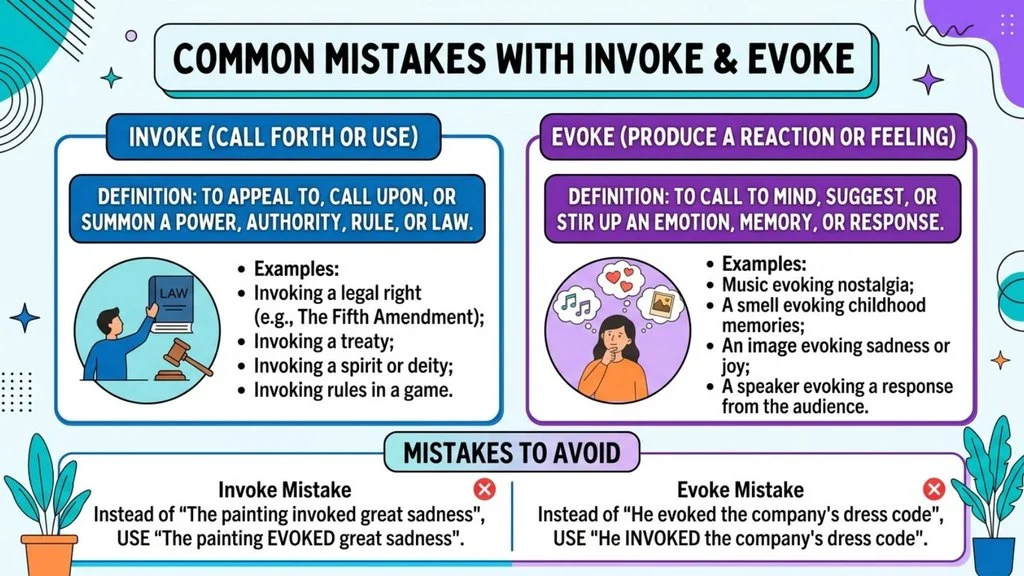
Mistake 1: Using invoke for feelings
- ❌ The painting invoked a sense of calm.
- ✅ The painting evoked a sense of calm.
Mistake 2: Using evoke for authority or rules
- ❌ The officer evoked his legal right to search the car.
- ✅ The officer invoked his legal right to search the car.
Wrong 3: Treating them as interchangeable synonyms
- They share a root, but they aren’t swappable. Invoke always involves calling on something for support or power. Evoke always involves stirring a memory or feeling.
Mistake 4: Confusing “invoke a spirit” with modern usage
- Older or poetic writing sometimes uses “invoke” to mean summon a spirit or muse, which can look similar to “evoke” in that context. In modern everyday writing, stick to the authority vs. feeling rule above.
Invoke or Evoke in Everyday Examples
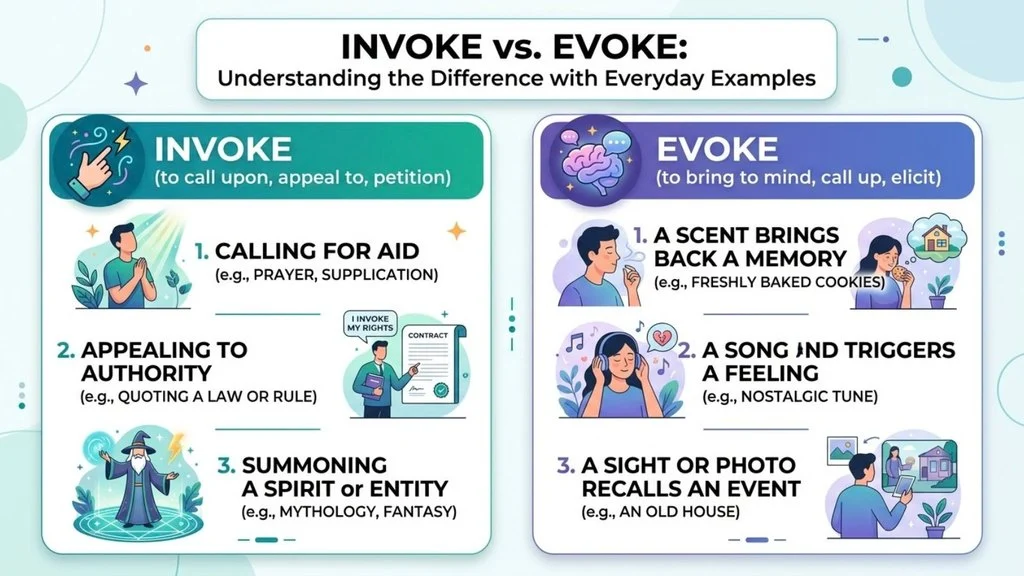
In emails:
- “We would like to invoke the cancellation clause in our contract.”
- “Your message evoked a lot of positive memories from our last meeting.”
News articles:
- “The senator invoked national security to justify the decision.”
- “The documentary evoked strong emotions from viewers across the country.”
In social media posts:
- “This song evokes every summer I spent at my grandmother’s house. 🌞”
- “Officials invoked emergency powers ahead of the storm.”
In formal writing (essays, reports):
- “The author invokes classical philosophy to support her argument.”
- “The imagery in chapter three evokes a deep sense of isolation.”
Invoke or Evoke – Search Trends & Usage Data
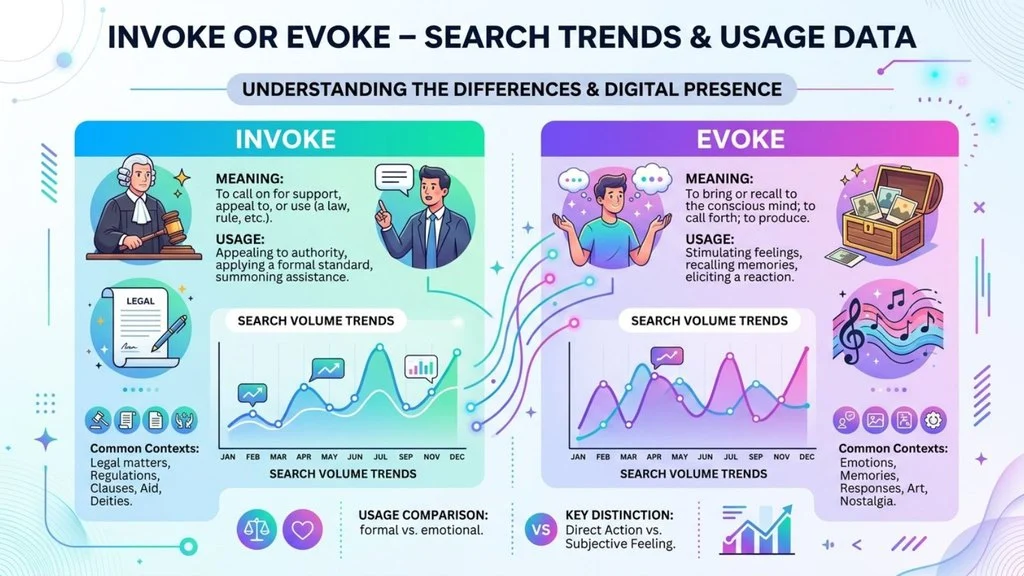
Both words are searched regularly, but usage patterns differ by context:
- Invoke appears more often in legal, political, and technical writing — think court cases, government policy, and software documentation (as in “invoke a function”).
- Evoke appears more often in creative, emotional, and descriptive writing — think film reviews, art criticism, and personal essays.
- Search interest for “invoke vs evoke” tends to spike around school essay season and whenever legal or political news uses one of the words prominently.
- Globally, English speakers in the US, UK, Canada, Australia, and India all show similar confusion patterns, since the issue is about meaning, not regional dialect.
Invoke vs Evoke – Comparison Table
| Aspect | Invoke | Evoke |
| Core meaning | Call on for help, support, or authority | Bring up a memory, feeling, or image |
| Latin root | invocare (call upon) | evocare (call out) |
| Typical subject | Laws, rights, rules, authority, spirits | Memories, emotions, art, nostalgia |
| Example sentence | “She invoked her right to remain silent.” | “The smell evoked memories of home.” |
| Common fields | Law, politics, technology | Literature, film, music, personal writing |
| Spelling in US/UK | Same | Same |
FAQs
1. Is it “invoke a memory” or “evoke a memory”?
It’s “evoke a memory.” Memories are feelings brought to mind, which is what evoke means.
2. Can invoke and evoke ever mean the same thing?
Rarely. In some poetic or older texts, “invoke” can mean summoning a spirit, which overlaps loosely with evoke’s meaning of “calling forth.” In everyday modern writing, though, they serve different purposes and shouldn’t be swapped.
3. Is “invoke” only used in legal writing?
No. It’s common in law and politics, but also appears in technology (like “invoke a function” in programming) and general writing about authority or permission.
4. What’s the noun form of each word?
The noun form of invoke is “invocation.” The noun form of evoke is “evocation.”
5. Is there a British spelling difference between invoke and evoke?
No. Both words are spelled the same in British and American English. The confusion is about meaning, not spelling.
6. Which word is more common in everyday speech?
Evoke is slightly more common in casual and creative writing, while invoke shows up more in formal, legal, and technical contexts.
7. How can I remember the difference quickly?
Think: “invoke” = call IN authority. “Evoke” = call OUT emotion. The prefixes match the meaning.
Conclusion
The confusion between invoke and evoke comes down to one simple distinction: invoke means calling on something for support, authority, or permission, while evoke means bringing up a feeling, memory, or image.
Both words trace back to the same Latin root, which explains why they feel so similar — but their modern uses are clearly separate.
There’s no British versus American spelling difference to worry about here. Both regions spell and use these words the same way. The real skill is matching the word to your intent: use invoke for laws, rights, and authority, and evoke for emotions, memories, and mood.
Next time you’re stuck between the two, ask yourself: am I calling on power or permission (invoke), or am I stirring up a memory or feeling (evoke)? That one question will guide you to the right word every time, whether you’re writing a legal brief, a news article, a poem, or a quick social media post.

Mary Roach is an American science writer and bestselling author known for making unusual and complex scientific topics engaging, accessible, and humorous. Her books include Stiff, Packing for Mars, Gulp, and Fuzz.
Author at Simifind.com, sharing clear, informative content designed to help readers understand interesting topics and everyday questions.