Have you ever imagined something clearly, only to wonder whether you’re using the right word to describe it?
Hey, I want to share something that happened to me recently about envision or invision.
I was chatting with a friend when I suddenly saw this term pop up, and honestly, I had no clue what it meant at first.
I kept wondering, “Am I missing something here?” It was a bit confusing, and I didn’t want to respond the wrong way.
So, I decided to look into envision or invision and figure out its meaning and context.
After understanding it, I realized how important it is to know these terms to avoid awkward situations in conversations.
I handled it by learning the proper meaning and responding confidently, and now I feel ready whenever I see envision or invision again in chats or social media.
Envision or Invision – Quick Answer
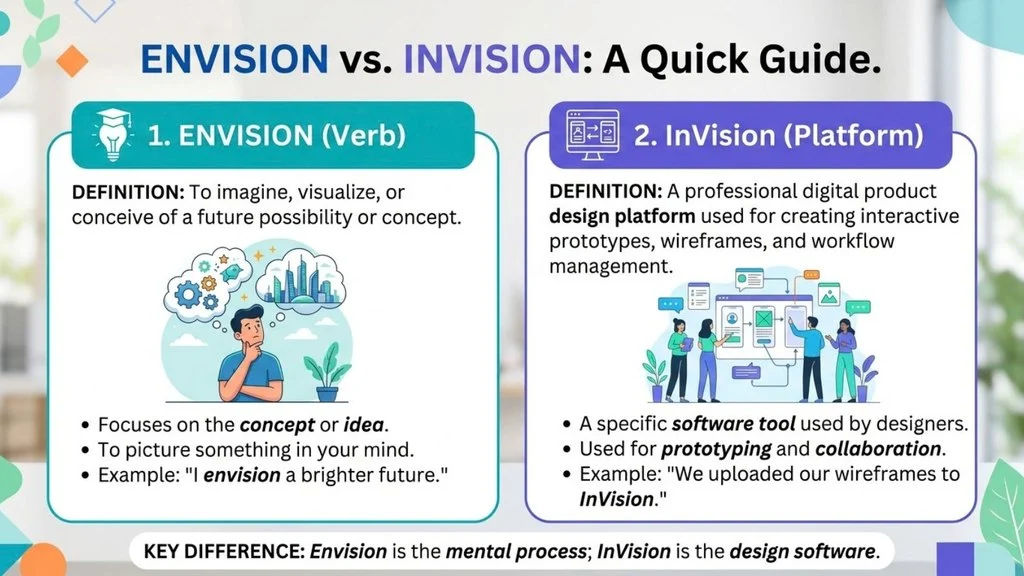
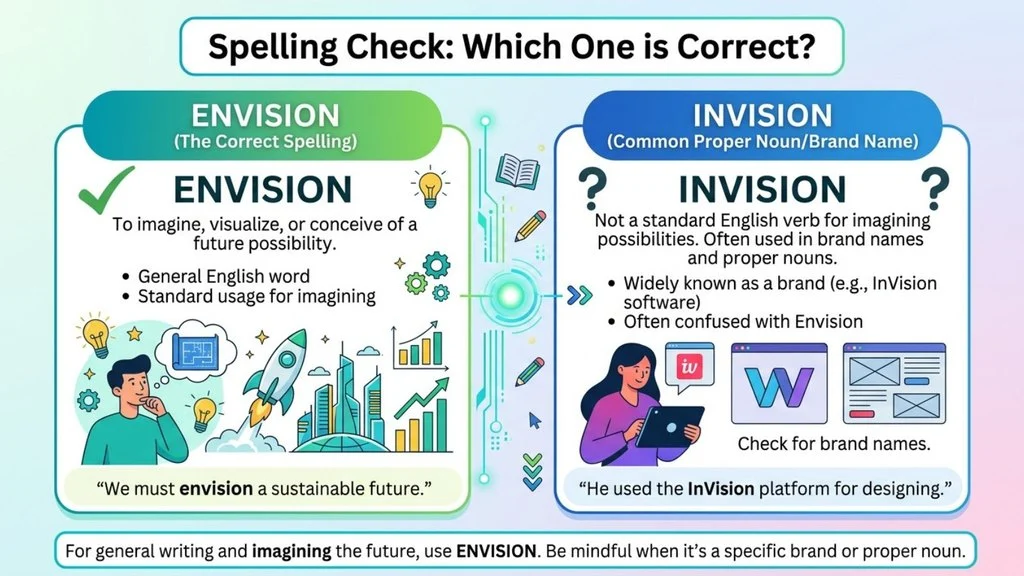
Envision is correct. Invision is not a word.
Envision means to picture something in your mind, usually something in the future. It is a verb.
Correct examples:
- I envision a bigger team next year.
- She envisions a world without plastic waste.
- They envisioned the project as a two-year plan.
Wrong examples:
- ~~I invision a bigger team next year.~~
- ~~She invisions a cleaner city.~~
The only time you write “InVision” with a capital I and a capital V is when you mean the design software company. That is a brand name, not English spelling.
So the rule is short: if you mean “to imagine,” write envision. Always.
The Origin of Envision
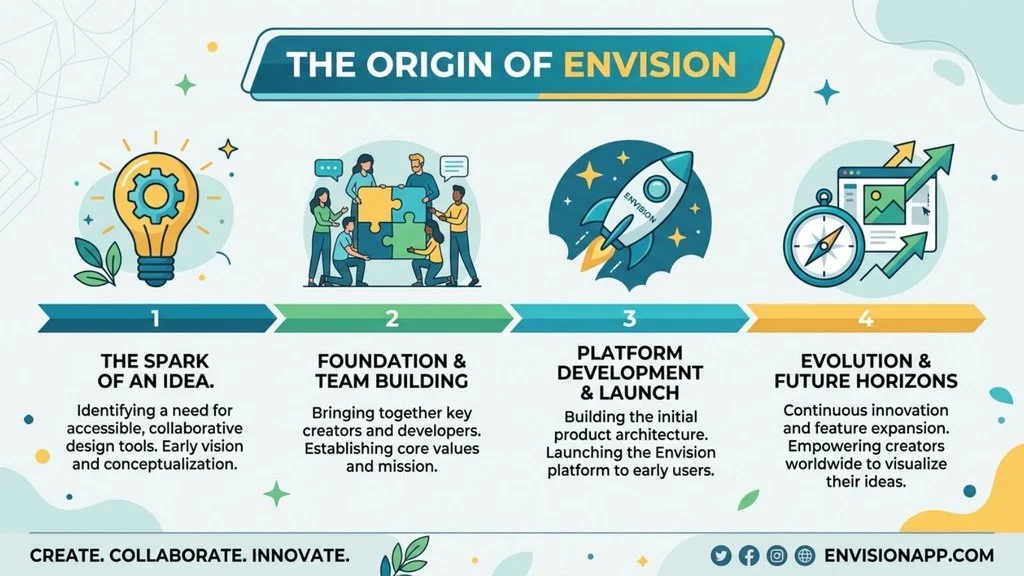
The word is young. It first appeared in English in the 1910s, which makes it a modern word compared to most of the language.
It was built from two parts:
- en- a prefix that means “to put into” or “to cause to be”
- vision from the Latin visio, meaning sight or something seen
Put them together and you get “to put into sight.” That is exactly what the word does. You take an idea and put it in front of your mind’s eye.
English uses this en- prefix a lot. Look at these words:
- enable (to make able)
- encourage (to give courage)
- enrich (to make rich)
- enlarge (to make large)
Now look at the in- prefix. In English, in- usually means “not.” Think of invisible, incorrect, inactive, incomplete.
So “invision” would suggest the opposite of vision. That is the reverse of what you mean. The spelling is not just wrong by habit. It is wrong by logic.
Why do people get it wrong? Three reasons:
- In fast speech, “en” and “in” sound almost identical in English.
- Many real words do start with in- (input, insight, inspire), so the pattern feels familiar.
- The InVision software brand puts the wrong spelling in front of millions of eyes.
British English vs American English Spelling
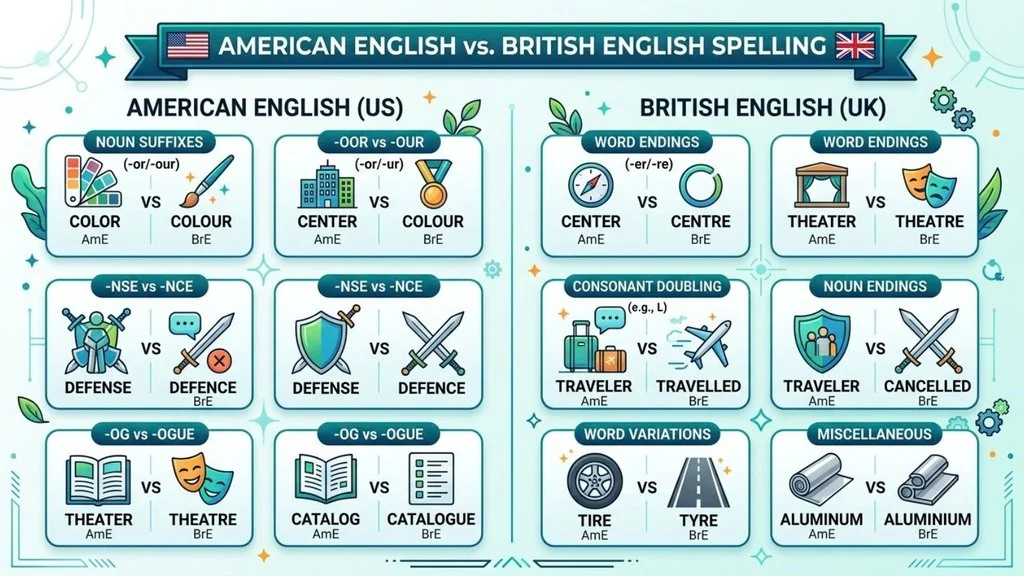
This is where most people expect a twist. They assume envision is American and invision is British, like color and colour.
That is not true. Invision is wrong in every English-speaking country. British, American, Australian, Canadian, Indian, Irish. All of them.
But there is a real British-American difference here, and it involves a different word: envisage.
- Envision is more common in American English.
- Envisage is more common in British English.
Both are correct. Both mean roughly the same thing. A British writer is a little more likely to say “I envisage a delay,” while an American writer would say “I envision a delay.”
There is a small shade of difference too. Envision often carries more imagination and vision, like a leader describing a dream. Envisage often sounds more practical, like predicting a likely outcome.
| Spelling | American English | British English | Australian / Canadian | Correct? |
| Envision | Very common | Used, less common | Common | ✅ Yes |
| Envisage | Less common | Very common | Common | ✅ Yes |
| Invision | Not a word | Not a word | Not a word | ❌ No |
| InVision | Brand name only | Brand name only | Brand name only | ⚠️ Proper noun |
Also note the related noun and adjective forms. You write vision, visionary, and envisioned. There is no “invisioned” in any dictionary.
Which Spelling Should Use envision or invision ?
Here is simple advice based on who you are writing for.
If you write for a US audience: Use envision. It is the natural choice. It sounds modern and confident. American business writing loves it, especially in mission statements and strategy documents.
If you write for a UK, Irish, or Commonwealth audience: You can use envision or envisage. Both are correct. Envisage may sound slightly more formal and more native to a British reader. Envision is still fully accepted and appears often in British newspapers.
If you write for a global audience: Use envision. It is understood everywhere and is the more common form online. It is also easier for non-native English speakers to read.
If you are writing formal academic work: Both envision and envisage are fine. Just be consistent. Pick one and stick with it through the whole paper.
If you are unsure: Use envision. It is never wrong.
Never use: invision, unless you are literally naming the software company InVision.
Common Mistakes with Envision
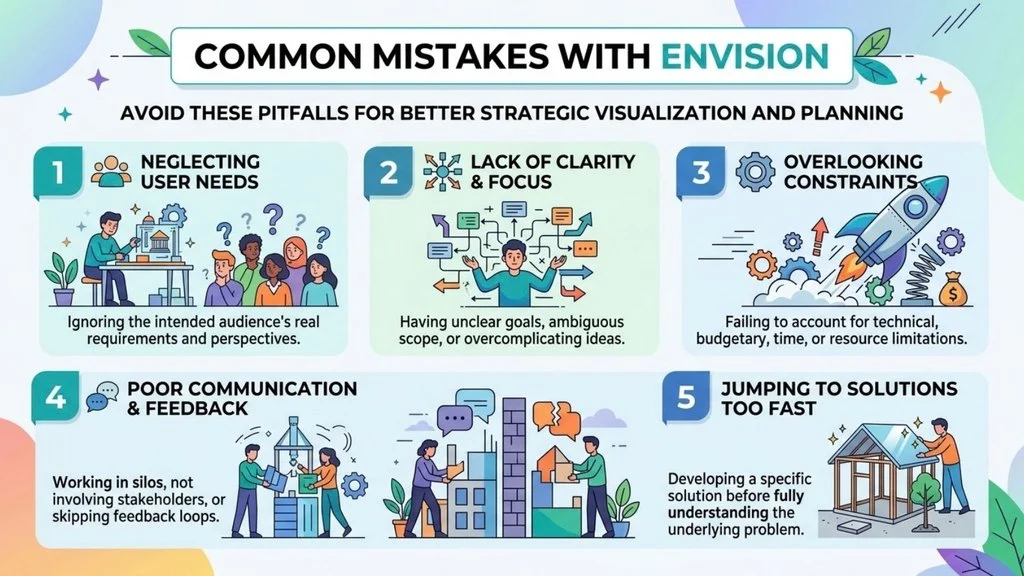
Here are the errors people make most, with fixes.
Mistake 1: Writing “invision”
- ❌ We invision a better future.
- ✅ We envision a better future.
Wrong 2: Wrong past tense spelling
- ❌ He invisioned a new office.
- ✅ He envisioned a new office.
Mistake 3: Wrong third-person form
- ❌ The company invisions growth.
- ✅ The company envisions growth.
Mistake 4: Mixing up envision and envy
These are not related words. Envy means wanting what someone else has. Envision means imagining something.
Mistake 5: Using the wrong preposition
- ❌ I envision about a new system.
- ✅ I envision a new system.
- ✅ I envision the system running by June.
Envision takes a direct object. You do not need “about” or “of.”
Mistake 6: Overusing it in business writing
- ⚠️ We envision a future where we envision solutions for clients.
- ✅ We picture a future where we solve real problems for clients.
Sometimes plain words like imagine, picture, or expect work better.
Mistake 7: Trusting spell-check too much
Some tools flag “invision” as a proper noun because of the software brand. Check it yourself.
Envision in Everyday Examples
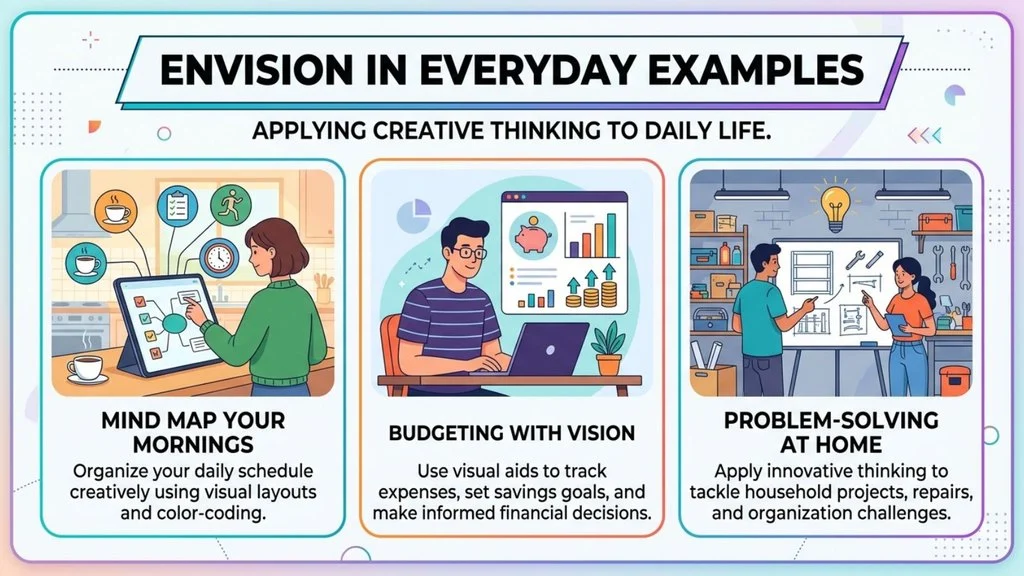
Here is how the word works in real settings.
In a work email:
Hi Sarah, I envision this launching in two phases. Can we talk Thursday?
In a job interview answer:
I envision myself leading a small team within three years.
In a news article:
City planners envision a car-free downtown by 2032.
In a mission statement:
We envision a world where clean water reaches every home.
On social media:
Ten years ago I could not envision any of this. Grateful today.
In academic writing:
The authors envision a framework that links both models.
In a design or product meeting:
Let’s start with the InVision prototype, then envision how users will move through it.
That last one is useful. It shows both spellings side by side, each doing its own job. The brand keeps its capital letters. The verb stays lowercase and starts with en.
Envision – Google Trends & Usage Data
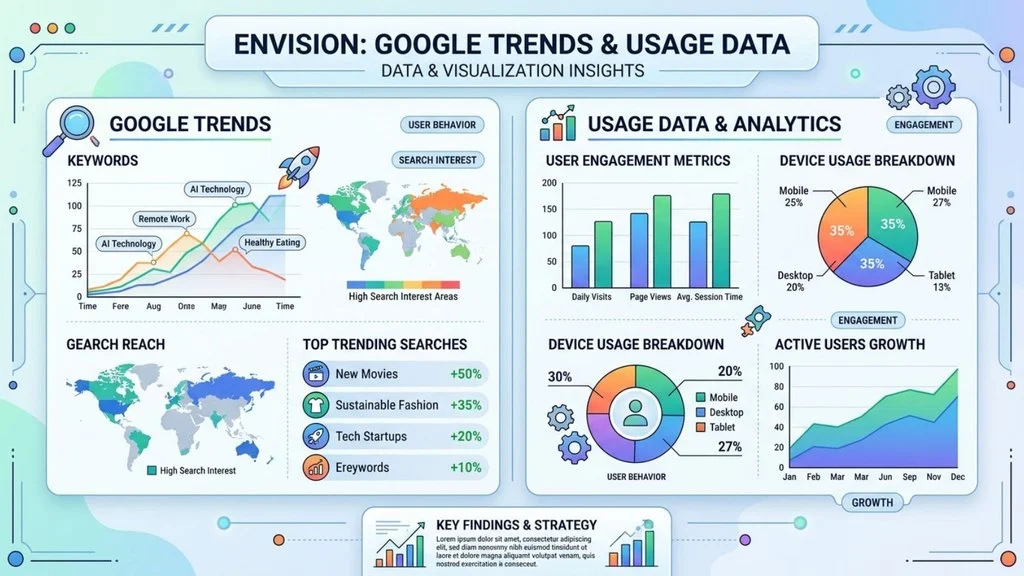
Search patterns tell a clear story.
Search volume: “Envision” is searched far more than “invision” as a word question. Most searches for “invision” lead to the design software, not the English word. When people search “envision or invision,” they are almost always trying to confirm the correct spelling.
By country: The United States shows the highest interest in envision. India, the Philippines, Canada, and Australia follow. In the United Kingdom, searches for envisage stay strong alongside envision, which matches the spelling preference described above.
By context: Envision spikes around business planning seasons, graduation speeches, and product launches. It appears heavily in corporate content, education content, and non-profit writing.
In published text: Large book and news databases show envision rising steadily since the 1960s. Envisage peaked earlier and has held steady in British sources. Invision barely registers except as a brand.
The takeaway: the data supports the rule. Envision is the standard verb. Invision is a typo that spread because of a famous product name.
Comparison Table: Envision vs Invision vs Envisage
| Feature | Envision | Envisage | Invision |
| Is it a real word? | Yes | Yes | No |
| Part of speech | Verb | Verb | — |
| Meaning | To picture in your mind | To imagine or expect | — |
| Common in | US, global | UK, Commonwealth | Nowhere |
| Tone | Visionary, aspirational | Practical, formal | — |
| Past tense | Envisioned | Envisaged | — |
| Present third person | Envisions | Envisages | — |
| Noun form | Vision | Vision | — |
| Safe to use? | ✅ Always | ✅ Yes | ❌ Never |
| Exception | — | — | InVision (software brand) |
Frequently Asked Questions
1. Is invision a word?
No. Invision is not a word in English. The correct spelling is envision. The only time you see “InVision” is as the name of a design software company.
2. Is invision British spelling for envision?
No. There is no British spelling called invision. British writers use envision or, more often, envisage. Both are correct.
3. What is the difference between envision and envisage?
They mean nearly the same thing. Envision is more common in American English and often suggests imagination or a dream. Envisage is more common in British English and often suggests a practical expectation.
4. Why do so many people write invision?
Two reasons. The en and in sounds are almost identical in speech. And the InVision software brand puts that spelling in front of millions of people every day.
5. What is the past tense of envision?
Envisioned. For example: “She envisioned a quieter life.” There is no “invisioned.”
6. Can I use envision in formal writing?
Yes. It is fine in business reports, academic papers, and professional emails. Just avoid repeating it too often in one document.
7. Is envision the same as imagine?
They are close. Imagine is broader and can mean any mental picture, real or not. Envision usually points to something in the future, often something you want or plan.
8. What is InVision the software?
InVision is a digital product design and prototyping platform used by design teams. It is a proper noun with two capital letters, and it has nothing to do with English spelling rules.
Conclusion
The answer is short and firm. Envision is correct. Invision is not a word.
The confusion is easy to understand. The two spellings sound the same. The in- prefix looks familiar because English has many words like input and insight. And the InVision software brand keeps the wrong spelling in view.
But the logic is clear. En- means “to put into.” So envision means to put something into sight in your mind. In- usually means “not,” which is the opposite of what you want to say.
Remember these three points:
- Write envision when you mean to picture something in your mind.
- Use envisage if you write for a British audience and want a more natural fit.
- Reserve InVision for the software brand, with both capital letters.
If you write for the United States or for a global readership, envision is your safest choice. It is clear, modern, and correct everywhere.
Next time you pause at the keyboard, you will know. Type envision and keep writing.

Here’s a concise 2-line author bio suitable for Simifind.com:
James Dashner is an American bestselling author best known for The Maze Runner series and other popular young-adult fiction.
On Simifind.com, he shares clear, engaging insights and helpful content for readers interested in books, writing, and popular literature.