Teammate vs. Team Mate: Meaning, Spelling, and Usage ( for 2026)
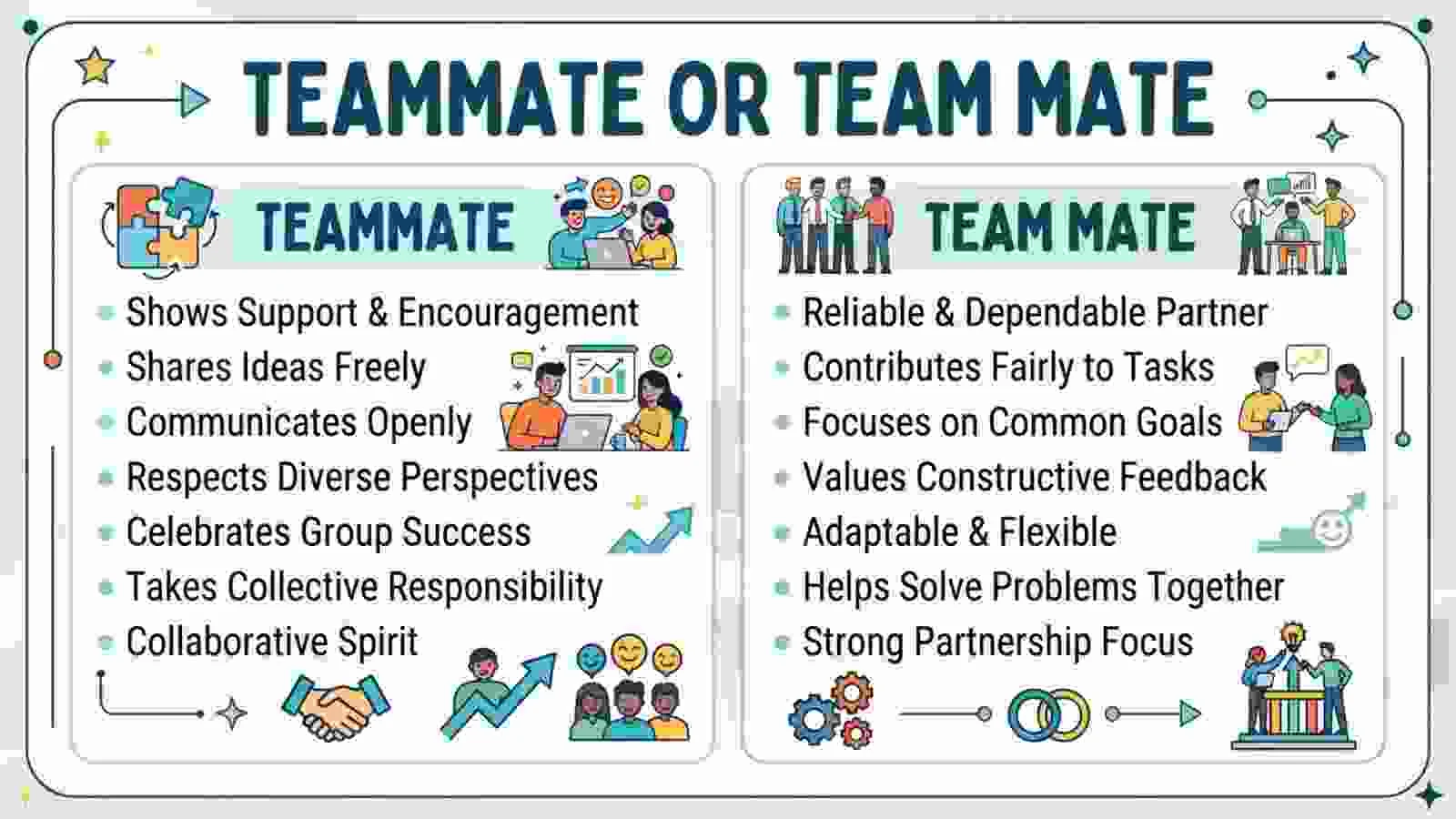
Teammate (one word) is the most common spelling. Team mate (two words) is also correct and means the same thing ...
Read more
Onward vs Onwards: Meaning, Difference, and Usage ( for 2026)
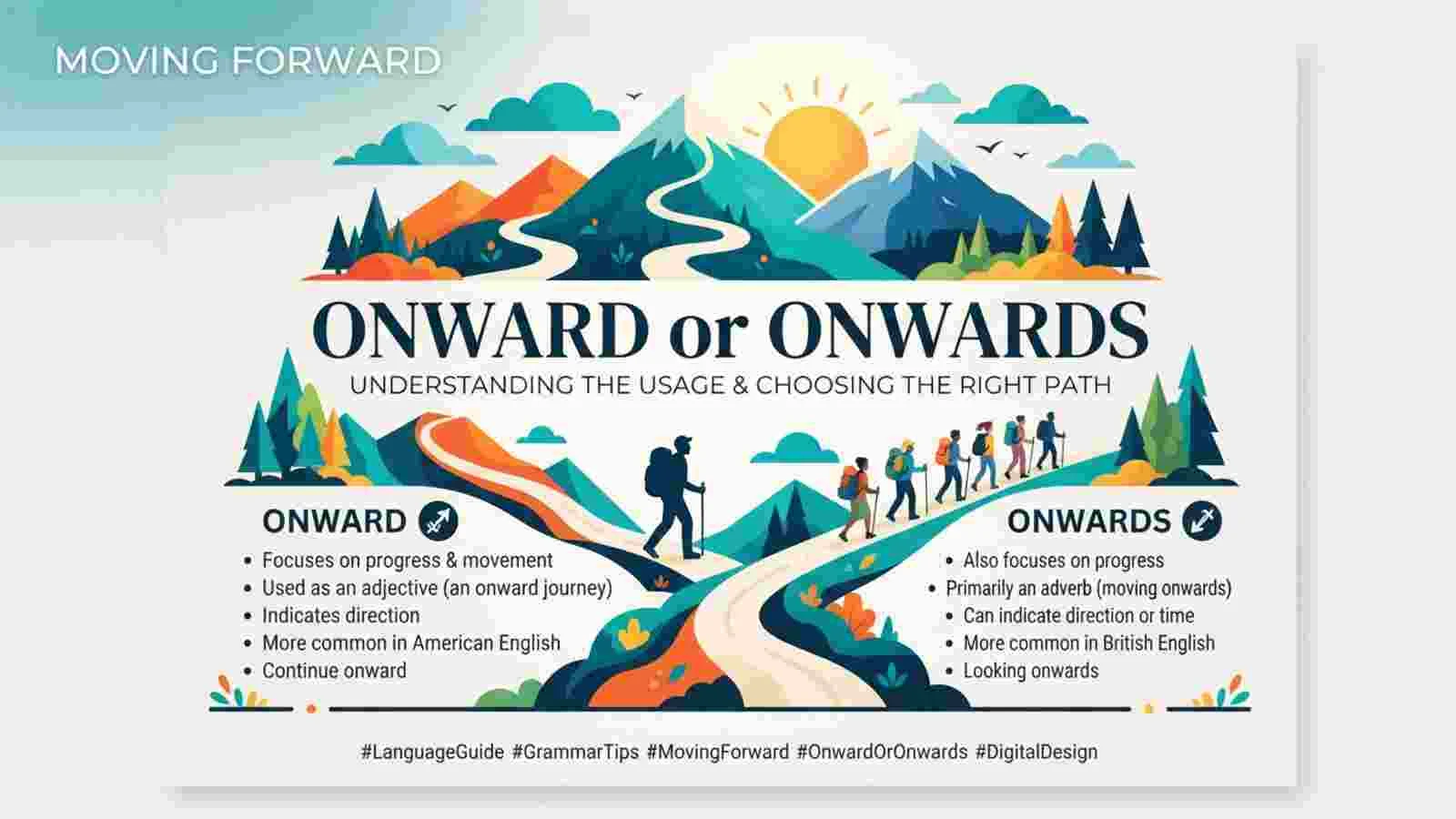
Both onward and onwards are correct and mean the same thing — moving forward or continuing from a point in ...
Read more
Hooves vs Hoofs: Meaning, Spelling, and Usage ( for 2026)
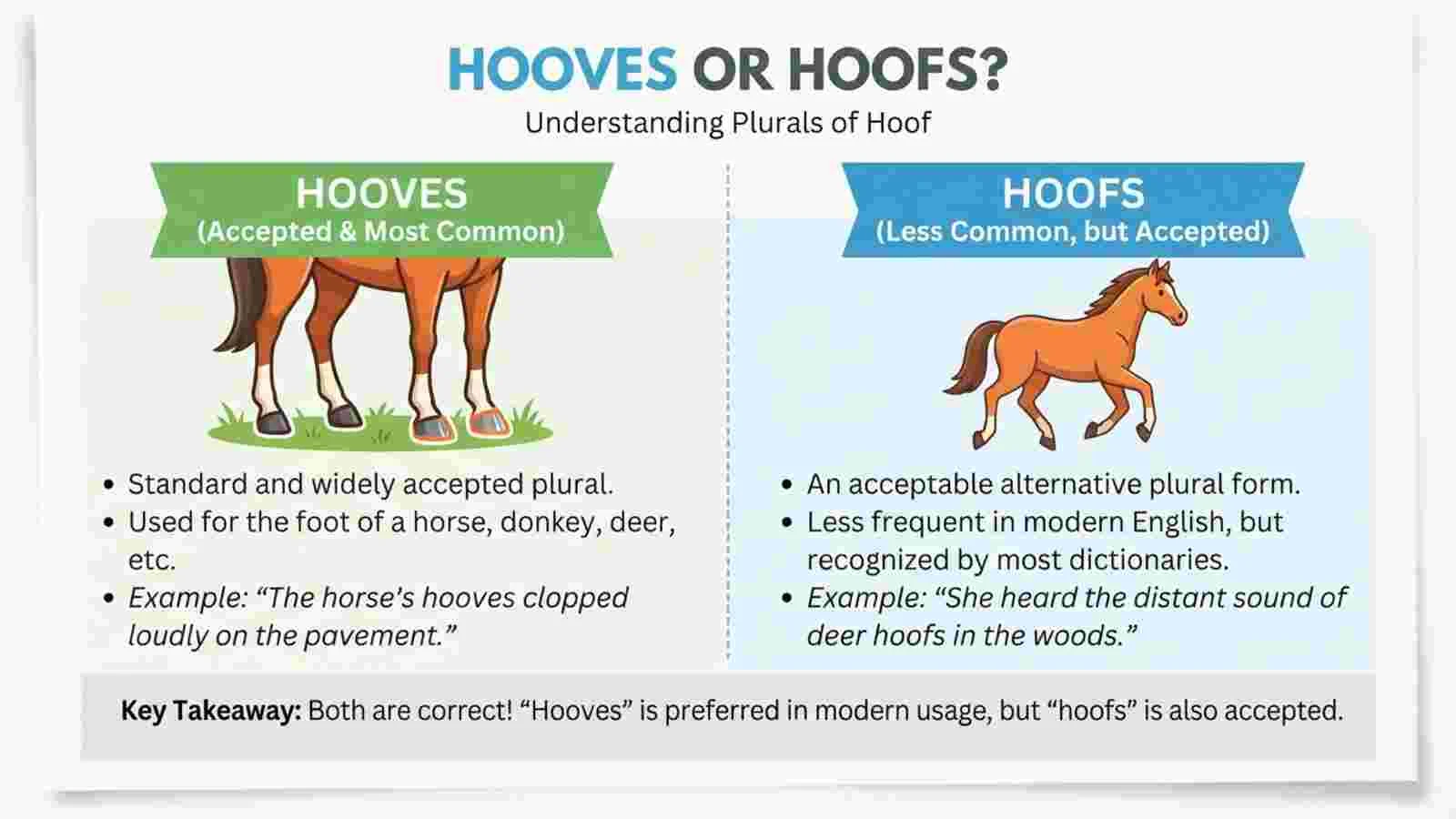
Hooves is correct. Hoofs is also accepted by some dictionaries, but hooves is the standard and far more common plural ...
Read more
Honoured vs Honored: Meaning, Spelling, and Usage ( for 2026)

Both honoured and honored are correct. Honoured is British English, honored is American English. Both mean the same thing — ...
Read more
Moral vs. Morale: Definitions, Differences, and Examples ( for 2026)

Moral and morale are different words. Moral = relating to right and wrong (moral values, a moral lesson; as a ...
Read more
Governor vs. Garner: Meaning, Spelling, and Usage ( for 2026)

Governor is correct for the head of a state or institution (e.g. the governor of a state, a bank governor). ...
Read more
Calendar vs. Calender: Meaning, Spelling, and Usage ( for 2026)

Calendar is correct. Calender is incorrect (it is a surname / proper name, or a machine for pressing cloth — ...
Read more
Ate vs Eaten: Meaning, Grammar Rules, and Examples ( for 2026)
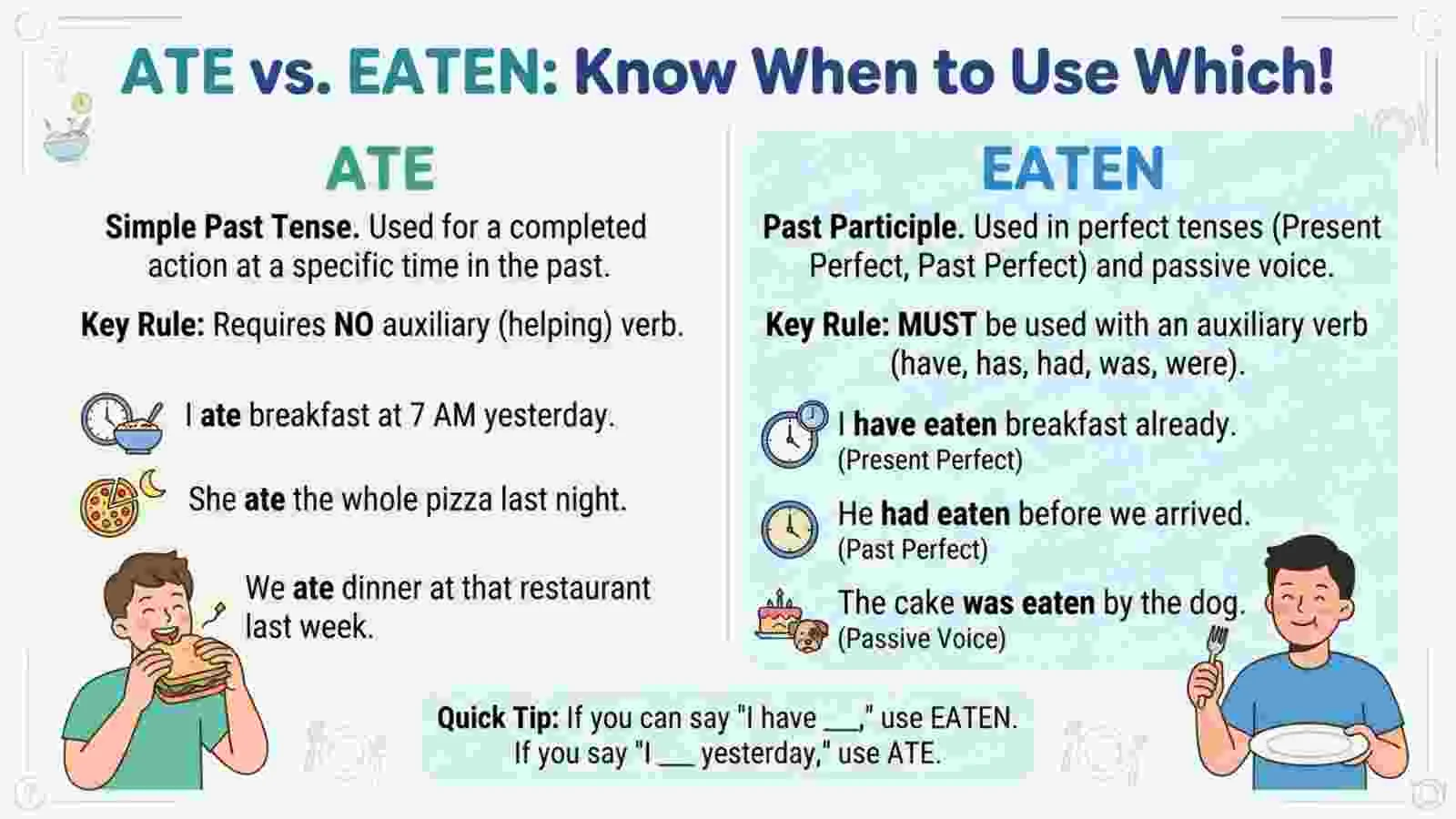
Ate = the simple past tense of eat (I ate breakfast). Eaten = the past participle of eat — used ...
Read more
Jess’s vs Jess’: Meaning, Rules, and Examples ( for 2026)
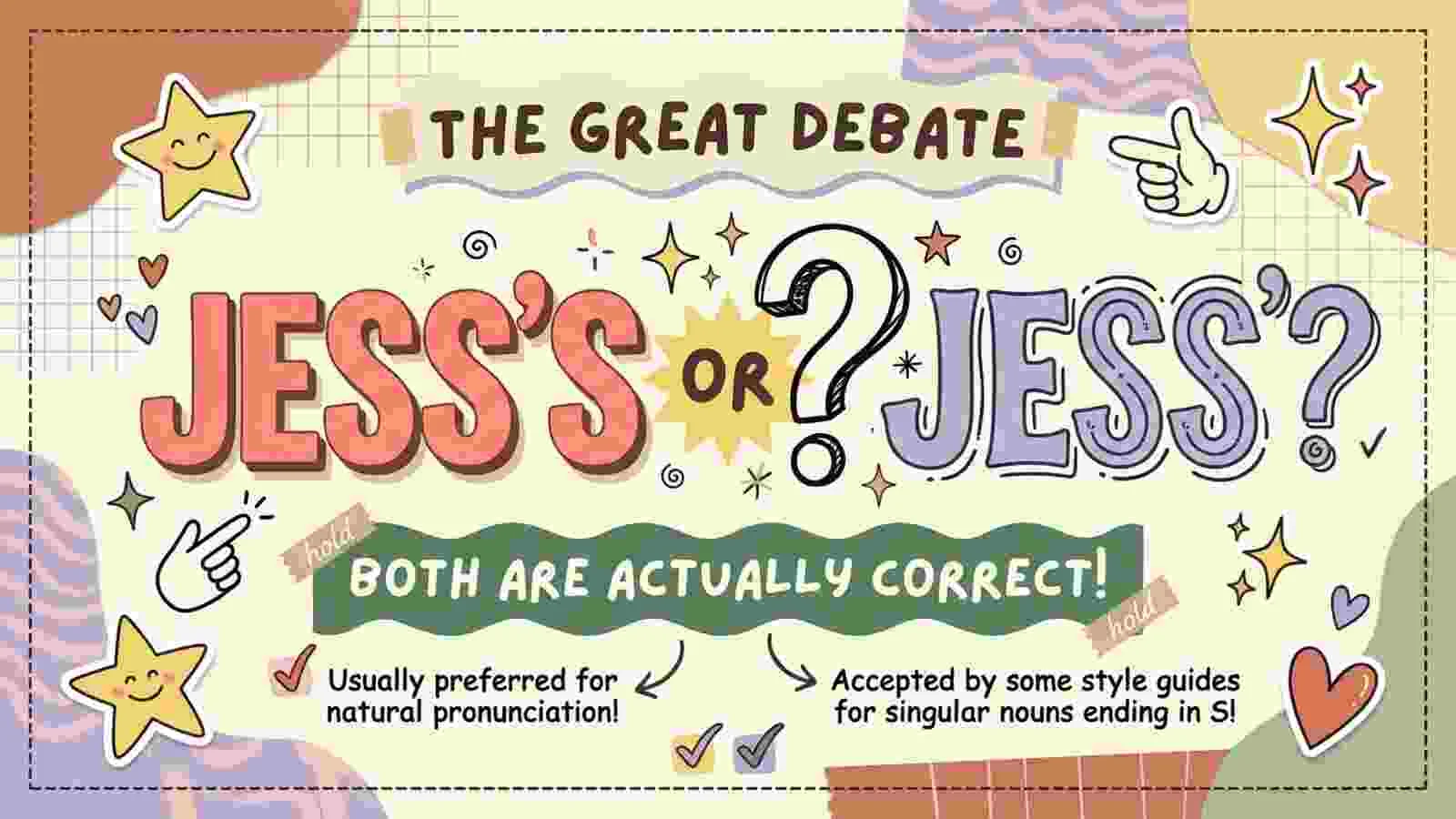
Jess is correct. Jesss is incorrect. Jess is the short form of Jessica/Jesse; the possessive is Jess’s (or Jess’ by ...
Read more







