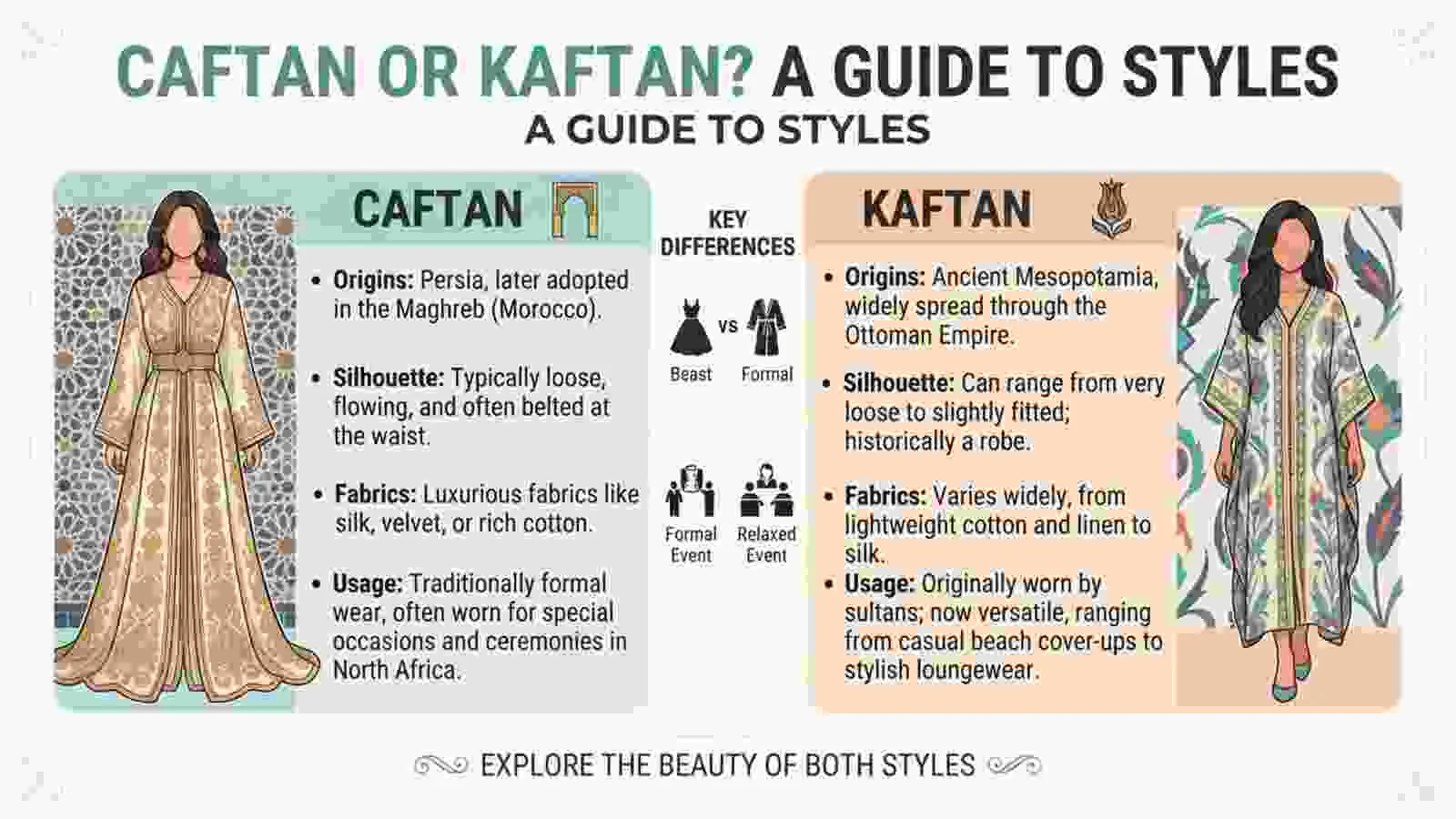
Both caftan and kaftan are correct and mean the same thing — a long, loose robe-like garment. Caftan (with a c) is the more common spelling in English. Kaftan (with a k) is also correct and closer to the original Turkish/Arabic form.
Have you ever searched for caftan or kaftan and wondered why both spellings appear in clothing stores, fashion articles, and dictionaries?
You are not alone. These two words look different, but they refer to the same type of loose, flowing garment.
A caftan or kaftan is a long, loose piece of clothing, often with wide sleeves.
It has been worn in parts of the Middle East, North Africa, Central Asia, and other regions.
Today, the word is also common in Western fashion, where it can describe a loose dress, beach cover-up, or elegant robe.
The answer depends mainly on your audience and regional English. Both caftan and kaftan are accepted English spellings.
American English commonly uses caftan, while British English commonly uses kaftan.
However, the spelling can vary by country, culture, brand, and context.
This guide explains the difference, origin, regional spelling, common mistakes, examples, and practical usage.
Caftan or Kaftan – Quick Answer
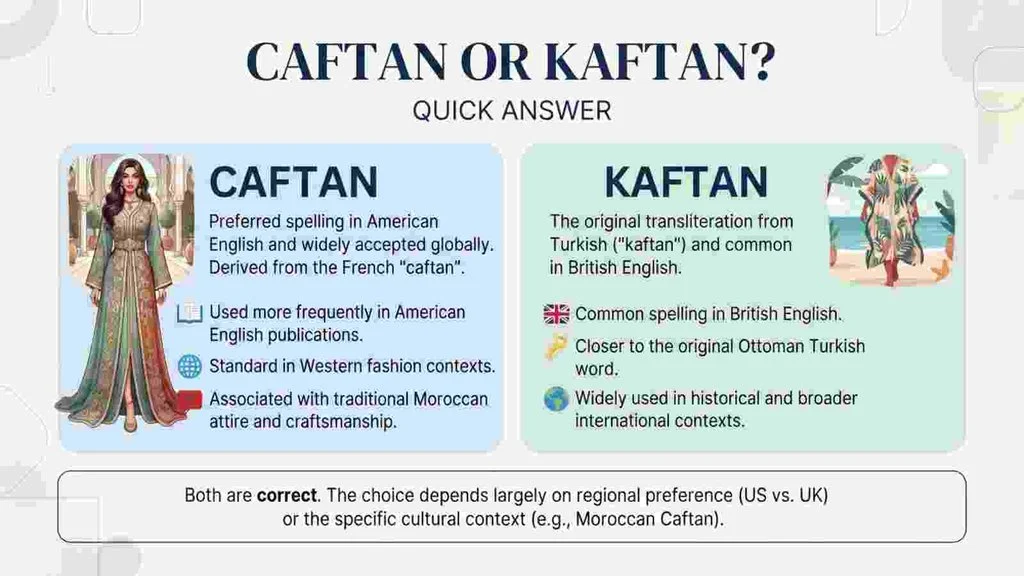
Caftan and kaftan are both correct spellings for the same garment.
The main difference is regional preference:
- Caftan is common in American English.
- Kaftan is common in British English.
- Kaftan is also widely used in cultural and fashion contexts around the world.
- Both words describe a long, loose garment with wide or long sleeves.
For example:
She wore a beautiful caftan to the summer party.
Or:
She wore a beautiful kaftan to the summer party.
Both sentences are correct.
Collins lists caftan and kaftan as alternative forms, while Cambridge and Oxford also recognize both spellings.
Quick Comparison
| Spelling | Correct? | Common Association |
| Caftan | Yes | American English |
| Kaftan | Yes | British English and international use |
| Caftans | Yes | Plural of caftan |
| Kaftans | Yes | Plural of kaftan |
So, there is no spelling mistake when you choose either caftan or kaftan.
The Origin of Caftan or Kaftan
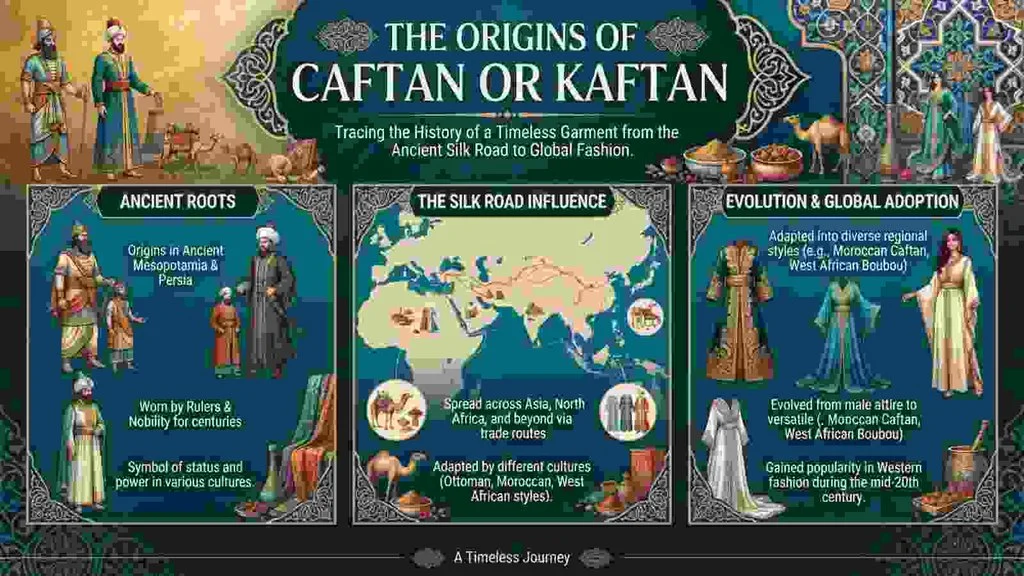
The history of caftan and kaftan goes back many centuries.
The word is connected to the Turkish qaftān, which comes from Persian qaftān. English later received related forms through languages such as Russian and French. Oxford dates the English word to the late 16th century.
The original garment was a long robe or coat-like piece of clothing. It was worn in several regions of the Middle East and surrounding areas.
Over time, the garment developed different styles in different cultures. Some versions were simple and practical. Others were made from rich fabrics and decorated with embroidery.
The spelling difference developed as the word moved between languages and into different forms of English.
The k in kaftan stays closer to forms such as Turkish qaftān. The c in caftan reflects another historical spelling path influenced by European forms. Oxford notes that the English word was partly influenced by French cafetan.
Today, both spellings have become established English words.
Is Kaftan Older Than Caftan?
The underlying word is much older than either modern English spelling.
Kaftan is closer to the Turkish and Persian forms, while caftan developed as another English form. This does not make kaftan more correct in modern English.
Modern dictionaries accept both forms.
British English vs American English Spelling
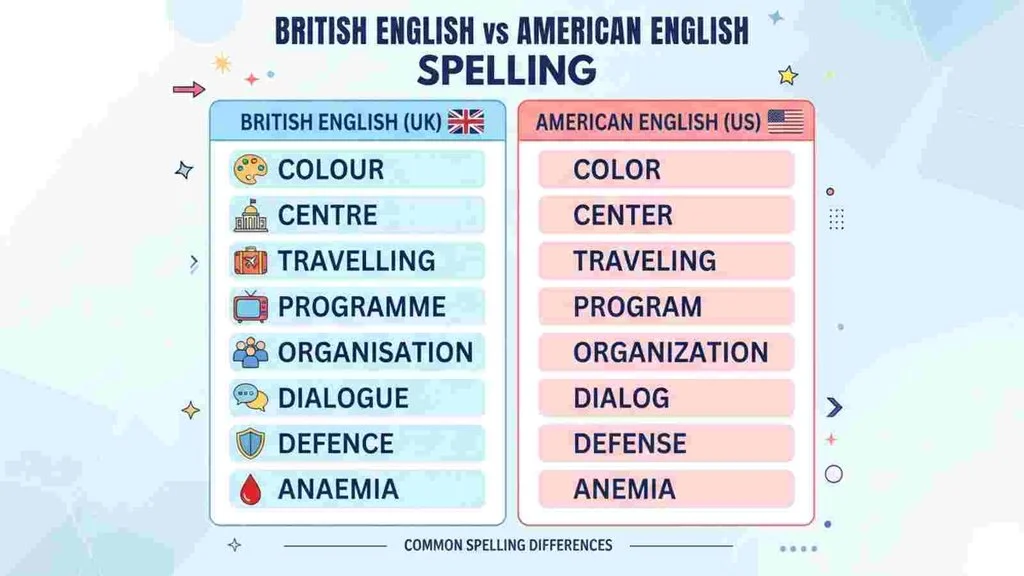
Regional English is one of the biggest reasons people see both spellings.
In British English, kaftan is generally the preferred spelling. Collins gives kaftan as a British English headword and lists caftan as a variant.
In American English, caftan is commonly used. American dictionary sources also recognize kaftan as an alternative spelling.
Cambridge also recognizes both forms. Its dictionary has entries for both kaftan and caftan, showing that the two words refer to the same type of clothing.
British English vs American English Table
| Feature | British English | American English |
| Preferred spelling | Kaftan | Caftan |
| Alternative | Caftan | Kaftan |
| Meaning | Same garment | Same garment |
| Pronunciation | Generally similar | Generally similar |
| Plural | Kaftans | Caftans |
| Formal use | Kaftan is natural | Caftan is natural |
This is a preference difference, not a strict grammar rule.
Which Spelling Should You Use: Caftan or Kaftan?
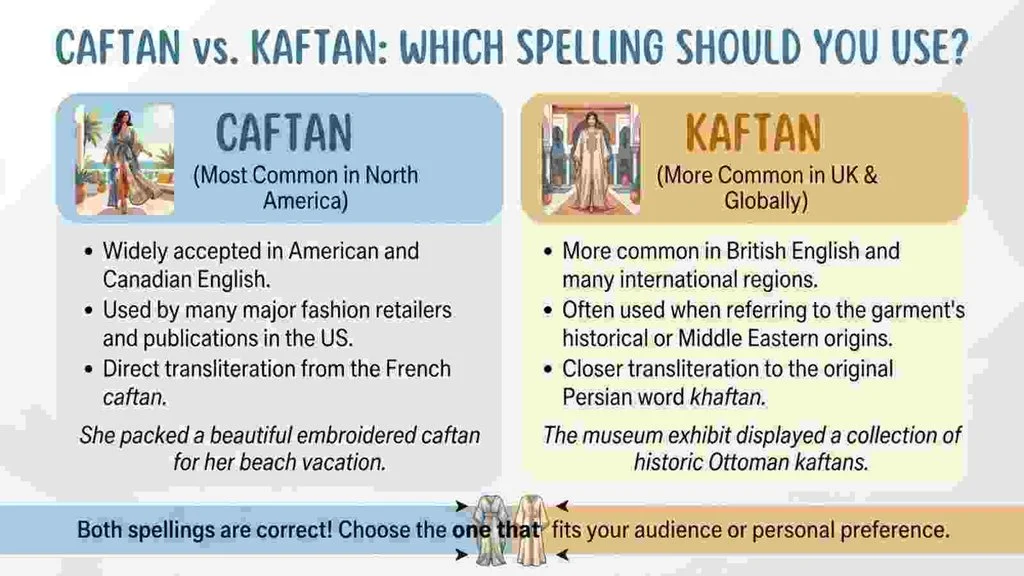
The best spelling depends on who will read your writing.
If You Write for American Readers
Use caftan as your main spelling.
Example:
She bought a silk caftan for her holiday.
This form fits common American English usage.
If You Write for British Readers
Use kaftan.
Example:
She wore a colourful kaftan over her swimsuit.
This spelling is natural in British English.
If You Write for Commonwealth Audiences
Kaftan is often a strong choice for audiences in countries where British English has traditionally influenced spelling. However, usage can vary by country and industry.
For example, fashion brands may choose a spelling based on branding, product names, or local convention.
If You Write for a Global Audience
You can use either spelling, but kaftan may be especially useful when discussing the garment in a cultural or historical context.
For SEO, it is also useful to understand both keywords:
- caftan
- kaftan
- caftan dress
- kaftan dress
- caftan clothing
- kaftan clothing
- traditional kaftan
- traditional caftan
The important point is to avoid treating one spelling as a mistake.
Common Mistakes with Caftan or Kaftan
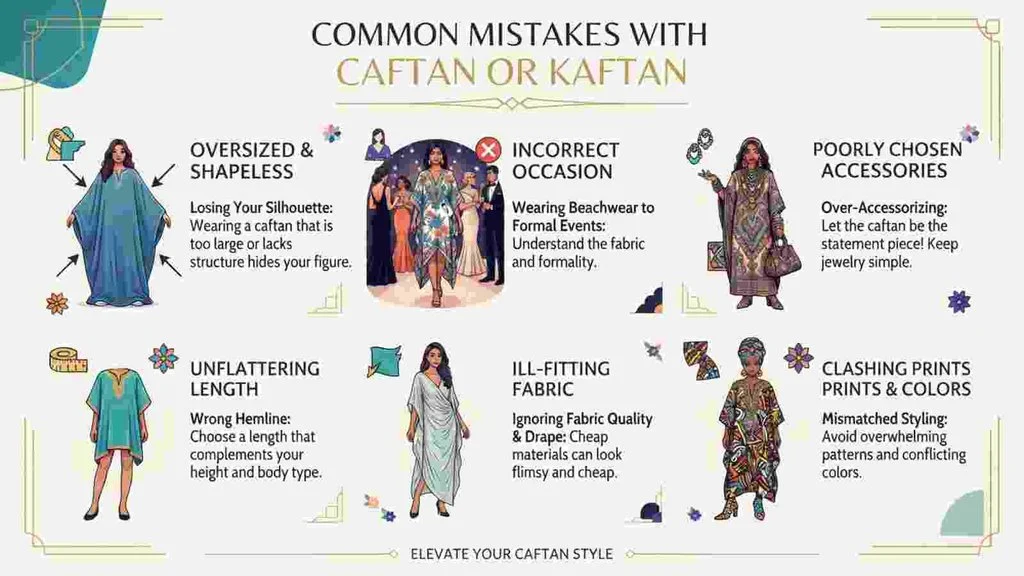
People make several common mistakes when using these words.
1. Thinking One Spelling Is Wrong
Incorrect idea: “Kaftan is wrong because caftan is the correct spelling.”
This is not true.
Correct: Both caftan and kaftan are accepted spellings.
2. Mixing Spellings in Formal Content
Changing between caftan and kaftan randomly can make your writing look inconsistent.
For example:
She bought a caftan. Her new kaftan was blue. The caftan had wide sleeves.
This is understandable, but consistency is usually better.
Choose one spelling for the main text unless there is a reason to mention the alternative.
3. Assuming the Meaning Is Different
The spelling does not normally change the meaning.
Caftan and kaftan refer to the same general type of garment.
4. Forgetting the Plural Form
The normal plural is:
- one caftan
- two caftans
- one kaftan
- two kaftans
Do not add an unnecessary apostrophe.
Wrong: kaftan’s
Correct: kaftans
5. Using an Unnecessary Hyphen
Usually, write:
kaftan dress
not:
kaftan-dress
unless a particular style guide or context requires a hyphen.
Caftan or Kaftan in Everyday Examples
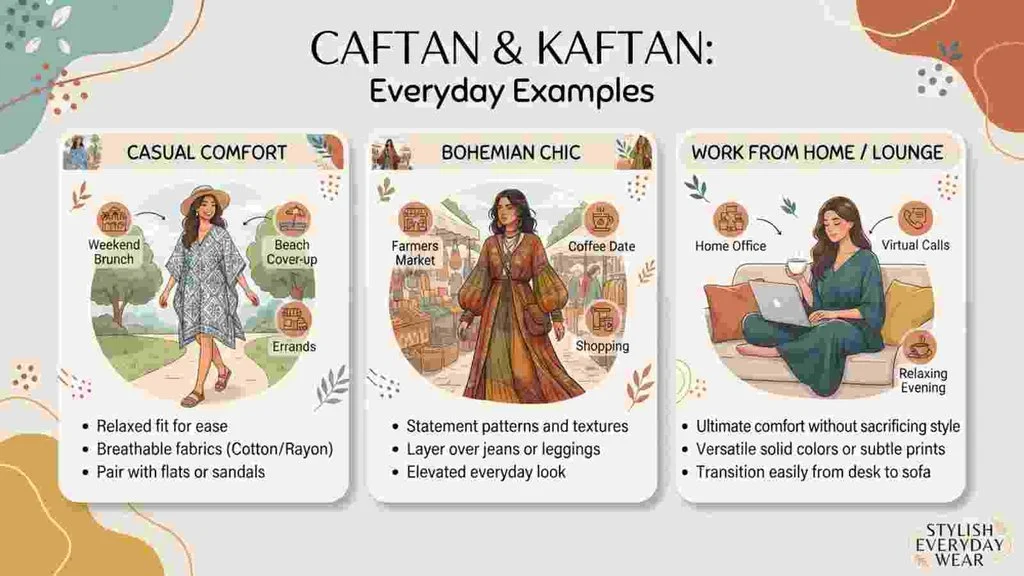
Both spellings work naturally in everyday English.
In Emails
I ordered a new caftan for my summer holiday.
For a British audience:
I ordered a new kaftan for my summer holiday.
In News Writing
The designer presented a collection featuring traditional kaftans.
Or:
The designer presented a collection featuring traditional caftans.
In Social Media
Loving my new beach kaftan! ☀️
Or:
My new silk caftan is perfect for summer.
In Formal Writing
The kaftan has a long history in Middle Eastern and Central Asian clothing traditions.
In Fashion Writing
This lightweight caftan is ideal for warm weather.
In Shopping Content
Choose a loose kaftan dress for a comfortable summer look.
In Historical Writing
The kaftan was traditionally worn as a long robe or coat-like garment in parts of the Middle East.
Caftan or Kaftan – Google Trends & Usage Data
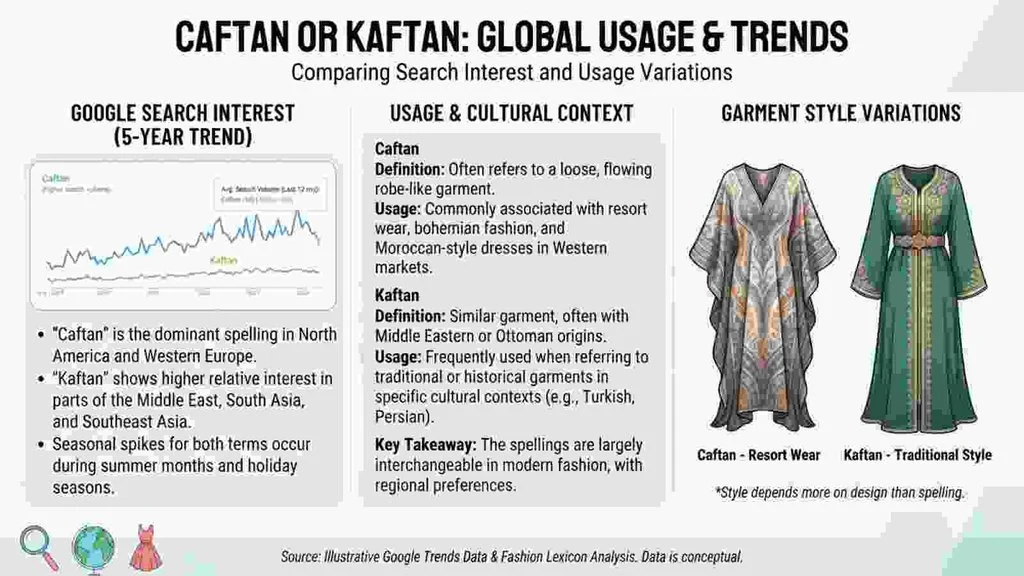
Search interest can vary because people in different regions use different spellings.
Google Trends allows users to compare search terms by country and region. It also notes that spelling variations can affect how search data is interpreted.
For SEO, this means you should not assume that the lower-volume spelling is incorrect. A spelling may be less common globally but still be important for a particular audience.
General Regional Pattern
A useful broad pattern is:
| Region / Audience | Likely Preference |
| United States | Caftan |
| United Kingdom | Kaftan |
| Canada | Both, with caftan commonly seen |
| Australia | Kaftan commonly used |
| India | Kaftan commonly used |
| International fashion | Both |
| Historical/cultural writing | Kaftan often appears |
These are general usage tendencies rather than absolute rules. Dictionary sources confirm that both spellings are established.
Tip for Caftan vs Kaftan
If your website targets a global audience, you can naturally include both terms.
For example:
A kaftan, also spelled caftan, is a loose garment with wide sleeves.
This approach answers the reader’s question while capturing both common search forms.
Do not repeat both keywords in every sentence. Natural writing is more useful than keyword stuffing.
Caftan vs Kaftan: Comparison Table
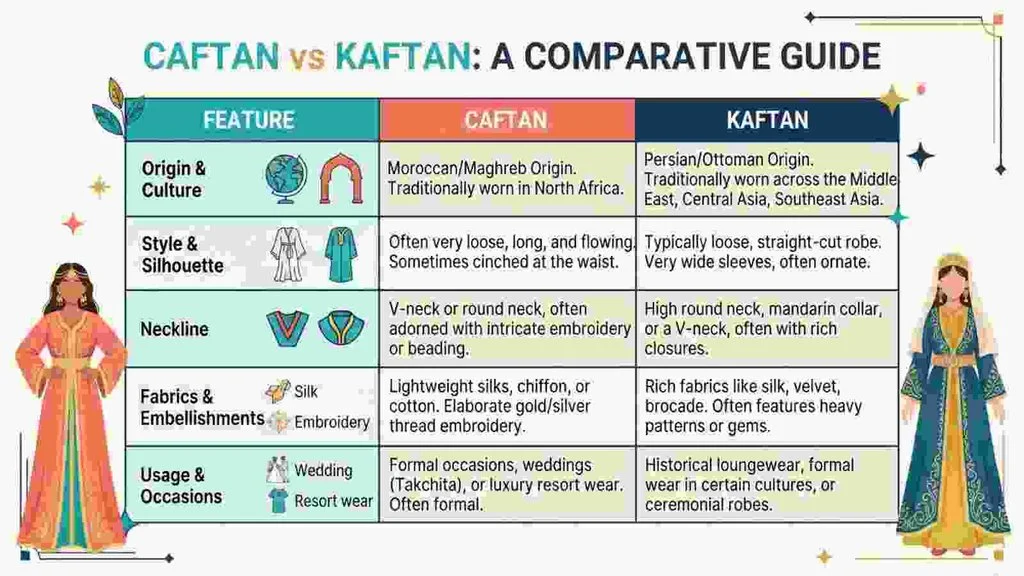
| Point | Caftan | Kaftan |
| Correct spelling | Yes | Yes |
| Same garment | Yes | Yes |
| American English | Common | Alternative |
| British English | Variant | Common |
| Historical origin | Related to qaftān | Related to qaftān |
| Plural | Caftans | Kaftans |
| Used in fashion | Yes | Yes |
| Used in cultural writing | Yes | Yes |
| Suitable for formal writing | Yes | Yes |
| SEO keyword | Yes | Yes |
FAQs About Caftan or Kaftan
1. Is it caftan or kaftan?
Both caftan and kaftan are correct spellings. The preferred form depends on regional English and context.
2. Is caftan the American spelling?
Yes. Caftan is commonly used in American English, while kaftan is also accepted as an alternative.
3. Is kaftan the British spelling?
Yes. Kaftan is generally the preferred British English spelling, while caftan is recognized as a variant.
4. Do caftan and kaftan mean the same thing?
Yes. They normally refer to the same type of long, loose garment with wide or long sleeves.
5. Which spelling is closer to the original word?
Kaftan is closer to the Turkish form qaftān, which is connected to Persian qaftān. English also developed the form caftan through other linguistic influences.
6. What is the plural of caftan?
The plural is caftans.
Example:
The shop sells colorful caftans.
7. What is the plural of kaftan?
The plural is kaftans.
Example:
The collection includes traditional kaftans.
8. Should I use caftan or kaftan for SEO?
Use the spelling that matches your target audience. If you target a global audience, mention both naturally because both are established search terms.
9. What does caftan mean?
Caftan means a long, loose robe-like garment with wide or long sleeves, traditionally worn in the Middle East, North Africa and Central Asia, and now also common in Western fashion.
10. What is a kaftan?
A kaftan is the same garment as a caftan — a long, loose robe-like garment with wide or long sleeves. Kaftan (with a k) is the spelling closer to the original Turkish/Arabic form and is the usual spelling in British English.
11. How do you spell caftan?
C-A-F-T-A-N — caftan, with a c. The alternative spelling kaftan is spelled K-A-F-T-A-N, with a k. Both spellings are correct.
Conclusion
The choice between caftan and kaftan is much simpler than it first appears. Both are correct spellings for the same type of loose, flowing garment.
The main difference is regional usage. American English commonly favors caftan, while British English commonly favors kaftan. However, both forms are recognized in major English dictionaries, so neither should be treated as a spelling error.
If you are writing for an American audience, caftan is a natural choice. For British readers, kaftan is usually the better choice. For global content, either spelling works, and mentioning both can help readers understand the variation.
The most important rule is consistency. Choose the form that fits your audience and use it naturally throughout your article.
Whether you call it a caftan or a kaftan, the meaning remains the same. The garment has a long history, and both spellings are now a normal part of English usage.
Continue Reading:
- Peaked or Piqued: Definitions, Examples, and Usage ( for 2026)
- Macaroon vs Macaron: Meaning, Spelling, and Taste ( for 2026)
- Boss’s vs Boss’: Difference, Rules, and Examples ( for 2026)

Here’s a concise 2-line author bio suitable for Simifind.com:
James Dashner is an American bestselling author best known for The Maze Runner series and other popular young-adult fiction.
On Simifind.com, he shares clear, engaging insights and helpful content for readers interested in books, writing, and popular literature.








3 thoughts on “Caftan or Kaftan: Meaning, Spelling, and Usage ( for 2026)”