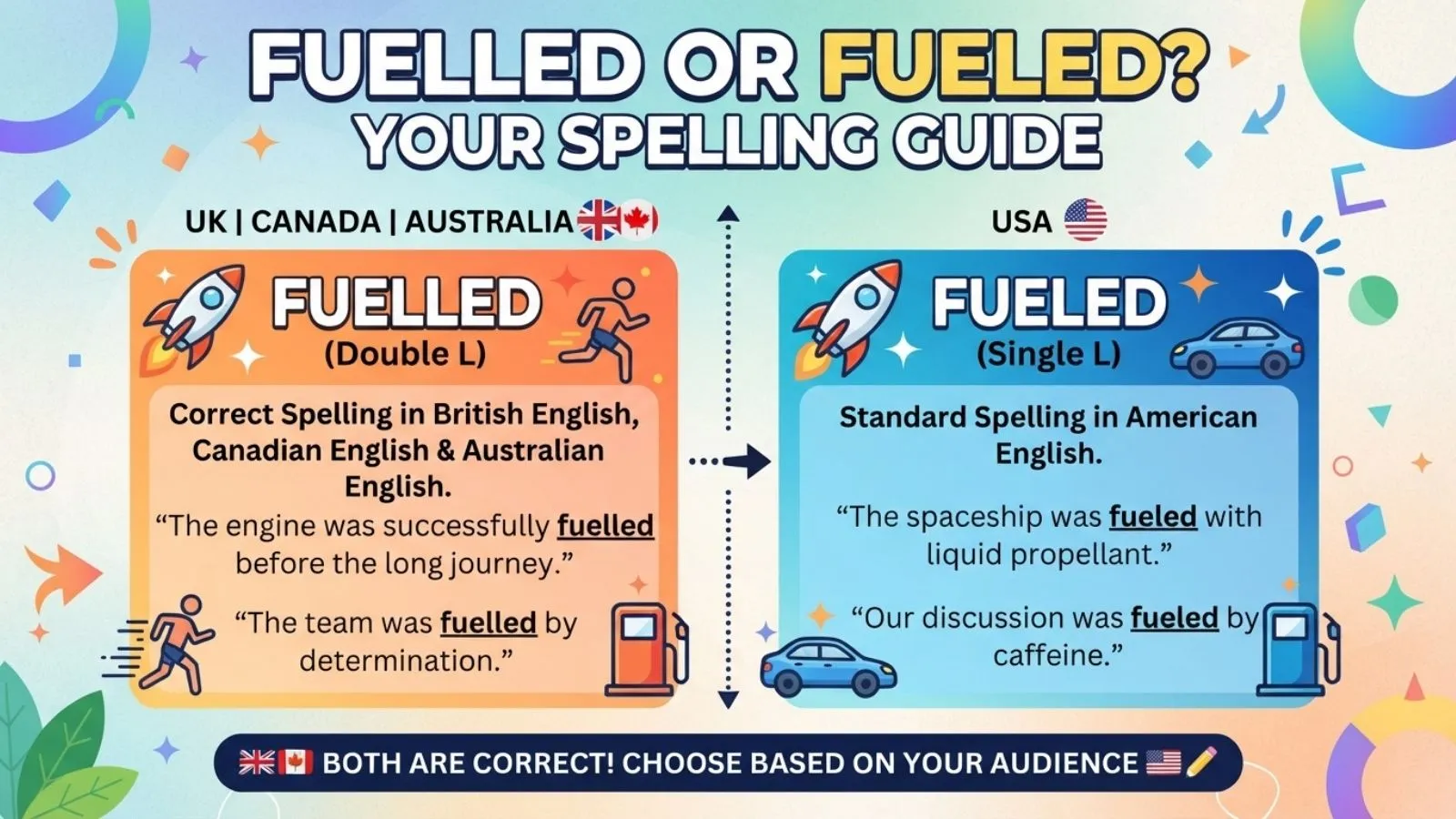
Have you ever wondered why the same word can look different depending on where you live?
“Fuelled” or “Fueled” is a perfect example of this spelling difference.
Hey, I want to share something that happened to me recently about Fuelled or Fueled.
I was chatting with a friend when I suddenly saw this term pop up, and honestly, I had no clue which spelling was correct at first.
I kept wondering, “Am I missing something here?” It was a bit confusing, and I didn’t want to respond the wrong way.
So, I decided to look into Fuelled or Fueled and figure out its meaning, spelling, and context.
After understanding it, I realized that both forms are correct, but they are used differently depending on the variety of English.
“Fuelled” is commonly used in British English, while “Fueled” is preferred in American English.
Knowing this simple difference can help you write clearly and avoid awkward spelling mistakes in conversations, schoolwork, or social media posts. Once I understood the rule, I felt much more confident using Fuelled or Fueled correctly.
Fuelled or Fueled – Quick Answer
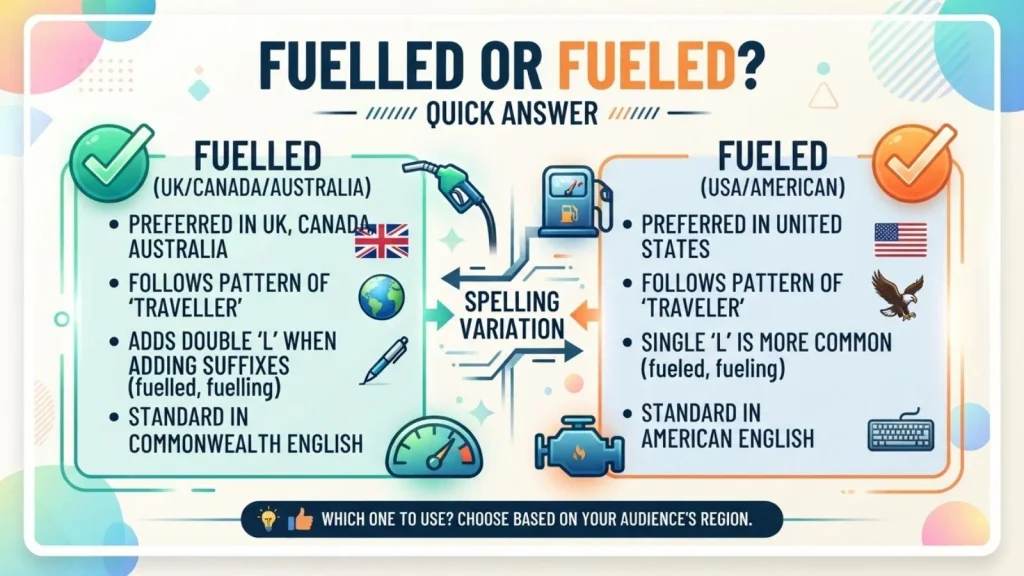
Both spellings are correct.
- Fuelled (two L’s) is British English. Used in the UK, Australia, Canada, and most Commonwealth countries.
- Fueled (one L) is American English. Used in the United States.
Example:
- UK: “The car was fuelled by diesel.”
- US: “The car was fueled by diesel.”
Same meaning. Same pronunciation. Different spelling convention.
What Does Fueled Mean?
Fueled is the past tense and past participle of the verb fuel, meaning to provide energy, power, or support to something. It can refer to adding fuel to a vehicle or fire, but it is also commonly used in a figurative sense. For example, “Her determination fueled her success” means her determination gave her the motivation and energy to succeed.
The spelling fueled is especially common in American English, while fuelled is the preferred spelling in British English, Australian English, and Canadian English. Both forms have the same meaning.
Examples:
- The car was fueled before the trip.
- His passion fueled his ambition.
- The fire was fueled by dry wood.
- Their success fueled their confidence.
In simple terms, fueled means powered, supplied with energy, or encouraged to grow or continue.
The Origin of Fuelled or Fueled
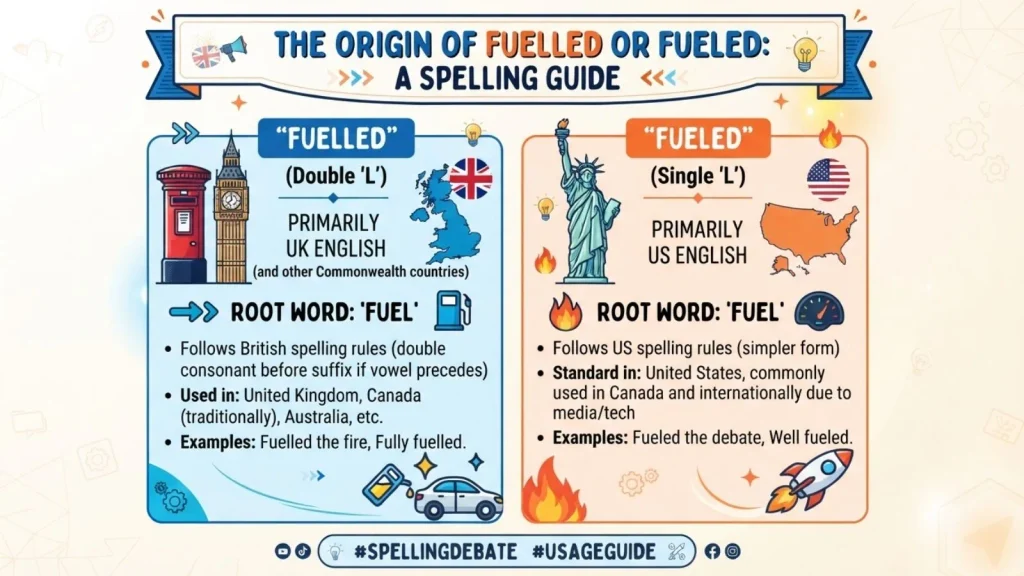
The root word “fuel” comes from Old French fouaille, which traces back to Latin focus, meaning “hearth” or “fireplace.” English speakers adopted it in the 13th century to describe material burned for heat.
The spelling split happened much later. It comes from a general rule in English grammar about doubling the final consonant before adding “-ed” or “-ing.”
In the 1800s, British lexicographer Noah Webster worked to simplify American English spelling. He dropped extra letters that he saw as unnecessary. Words like “colour” became “color,” “travelled” became “traveled,” and “fuelled” became “fueled.”
This is why many words ending in a single vowel plus “L” split into two spellings: one for British English, one for American English. “Fuelled” and “fueled” are part of this larger pattern, not an isolated case.
Sentence With “Fuelled”
“Fuelled” is the British English spelling of the past tense and past participle of “fuel.” It means to provide energy, motivation, or a substance needed to keep something going.
Examples:
- The car was fuelled before the long journey.
- Her passion fuelled her desire to succeed.
- The team was fuelled by hope and determination.
- The fire was fuelled by dry wood.
- His faith fuelled his strength during difficult times.
In American English, “fueled” is more common, while “fuelled” is preferred in British English and many other varieties of English.
British English vs American English Spelling
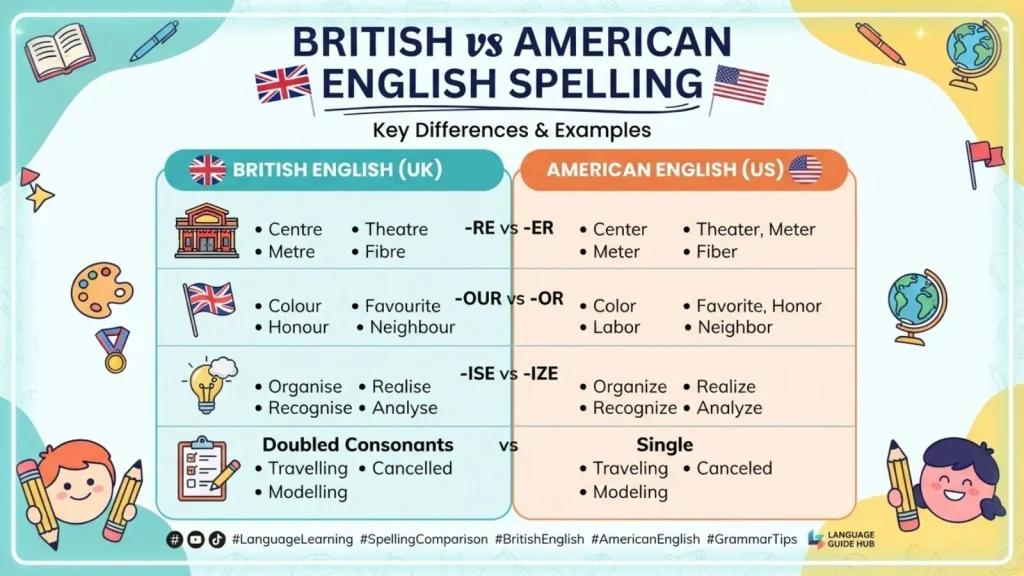
The rule centers on consonant doubling. British English usually doubles the final “L” before adding a suffix, even when the stress falls on the first syllable. American English typically does not.
| Rule | British English | American English |
| Doubling final L | Fuelled | Fueled |
| Similar pattern | Travelled | Traveled |
| Similar pattern | Cancelled | Canceled |
| Similar pattern | Modelled | Modeled |
| Similar pattern | Labelled | Labeled |
The pattern is consistent. If a British spelling doubles the “L,” the American version almost always uses a single “L.”
Which Spelling Should You Use Fuelled or Fueled?
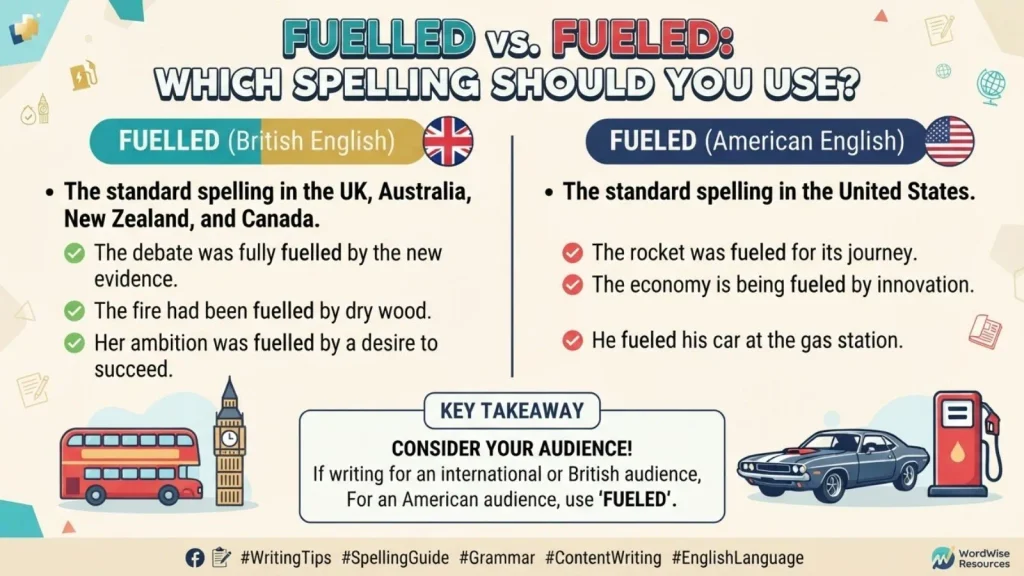
Your audience decides your spelling. Follow this simple guide:
- Writing for a US audience (US companies, US publications, US readers): Use fueled.
- Writing for UK, Australian, or Commonwealth audiences: Use fuelled.
- Writing for a global or mixed audience: Pick one spelling and stay consistent throughout the entire piece. Consistency matters more than which version you choose.
- Writing for school, work, or a client: Check their style guide first. Many companies specify American or British English regardless of where you live.
If you are unsure, “fueled” is the more common spelling worldwide due to the size and reach of American media, tech companies, and search platforms.
Fueled or Fuelled in Australian English?
In Australian English, “fuelled” is the preferred spelling, following British spelling conventions. “Fueled” is the American English form.
Example:
- Australian English: The car was fuelled before the trip.
- American English: The car was fueled before the trip.
For an Australian-focused SEO article, use “fuelled” as your primary spelling.
Common Mistakes with Fuelled or Fueled
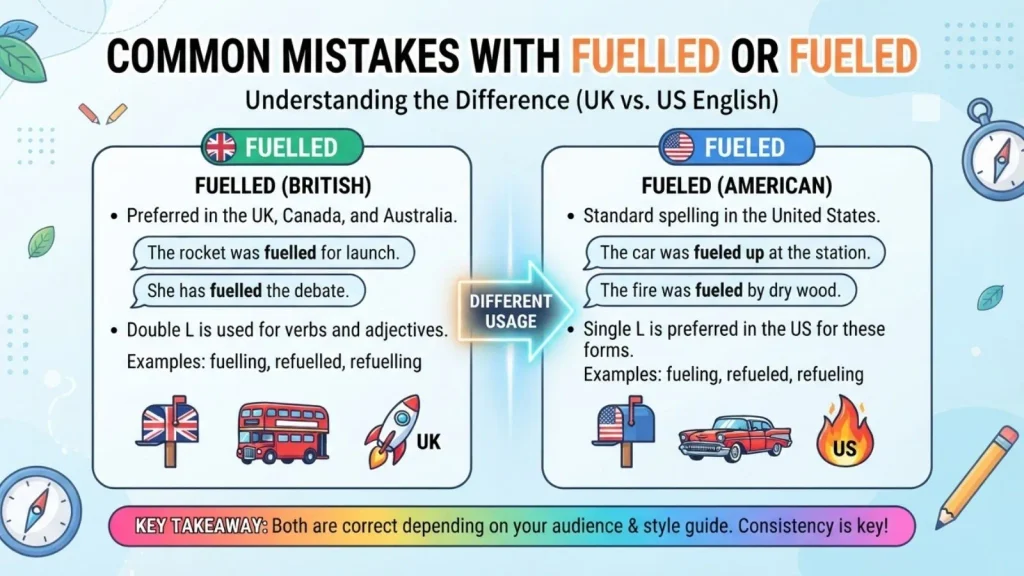
- Mixing spellings in one document.Using “fuelled” in paragraph one and “fueled” in paragraph three looks careless. Pick one and keep it.
- Assuming one spelling is “more correct.” Neither spelling is grammatically superior. This is a regional difference, not an error.
- Misspelling with three L’s. “Fuellled” is never correct in either English variant.
- Confusing it with “fuel” as a noun. “Fuel” stays the same in both dialects. Only the past tense and “-ing” forms (fueled/fuelled, fueling/fuelling) change.
- Ignoring brand or house style. Some publications require American spelling even for UK writers, and vice versa. Always check first.
Fuelled or Fueled in Everyday Examples
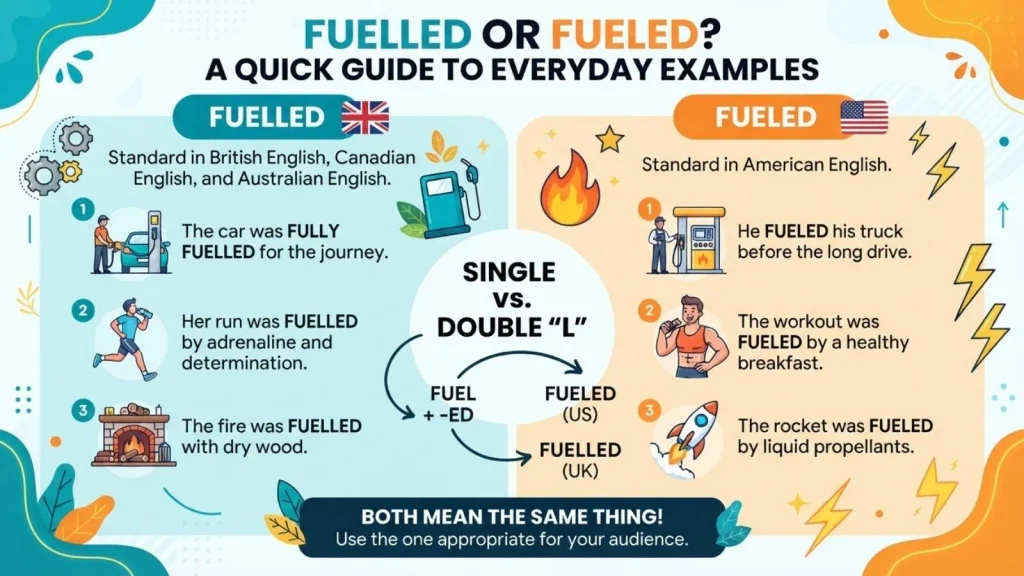
In emails: “Our Q3 growth was largely fueled by new customer signups.” (US style)
UK news headlines: “Inflation fuelled by rising energy costs, report finds.”
Social media posts: “Feeling fueled and ready for Monday 💪” (US style) “Feeling fuelled and ready for Monday 💪” (UK style)
Formal writing: “The economic recovery was fueled by government stimulus programs.” (US academic paper) “The economic recovery was fuelled by government stimulus programmes.” (UK academic paper)
Notice how “programs” and “programmes” follow the same regional pattern. Once you know one spelling rule, you start to notice this pattern everywhere in British vs. American writing.
Fuelled or Fueled – Google Trends & Usage Data
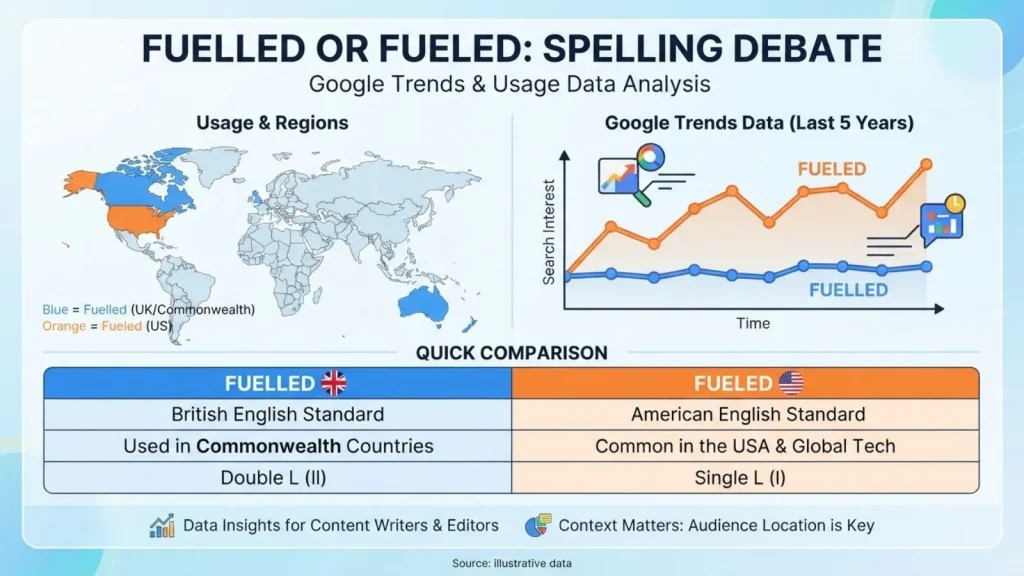
Search interest for both terms exists worldwide, but usage splits clearly by region.
- United States, Canada (English-speaking business context), and most of Asia favor “fueled” due to American media influence and US-based content dominance online.
- United Kingdom, Ireland, Australia, and New Zealand show consistently higher use of “fuelled” in news, government, and educational writing.
- Global content platforms and international brands often default to “fueled” simply because American English has a larger share of English-language internet content overall.
- Searches for “fuelled or fueled” and “fueled vs fuelled” spike among students, content writers, editors, and non-native English speakers trying to confirm correct usage for a specific audience.
This confirms the word is not misspelled by most people. They are simply choosing between two valid regional standards.
Comparison Table: Keyword Variations
| Form | British English | American English |
| Base word | Fuel | Fuel |
| Past tense | Fuelled | Fueled |
| Present participle | Fuelling | Fueling |
| Noun (unchanged) | Fuel | Fuel |
| Adjective use | Fuelled by anger | Fueled by anger |
FAQs
1. Is “fuelled” or “fueled” correct?
Both are correct. “Fuelled” is British English. “Fueled” is American English.
2. Which spelling does Google prefer?
Google does not prefer one spelling. Search results show both, ranked by relevance to the searcher’s region and query.
3. Can I use both spellings in the same document?
No. Pick one spelling and use it consistently throughout your writing.
4. Is “fuelling” also correct, or only “fueling”?
Both are correct. “Fuelling” is British English, and “fueling” is American English, following the same doubling rule.
5. Which spelling should I use for a US-based company blog?
Use “fueled.” American companies and publications almost always follow American English conventions.
6. Why does British English double the “L” but American English doesn’t?
It comes from 19th-century spelling reforms by Noah Webster, who simplified many American English words by removing doubled consonants.
7. Does Microsoft Word or Grammarly flag one spelling as wrong?
Only if your document’s language setting doesn’t match the spelling. Set your document to “English (UK)” or “English (US)” to avoid false spelling flags.
Conclusion
“Fuelled” and “fueled” are both correct spellings of the same word. The only real difference is regional: “fuelled” belongs to British English, while “fueled” belongs to American English.
This split comes from 19th-century spelling reforms that simplified many American words by dropping doubled consonants.
The key rule to remember is consistency. Whichever spelling you choose, use it throughout your entire document, website, or social media post. Mixing both versions looks unprofessional and can confuse readers.
If you are writing for a US audience, use “fueled.” If you are writing for UK, Australian, or Commonwealth readers, use “fuelled.” For global content, either works, as long as you stay consistent and check your brand or publication’s style guide when one exists.
Understanding this simple British vs. American English pattern also helps with dozens of similar words, like “travelled/traveled” and “cancelled/canceled.” Once you know the rule, you will never have to guess again.

Mary Roach is an American science writer and bestselling author known for making unusual and complex scientific topics engaging, accessible, and humorous. Her books include Stiff, Packing for Mars, Gulp, and Fuzz.
Author at Simifind.com, sharing clear, informative content designed to help readers understand interesting topics and everyday questions.