Hey, I want to share something that happened to me recently about cerebus or cerberus.
Chatting with a friend when I suddenly saw this term pop up, and honestly, I had no clue what it meant at first.
I kept wondering, “Am I missing something?” It was a bit confusing, and I didn’t want to respond the wrong way.
So, I decided to look into cerebus or cerberus and figure out its meaning, spelling, and context.
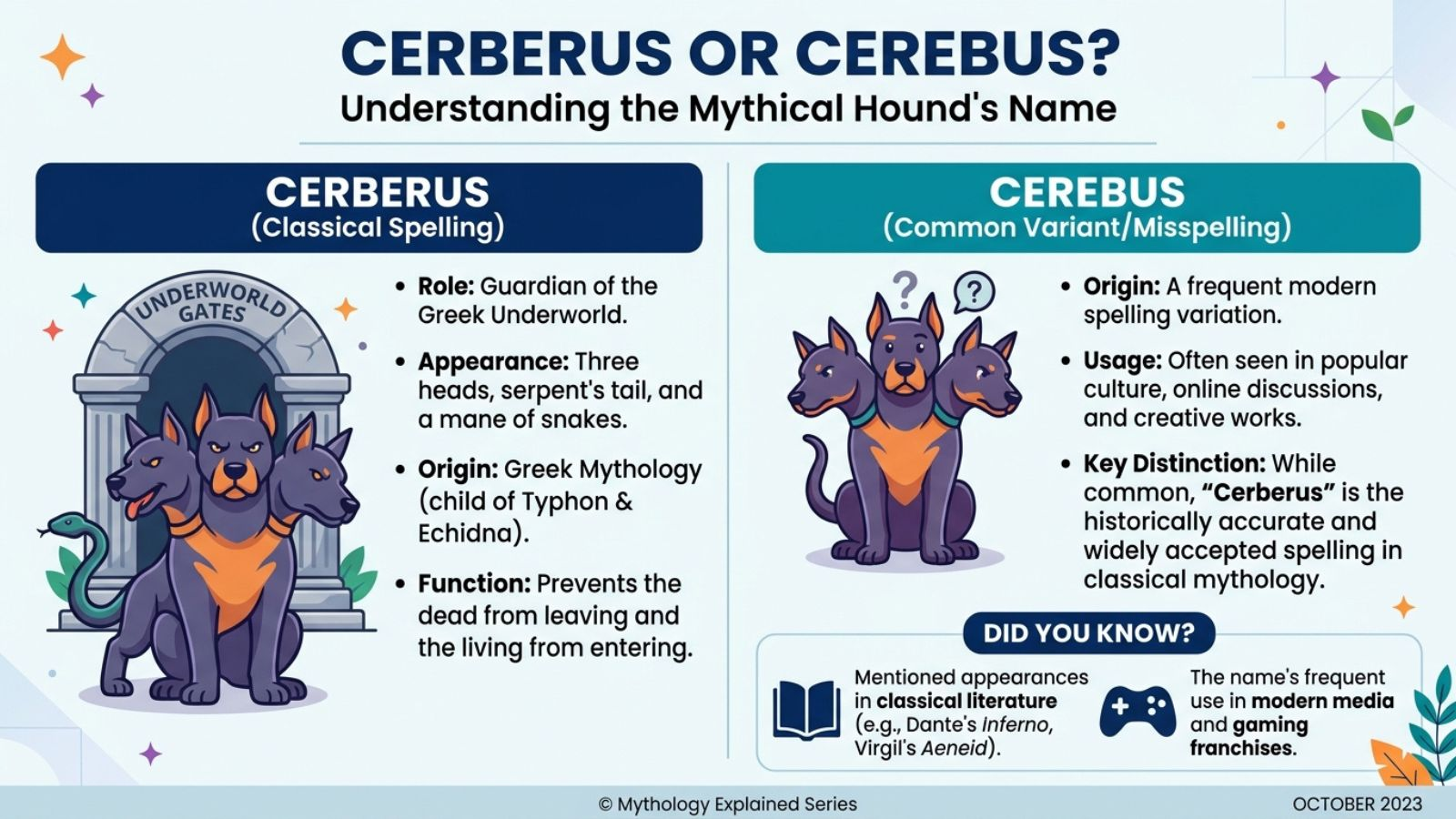
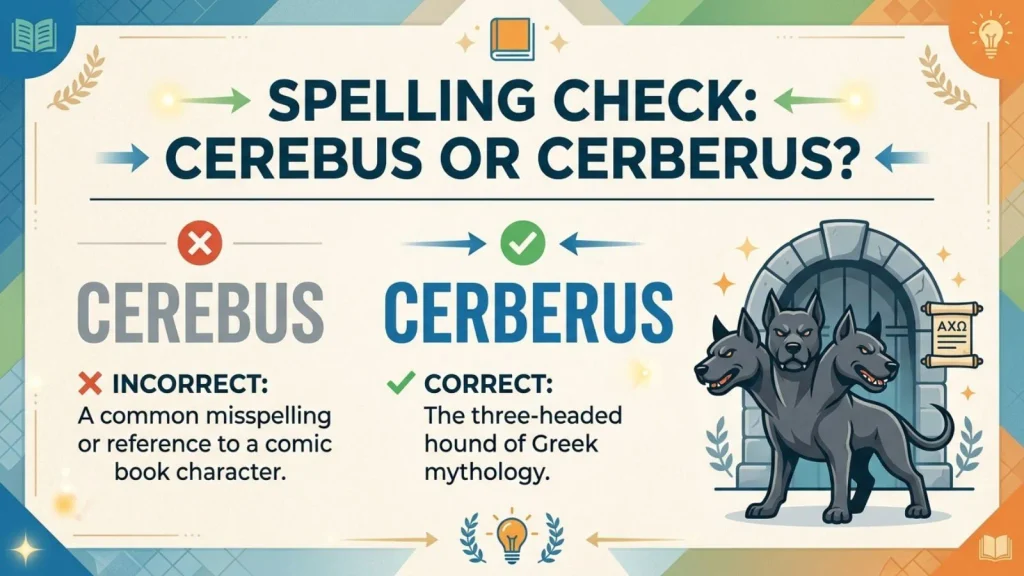
After learning about it, I realized that Cerberus is the correct spelling of the famous three-headed dog from Greek mythology, while “Cerebus” is a common misspelling.
Knowing the difference helped me understand the term better and avoid confusion in conversations, articles, and social media.
Now, whenever I see cerebus or cerberus, I know exactly which spelling is correct and what this fascinating mythological name refers to.
Cerberus or Cerebus – Quick Answer
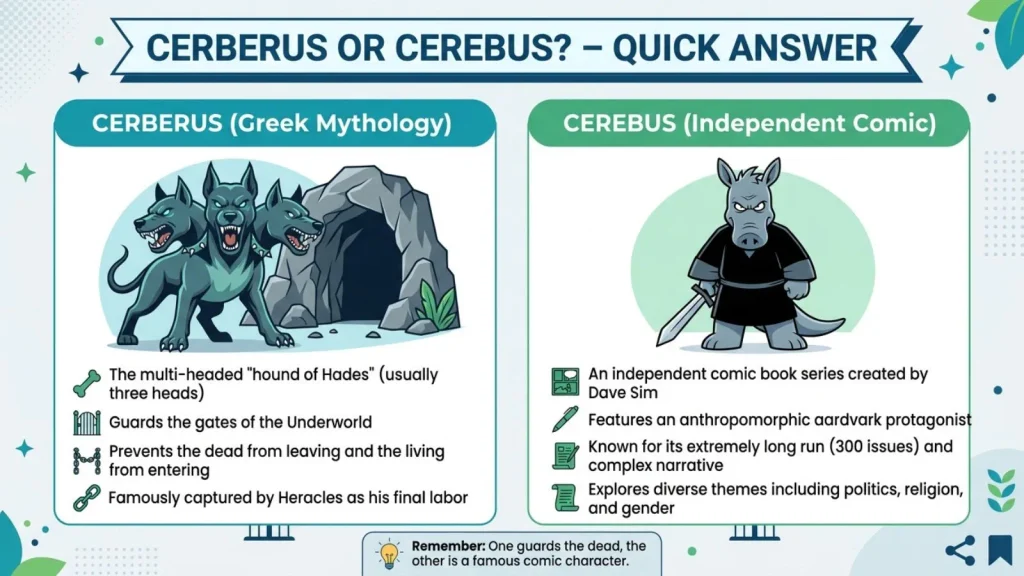
Cerberus is the correct spelling. It refers to the multi-headed dog that guards the entrance to the underworld in Greek and Roman mythology.
- Correct: “Cerberus guarded the gates of Hades.”
- Incorrect (typo): “Cerebus guarded the gates of Hades.”
Cerebus is not a misspelling in every case. It is a real word in one specific context: Cerebus the Aardvark, a long-running comic book series by Dave Sim.
- Correct: “Cerebus is a black-and-white comic that ran for 300 issues.”
So the rule is simple:
- Talking about mythology, a dog, or something named after the myth (a security tool, a gym, a gate)? Use Cerberus.
- Talking about the comic book character? Use Cerebus.
- Not sure which one you mean? You almost certainly mean Cerberus.
The Origin of Cerberus
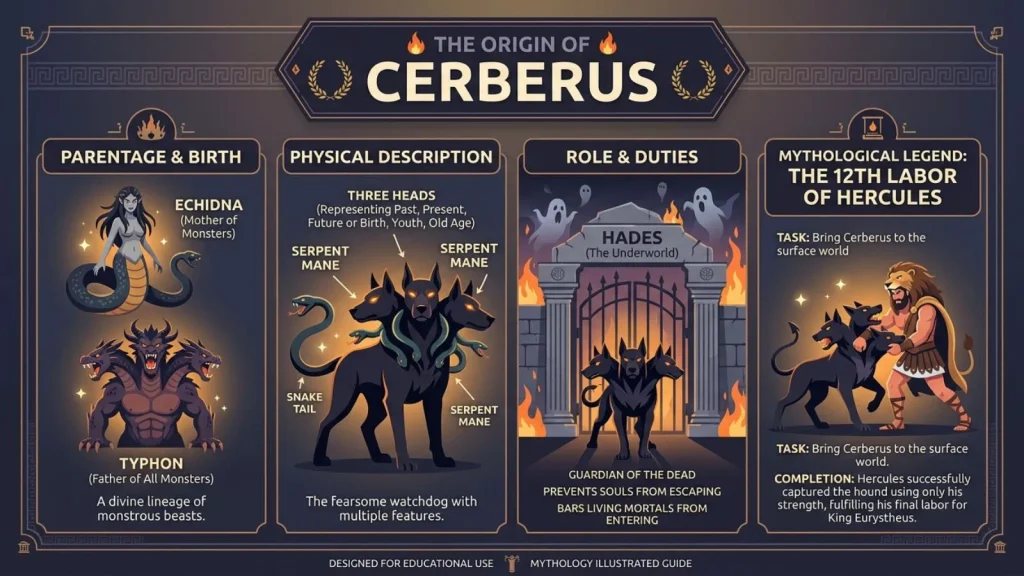
The word comes from Ancient Greek, where the dog was called Kerberos (Κέρβερος). Its exact meaning is debated. Some scholars link it to a root meaning “spotted” or “demon of the pit.” The Romans adopted the name into Latin as Cerberus, and that spelling carried into English.
In myth, Cerberus was a monstrous dog with multiple heads (usually three) who guarded the gates of the underworld. His job was to stop the dead from leaving and the living from entering. Hercules faced Cerberus as one of his twelve labors.
Why does the spelling confusion exist? Two reasons:
- Uncommon word shape. English speakers rarely use words with this exact letter pattern (C-E-R-B-E-R-U-S). The brain defaults to more familiar patterns, and “cerebus” feels easier to type because it echoes words like “cerebral” or “cerebrum,” which relate to the brain.
- A real second word exists. Because Cerebus the Aardvark is a well-known comic, some people see “Cerebus” online and assume it is an alternate spelling of the mythological name. It is not. They are two separate words that happen to look alike.
British English vs American English Spelling
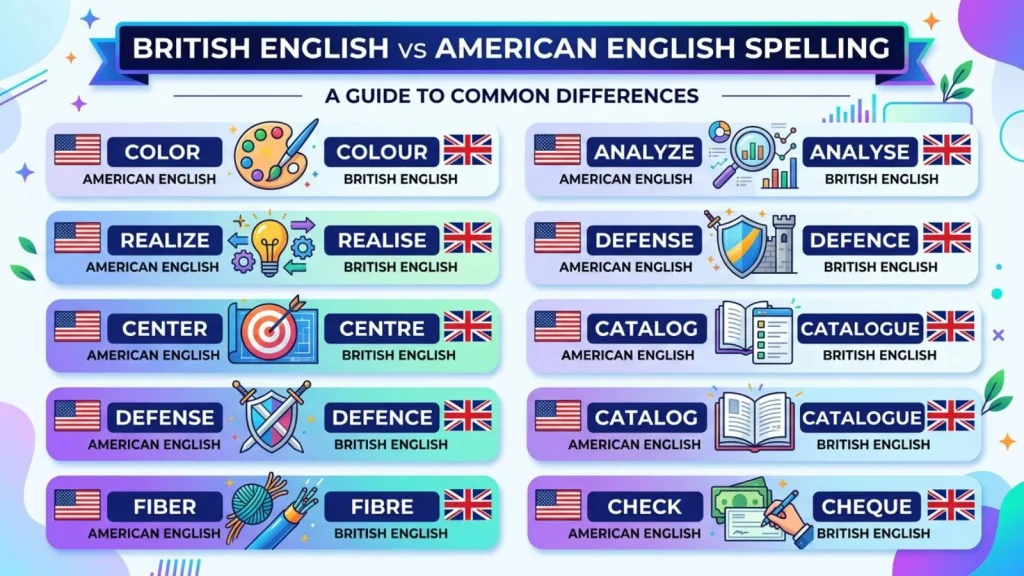
This is the part where most articles about spelling differences point to a table of “colour vs color” or “organise vs organize.” That is not what is happening here.
Cerberus is spelled the same way in British English and American English. There is no regional variant. Dictionaries in the UK, the US, Canada, and Australia all list the same spelling.
The confusion with “cerebus” is not regional. It is a typo that happens everywhere, regardless of which English dialect you speak.
That said, here is a comparison table showing how this word behaves compared to genuine US/UK spelling differences, so you can see why it stands apart:
| Word Type | US Spelling | UK Spelling | Regional Difference? |
| Color/Colour | color | colour | Yes |
| Organize/Organise | organize | organise | Yes |
| Center/Centre | center | centre | Yes |
| Cerberus | Cerberus | Cerberus | No same everywhere |
| Cerebus (comic name) | Cerebus | Cerebus | No proper noun, fixed spelling |
Which Spelling Should Use cerebus or cerberus?
Since this is not a regional spelling choice, the advice is the same no matter where your audience lives.
For US readers: Use “Cerberus” when referring to the myth, a pet name, a product name, or anything drawing on the three-headed dog. Use “Cerebus” only for the comic book.
For UK and Commonwealth readers (Canada, Australia, New Zealand, etc.): Same rule applies. “Cerberus” is standard across all Commonwealth dictionaries.
For global and non-native English writers: If you are writing for an international audience, or you are not sure which word you need, default to “Cerberus.” It covers mythology, brand names, security software, and general references. “Cerebus” almost never applies unless you are specifically discussing the comic.
For writers, editors, and content teams: Add “Cerberus” to your style guide or spell-check dictionary if your industry (gaming, security, mythology content) uses the word often. This prevents repeat typos across a team.
Common Mistakes with Cerberus
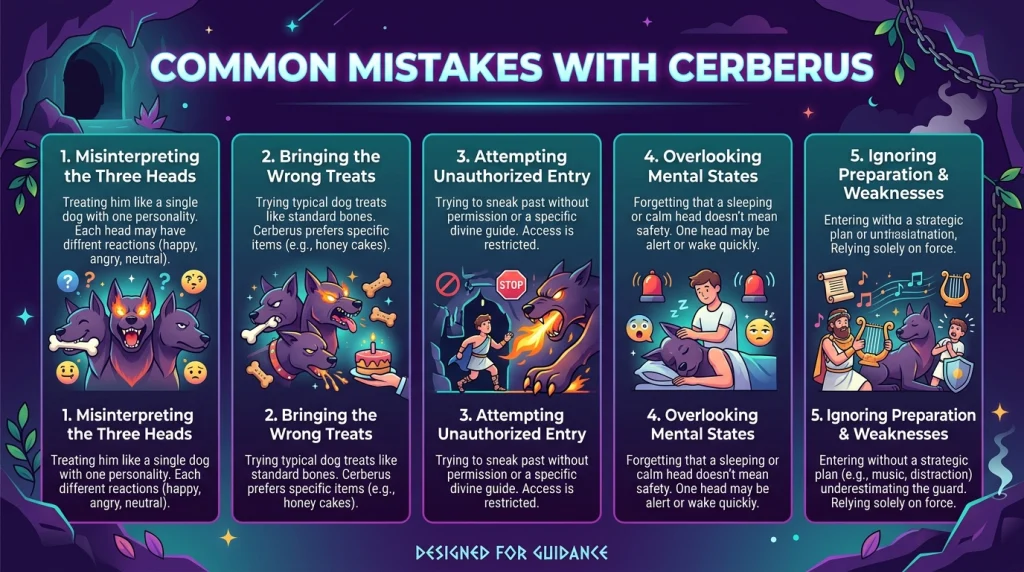
Here are the errors people make most often, and how to fix them:
- Mistake: “Cerebus” when you mean the mythological dog. Fix: Use “Cerberus.” Say it slowly: cer-BER-us. The “ber” comes before the final syllable.
- Mistake: “Cerberos” (Greek-style ending). Fix: In English, the standard spelling ends in “-us,” not “-os.” Save “-os” for direct transliterations of the Greek.
- Mistake: “Cerburus” or “Cerbarus” (swapped vowels). Fix: The correct vowel order is E-E-U: C-E-R-B-E-R-U-S.
- Mistake: Assuming “Cerebus” is just an alternate spelling. Fix: It is a different word entirely, tied to a specific comic book character. Don’t use it interchangeably.
- Mistake: Autocorrect changes “Cerberus” to “Cerebus” or “Cerebrus” without you noticing. Fix: Always double-check names and mythology terms after autocorrect runs, since these words are often not in default dictionaries.
Cerberus in Everyday Examples

In emails: “The new authentication system is codenamed Cerberus it guards three access points, just like the mythological dog.”
News headlines: “Storm ‘Cerberus’ Brings Record Heat to Southern Europe”
In social media posts: “Just finished a tattoo of Cerberus guarding the gates. Three heads, one very good boy. 🐕🐕🐕”
In formal or academic writing: “In Hesiod’s Theogony, Cerberus is described as the offspring of Typhon and Echidna, tasked with guarding the entrance to the underworld.”
In branding and product names: Cerberus is a popular name for cybersecurity tools, gyms, gaming clans, and even a European heatwave in recent years , because the “three-headed guardian” idea fits products built around protection or multiple layers of defense.
Cerberus – Google Trends & Usage Data

Search interest in “Cerberus” spikes in a few recurring patterns:
- Mythology and education spikes: Searches rise during school terms when Greek mythology is taught, and around popular culture releases (movies, games, books) that reference the underworld.
- Weather event spikes: European heatwaves have been informally named “Cerberus” by meteorologists and media in recent years, driving short, sharp traffic spikes in countries like Italy and Spain.
- Gaming and tech spikes: “Cerberus” is a common name for game bosses, weapons, and security software, so gaming communities and IT audiences search it steadily year-round.
- Comic fans searching “Cerebus”: A smaller, dedicated audience searches “Cerebus” specifically for the Dave Sim comic. This group is consistent but much smaller than general Cerberus search volume.
By country, English-speaking nations (US, UK, Canada, Australia) show the highest steady search volume, with occasional surges in Southern Europe tied to weather naming.
Keyword Variations Comparison Table
| Variation | Correct Usage | Frequency | Notes |
| Cerberus | Mythological dog, brand names, general use | Most common | The standard, correct spelling |
| Cerebus | Comic book character only | Less common | Real word, but narrow use case |
| Cerberos | Rare Greek transliteration | Very rare | Not standard in English |
| Cerburus | Typo | Rare | Always incorrect |
| Cerebrus | Typo (blends “cerebrum” + “Cerberus”) | Occasional | Always incorrect |
FAQs
1. Is it spelled Cerberus or Cerebus?
It’s “Cerberus” for the mythological three-headed dog. “Cerebus” is a different word the name of a comic book character.
2. Why do people misspell Cerberus?
The letter order (E-E-U) is unusual in English, and the word “cerebral” primes people to write “cerebus” instead.
3. Is Cerberus a British or American spelling?
Neither it’s the same spelling in both. There is no regional variant for this word.
4. What does Cerberus mean?
Cerberus is the multi-headed dog from Greek and Roman mythology that guards the entrance to the underworld.
5. Is Cerebus a real word?
Yes. It’s the title character of Cerebus the Aardvark, a comic book series. It is not a misspelling in that specific context.
6. How do you pronounce Cerberus?
It’s pronounced SUR-ber-us, with stress on the first syllable.
7. What’s the difference between Cerberus and Cerberos?
“Cerberus” is the standard English spelling. “Cerberos” reflects the Greek transliteration but is not used in everyday English writing.
8. Can Cerberus be used as a brand or product name?
Yes. It’s a popular choice for security software, gyms, and gaming products because of its “guardian” symbolism.
Conclusion
The spelling debate between “Cerberus” and “Cerebus” isn’t really a debate at all.
Cerberus is the correct spelling for the three-headed dog of Greek mythology, and that spelling stays the same whether you’re writing for a US, UK, or global audience.
There’s no regional variation to worry about here just one correct word and one common typo.
Cerebus, on the other hand, is a real word in its own right. It belongs to a specific comic book character, Cerebus the Aardvark, and shouldn’t be swapped in for the mythological name.
If you remember one thing from this article, remember this: when in doubt, write “Cerberus.” It covers mythology, branding, pop culture, and everyday references. Save “Cerebus” for the rare case when you’re specifically talking about the comic.
Double-check autocorrect, sound out the syllables (cer-BER-us), and you’ll never mix up this word again.

Here’s a concise 2-line author bio suitable for Simifind.com:
James Dashner is an American bestselling author best known for The Maze Runner series and other popular young-adult fiction.
On Simifind.com, he shares clear, engaging insights and helpful content for readers interested in books, writing, and popular literature.