Have you ever typed transferring and stopped to wonder if the extra “r” is correct? You are not alone.
Transferring or transfering is a common spelling question because the word comes from transfer, and adding -ing changes the spelling.
Many English learners also notice that similar verbs sometimes double their final consonant, while others do not. This makes the rule easy to miss.
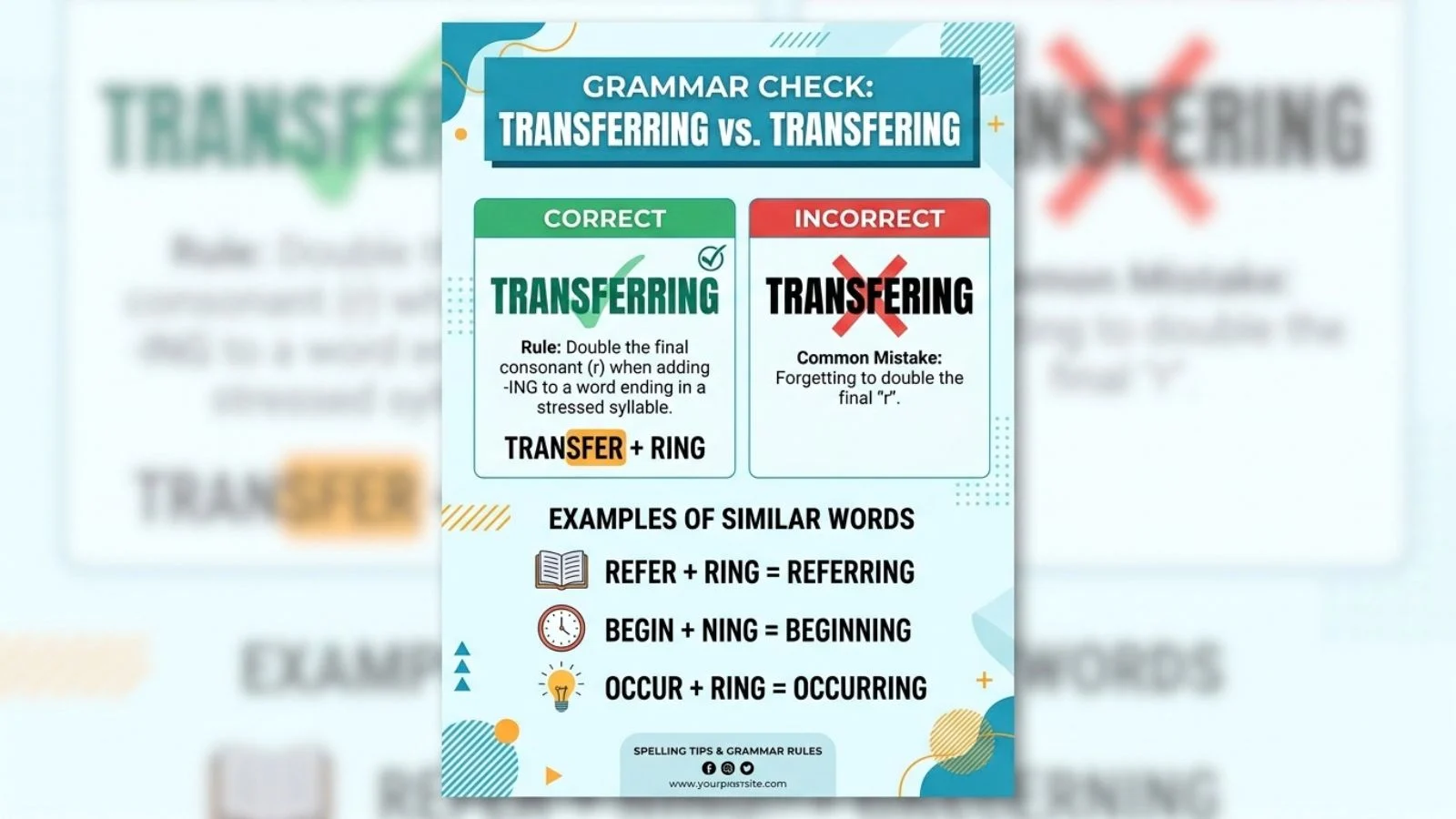
The correct spelling in standard English is transferring. The form transfering is incorrect. The same rule applies to related forms such as transferred and transferrer.
This guide explains why the final r is doubled, how the rule works in British and American English, and how to use transferring correctly.
You will also see simple examples from emails, news, social media, and formal writing. By the end, you will know which spelling to use and why.
Transferring or Transfering – Quick Answer
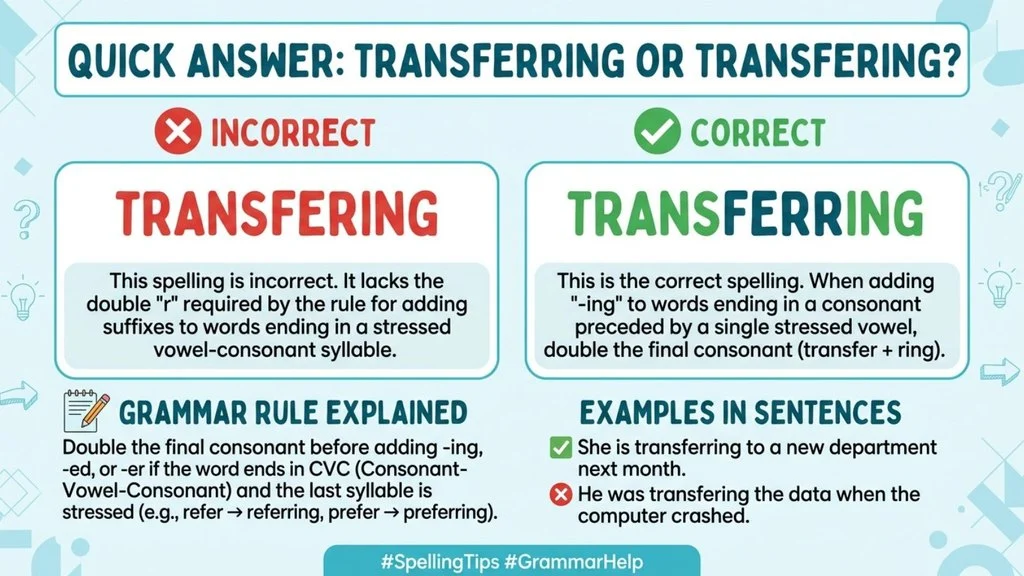
Transferring is the correct spelling.
Transfering is a misspelling.
The word transferring is formed by adding -ing to the verb transfer. Because transfer ends in a stressed syllable with a consonant-vowel-consonant pattern at the end, the final r is doubled before adding -ing.
Correct
- I am transferring the money.
- She is transferring to another school.
- We are transferring the files.
- He is transferring ownership.
Incorrect
- I am transfering the money.
- She is transfering to another school.
The key point is simple:
Transfer + ing = transferring
The Origin of Transferring

The word transferring comes from the verb transfer. English borrowed transfer from Latin transferre, meaning “to carry across” or “to carry from one place to another.”
The Latin word was formed from parts meaning across and carry. Over time, the word entered English through French and Latin-influenced forms.
Today, transfer can describe moving something or someone from one place, person, account, or situation to another.
For example:
- transfer money from one bank account to another
- transfer a student to another school
- transfer files between computers
- transfer ownership to another person
- transfer an employee to another office
The spelling question appears when -ing is added. English spelling rules often double a final consonant in certain short stressed syllable patterns.
Therefore:
transfer → transferring
The extra r is not optional. It is part of the standard spelling.
British English vs American English Spelling
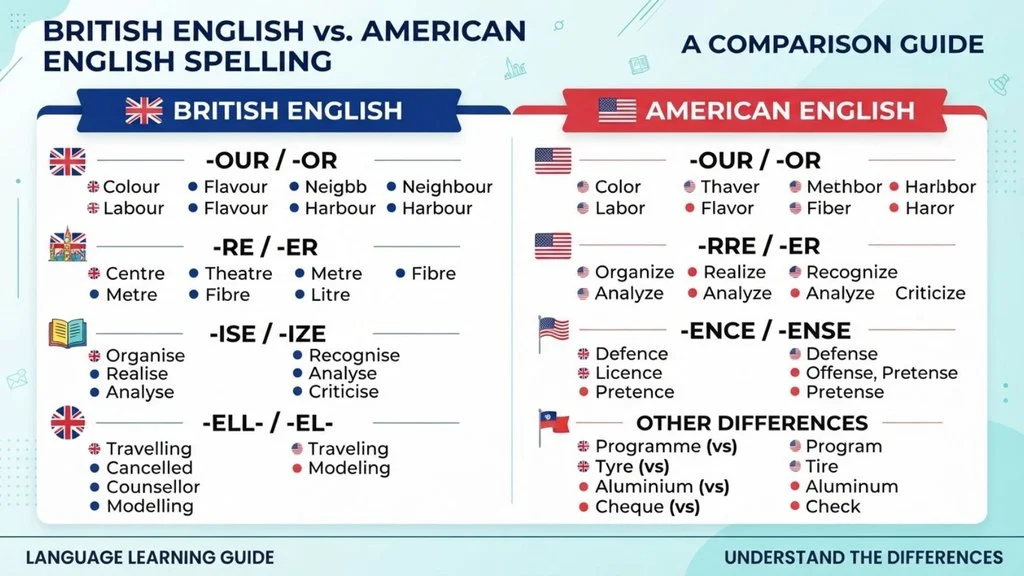
Unlike some spelling differences between British and American English, transferring is spelled the same way in both varieties.
| Form | British English | American English | Correct? |
| transfer | transfer | transfer | Yes |
| transferring | transferring | transferring | Yes |
| transfered | transfered | transfered | No |
| transferred | transferred | transferred | Yes |
| transfering | transfering | transfering | No |
| transferrer | transferrer | transferrer | Yes |
There is no British vs American spelling difference for transferring.
Why Is the R Doubled?
The final consonant is doubled when the spelling rule requires it before a suffix such as -ing or -ed.
Compare:
- transfer → transferring
- prefer → preferring
- occur → occurring
- refer → referring
But compare these:
- open → opening
- visit → visiting
- offer → offering
The spelling depends on the word’s stress and ending pattern.
Which Spelling Should Use Transferring ?
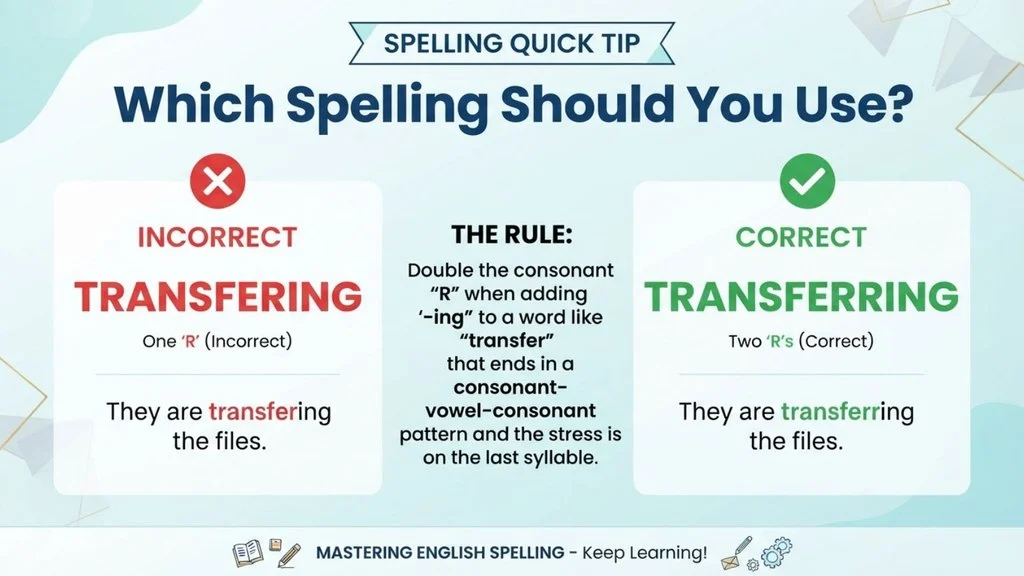
Whether you write in American English, British English, Canadian English, Australian English, or international English, use:
Transferring
It is the standard spelling across major forms of English.
If you are writing a:
- school assignment
- university paper
- business email
- CV or résumé
- report
- website
- news article
- formal letter
always use transferring, not transfering.
For international readers, transferring is also the safest choice because it is the standard form in widely used English varieties.
Common Mistakes with Transferring
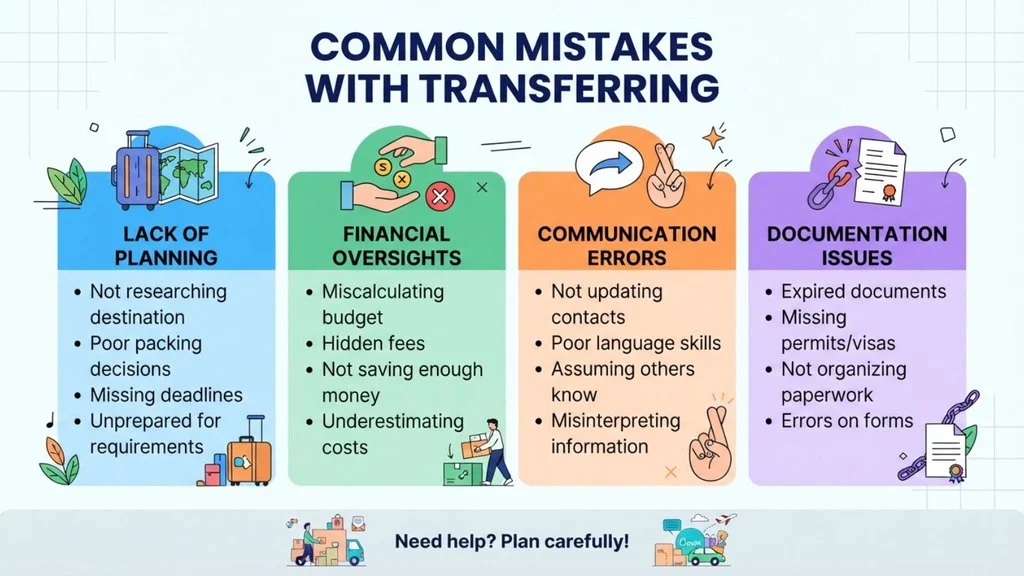
1. Writing “transfering”
❌ I am transfering the money.
✅ I am transferring the money.
The final r must be doubled.
2. Writing “transfered”
❌ The payment was transfered yesterday.
✅ The payment was transferred yesterday.
The same doubling rule applies when adding -ed.
3. Confusing Transfer and Transferring
Transfer is the base verb.
Transferring is the present participle or gerund.
Examples:
- I will transfer the money tomorrow.
- I am transferring the money now.
4. Using “transferring” when “transferred” is needed
❌ She has been transferring to another department yesterday.
✅ She transferred to another department yesterday.
Use transferred for a completed past action.
Transferring in Everyday Examples

In Emails
I am transferring the documents to the shared folder now.
We are transferring your request to the correct department.
In Business Writing
The company is transferring several employees to its new office.
Banking
The customer is transferring funds to another account.
In Education
She is transferring from one university to another.
In News Writing
The club is transferring the player to another team.
Social Media
I am transferring all my photos to my new phone.
In Formal Writing
The organization is transferring responsibility to the new management team.
Transferring – Google Trends & Usage Data

Searches for “transferring or transfering” usually come from people checking English spelling. The question appears in contexts such as education, employment, banking, technology, and everyday writing.
The correct form, transferring, is naturally more common in published English because it is the standard spelling.
The misspelling transfering may still appear online because users often apply an incorrect spelling pattern. Search engines may show both forms when people search for spelling differences, but that does not make transfering correct.
Usage can also vary by context. For example:
| Context | Common correct phrase |
| Banking | transferring money |
| Education | transferring schools |
| Technology | transferring files |
| Employment | transferring employees |
| Sports | transferring players |
| Business | transferring ownership |
| Communication | transferring information |
For professional writing, always choose transferring.
Transferring vs Transfering: Comparison Table
| Word | Status | Example |
| transferring | Correct | She is transferring to another school. |
| transfering | Incorrect | She is transfering to another school. |
| transfer | Correct | I need to transfer the files. |
| transferred | Correct | He transferred the money yesterday. |
| transfered | Incorrect | He transfered the money yesterday. |
FAQs About Transferring or Transfering
Is “transferring” correct?
Yes. Transferring is the correct standard spelling.
Is “transfering” ever correct?
No. Transfering is considered a spelling error in standard English.
Why does transferring have two Rs?
The final r in transfer is doubled when the -ing suffix is added, giving transferring.
Is transferring spelled differently in British English?
No. British and American English both use transferring.
Is it “transferred” or “transfered”?
The correct form is transferred, with two rs.
What is the difference between transfer and transferring?
Transfer is the base verb, while transferring describes an action that is happening or continuing.
Example:
- I will transfer the money.
- I am transferring the money.
How do you remember the spelling of transferring?
Remember this simple pattern:
transfer + ing = transferring
Think of the doubled r as staying with the word when you add -ing.
Conclusion
The correct spelling is transferring, not transfering. This spelling is used in both British and American English, so you do not need to choose a different form based on your audience. The extra r follows the English spelling pattern used when the suffix -ing is added to transfer.
You can use transferring when talking about moving money, files, students, employees, information, ownership, or people from one place or situation to another. The related past-tense form is transferred, which also keeps the doubled r.
If you are writing an email, academic paper, business document, website article, or social media post, choose transferring. Avoid transfering, even though it may appear in informal online writing or search queries.
The easiest rule to remember is simple: transfer + ing = transferring. Once you learn this pattern, you can avoid one of the most common spelling mistakes involving the word transfer.

Here’s a concise 2-line author bio suitable for Simifind.com:
James Dashner is an American bestselling author best known for The Maze Runner series and other popular young-adult fiction.
On Simifind.com, he shares clear, engaging insights and helpful content for readers interested in books, writing, and popular literature.