“Do you ensure something happens, or assure someone that it will?” This small difference can easily cause confusion in everyday English.
Hey, I want to share something that happened to me recently about Ensure or Assure.
Chatting with a friend when suddenly saw these terms pop up, and honestly, wasn’t completely sure which one fit the situation.
I kept wondering, “Am I missing something here?” It was a bit confusing, and I didn’t want to use the wrong word in my response.
So, I decided to look into Ensure or Assure and understand their meanings and contexts.
After learning the difference, realized how important it is to know when to use each word, especially in conversations, emails, and social media.
Handled the confusion by learning the proper usage and responding confidently, and now I feel ready whenever come across Ensure or Assure again.
Ensure or Assure – Quick Answer
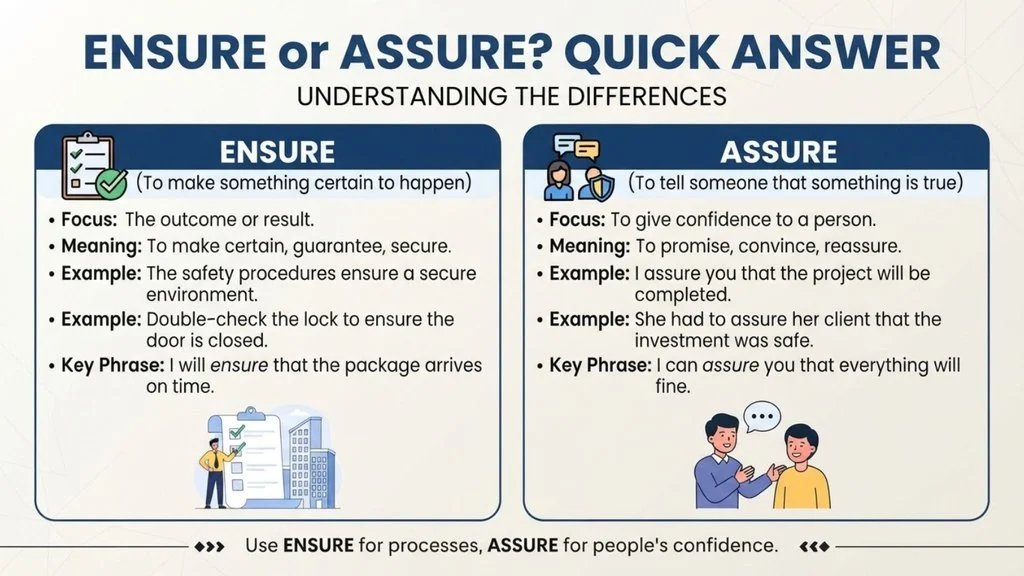
The easiest way to remember the difference is:
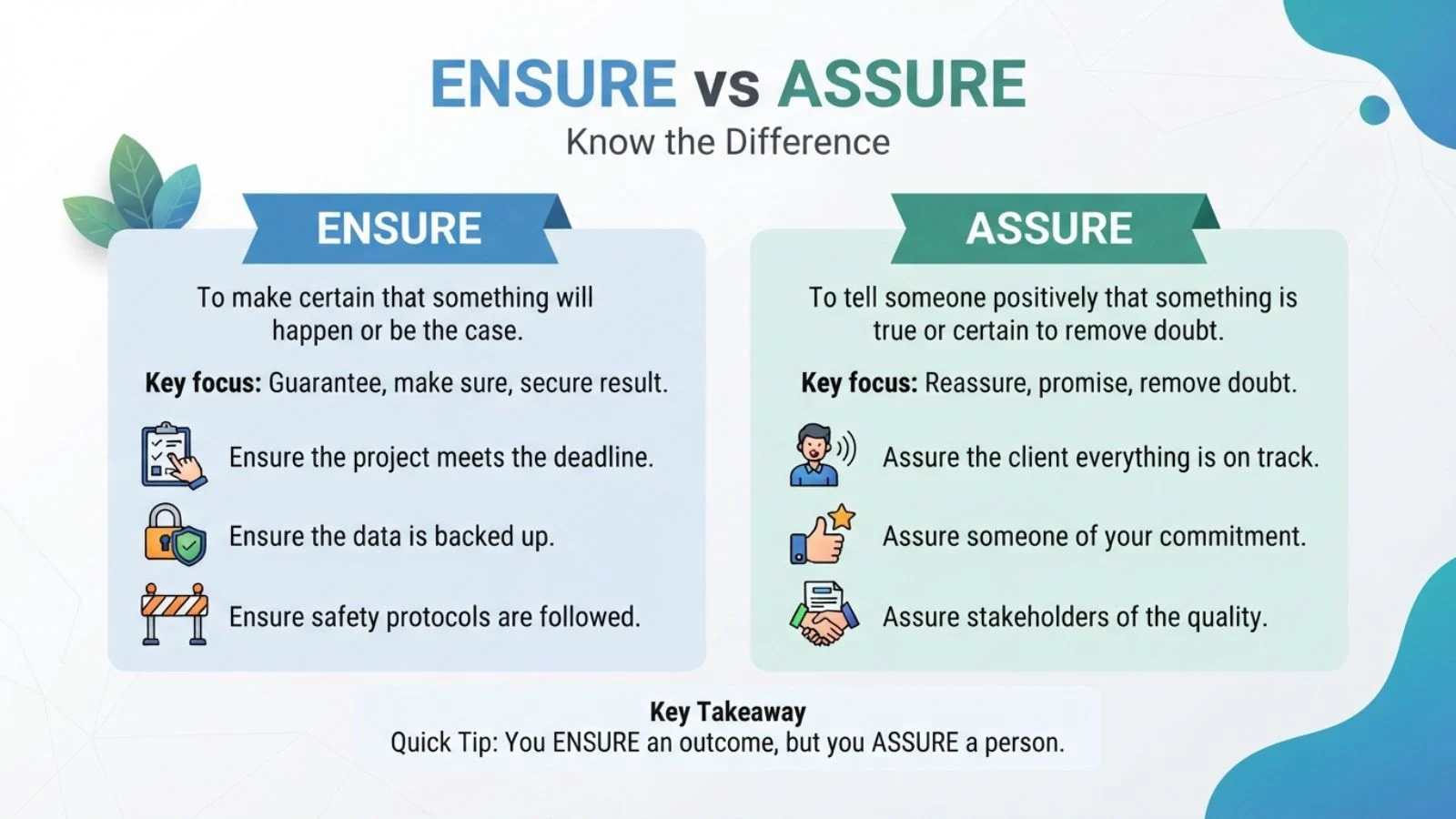
- Ensure = make certain that something happens.
- Assure = tell someone confidently that something is true or will happen.
Examples with Ensure
Please ensure that all windows are closed.
We must ensure that the report is accurate.
The new system helps ensure better security.
Here, ensure means to make something certain.
Examples with Assure
I assure you that everything is ready.
She assured me that she would arrive on time.
The manager assured the customers that their information was safe.
Here, assure means to give someone confidence or remove their doubt.
Simple Memory Trick
Think:
Ensure → Ensure an event happens.
Assure → Assure a person.
For example:
The manager ensured that the meeting started on time.
The manager assured me that the meeting would start on time.
Both sentences are correct, but their meanings are different.
The Origin of Ensure or Assure
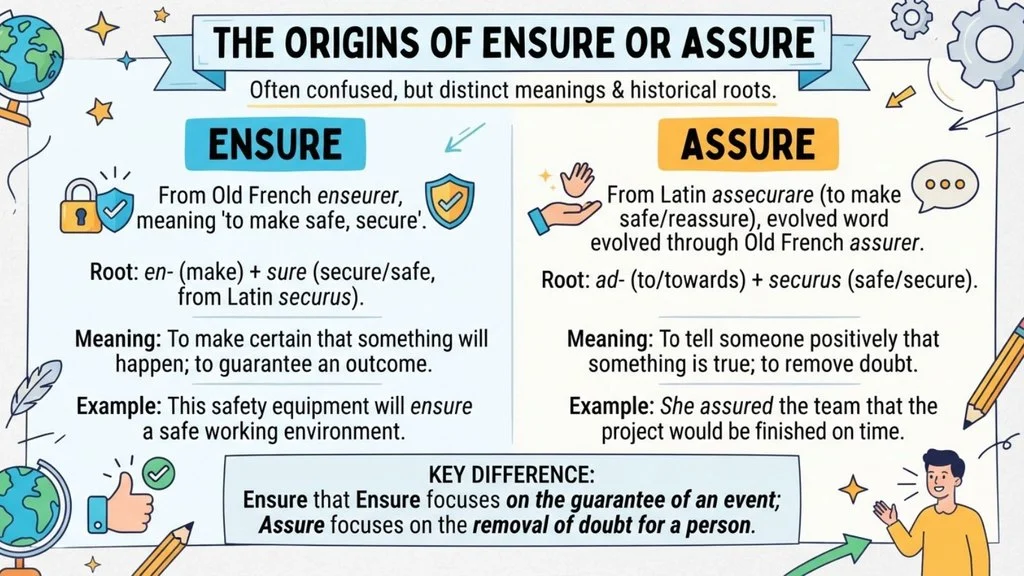
The words ensure and assure have a long history in English. Both are related to the idea of making something certain or secure, which explains why they are often confused.
Origin of Ensure
Ensure developed from Anglo-French and Old French forms related to making something certain or secure. The prefix en- can carry the sense of making or causing something to become a particular state.
Over time, ensure developed its modern meaning:
to make certain that something happens.
For example:
Good planning can ensure success.
The focus is on the result or event.
Origin of Assure
Assure also came into English through French and ultimately has roots connected with the idea of making something secure or certain.
Its modern meaning developed toward giving confidence to another person.
For example:
I assure you that the information is correct.
The focus is usually on the person receiving reassurance.
Why Are They Confused?
The confusion exists because both words are connected with certainty.
Compare:
- Ensure a safe journey.
- Assure a traveler that the journey is safe.
The first focuses on making something happen. The second focuses on giving confidence to a person.
British English vs American English Spelling
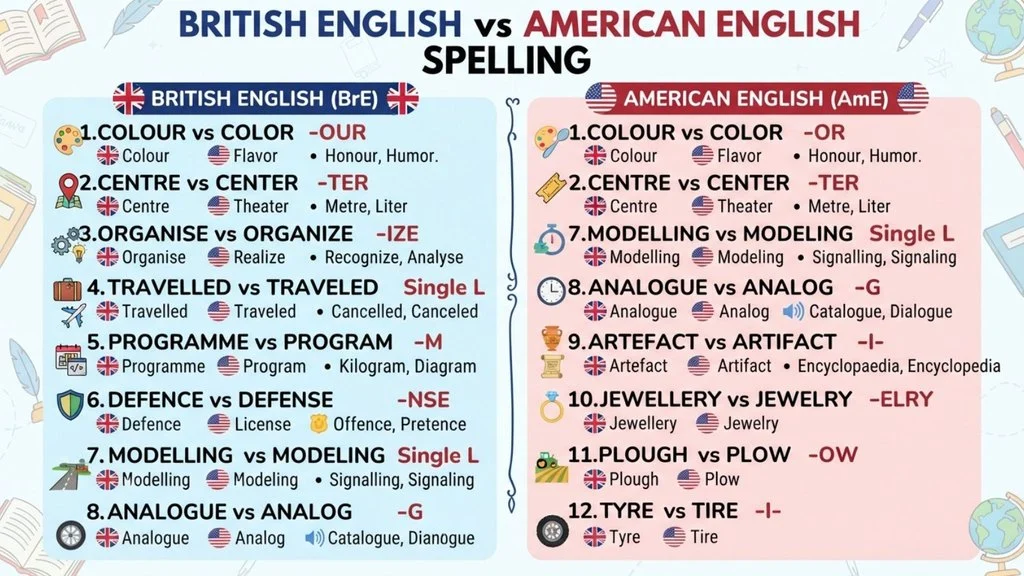
Unlike some British and American spelling differences, such as colour/color or organise/organize, there is generally no major British-versus-American spelling difference between ensure and assure.
Both forms are standard:
| Word | British English | American English | Meaning |
| Ensure | ensure | ensure | Make certain |
| Assure | assure | assure | Give confidence |
| Ensured | ensured | ensured | Made certain |
| Assured | assured | assured | Gave confidence |
| Ensuring | ensuring | ensuring | Making certain |
| Assuring | assuring | assuring | Giving confidence |
So, whether you write for a British, American, Canadian, Australian, or international audience, the spelling normally stays the same.
Ensure
Please ensure that the documents are complete.
Assure
I assure you that the documents are complete.
The difference is mainly about meaning and grammar, not regional spelling.
Which Spelling Should Use Ensure or Assure ?
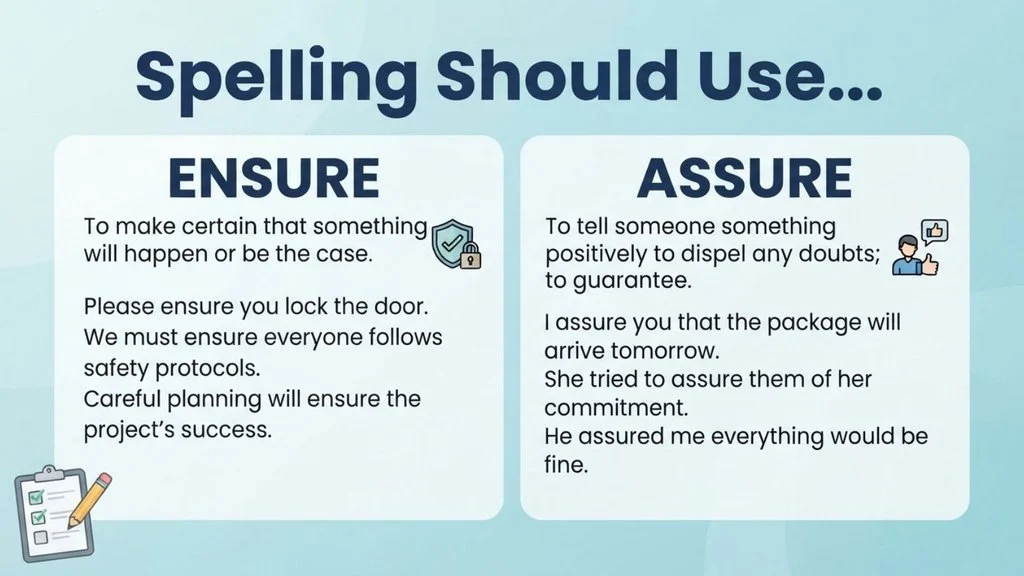
There is no need to choose a British or American spelling for ensure or assure. Both words are accepted in standard English.
Instead, choose the word according to what you want to say.
Use Ensure When You Mean “Make Certain”
Use ensure when the subject is taking action to make a result certain.
Please ensure that everyone receives the message.
The company introduced new rules to ensure safety.
Use Assure When You Mean “Give Someone Confidence”
Use assure when you are speaking to a person and want to remove their doubt or worry.
I assure you that your request has been received.
She assured her parents that she was safe.
A Useful Rule
If you can replace the word with make sure, choose ensure.
Please ensure the door is locked.
= Please make sure the door is locked.
If you can replace it with reassure, assure may be the right choice.
I assure you that there is no problem.
= I reassure you that there is no problem.
Common Mistakes with Ensure or Assure
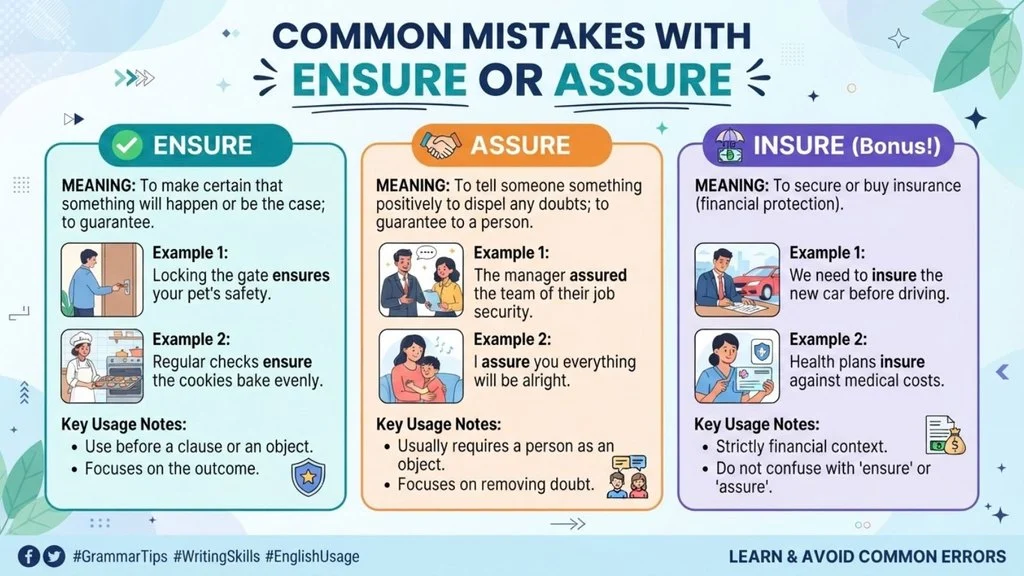
Because the words are similar, several mistakes appear frequently.
Mistake 1: Using Assure for Things
Incorrect:
Please assure that the door is locked.
Better:
Please ensure that the door is locked.
Why? The sentence describes making sure that something happens.
Mistake 2: Using Ensure When Speaking Directly to Someone
Awkward:
I ensure you that everything is fine.
Better:
I assure you that everything is fine.
Why? The speaker is giving confidence to another person.
Mistake 3: Thinking They Are Interchangeable
They are related, but they do different jobs.
The safety system ensures protection.
The manager assures customers that their information is protected.
Mistake 4: Confusing Assure and Insure
There is another word that often causes confusion: insure.
- Ensure = make certain.
- Assure = give confidence.
- Insure = protect against financial loss, usually through insurance.
Examples:
We must ensure the building is secure.
I assure you that the building is secure.
The company will insure the building against fire.
Ensure or Assure in Everyday Examples
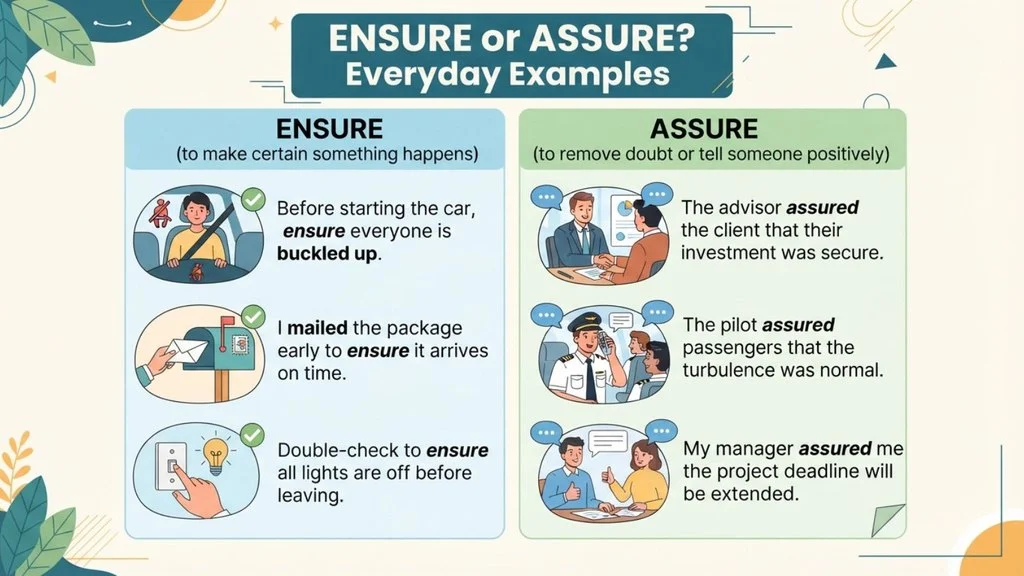
Understanding these words becomes easier when you see them in common situations.
In Emails
Ensure:
Please ensure that the attached form is completed before Friday.
Assure:
I assure you that we are working on your request.
In News Writing
Ensure:
Officials introduced new measures to ensure public safety.
Assure:
The minister assured citizens that emergency services were prepared.
In Social Media
Ensure:
Make sure you ensure all your settings are updated before using the app.
Assure:
I can assure you that this update is worth trying.
In Formal Writing
Ensure:
The policy is designed to ensure equal access to education.
Assure:
The organization assured employees that their concerns would be reviewed.
In Workplace Communication
Please ensure that all files are backed up.
I assure you that your information will remain confidential.
In Everyday Conversation
Make sure you ensure the children have everything they need.
A more natural version is often:
Make sure the children have everything they need.
For reassurance:
Don’t worry. I assure you that everything is under control.
Ensure or Assure – Comparison Table
| Feature | Ensure | Assure |
| Basic meaning | Make certain | Give confidence |
| Main focus | Result or event | Person |
| Common pattern | Ensure that… | Assure someone that… |
| Example | Ensure that the door is locked. | I assure you that the door is locked. |
| Similar word | Make sure | Reassure |
| Common context | Rules, safety, results | Promises, confidence, reassurance |
| British spelling | Ensure | Assure |
| American spelling | Ensure | Assure |
| Related word | Insure | Reassure |
Ensure or Assure – Google Trends & Usage Data
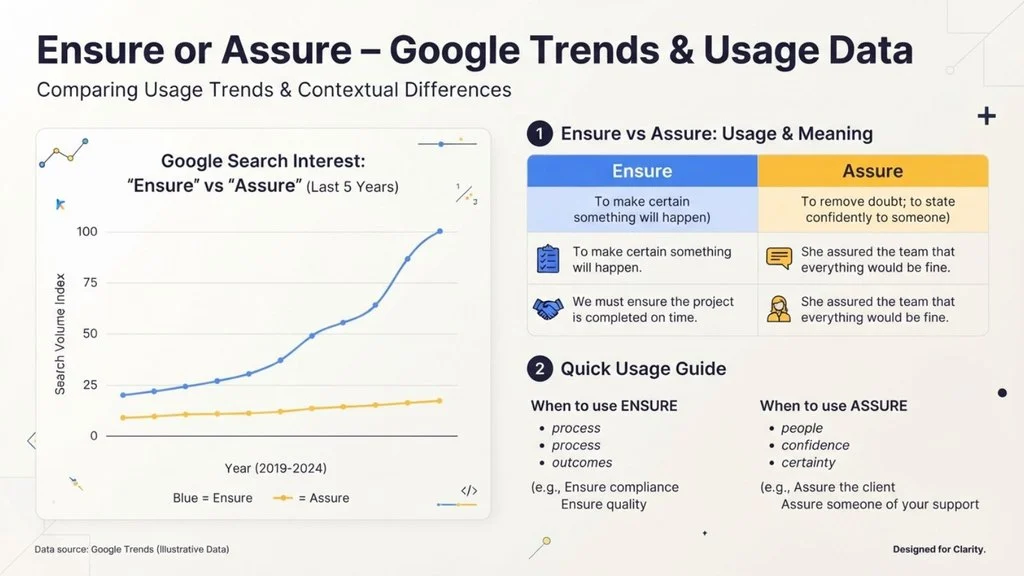
Search interest for ensure and assure can vary by country, language background, and writing context. However, search popularity should not be treated as a grammar rule.
Both words are widely used in English-speaking countries.
Ensure is especially common in formal and professional contexts because writers often discuss policies, safety, quality, accuracy, compliance, and results.
Examples include:
- ensure safety
- ensure quality
- ensure accuracy
- ensure compliance
- ensure success
Assure is common when people discuss promises, confidence, customer communication, and reassurance.
Examples include:
- assure customers
- assure people
- assure someone
- assure you
- assure the public
Google Trends data can change over time and can reflect search behavior rather than actual language use.
This reason, the best way to choose between the words is to consider meaning and sentence structure, not simply which term receives more searches.
FAQs About Ensure or Assure
1. What is the main difference between ensure and assure?
Ensure means to make certain that something happens. Assure means to give someone confidence that something is true or will happen.
2. Is it correct to say “I assure you”?
Yes. “I assure you” is a standard expression used to give someone confidence or remove doubt.
Example:
I assure you that everything will be fine.
3. Is it correct to say “Please ensure”?
Yes. “Please ensure” is common in instructions, emails, workplace communication, and formal writing.
Example:
Please ensure that all information is correct.
4. Can ensure and assure be used interchangeably?
Usually, no. They have related meanings but different uses. Ensure normally focuses on making a result certain, while assure normally focuses on giving confidence to a person.
5. What is the difference between ensure, assure, and insure?
Ensure means make certain. Assure means give confidence. Insure usually means provide financial protection through insurance.
6. Which is correct: “ensure you” or “assure you”?
Both can be correct, but they mean different things.
I assure you that the plan will work.
Please ensure that the plan is ready.
7. Is ensure American or British English?
Ensure is used in both American and British English. There is no major regional spelling difference for this word.
Conclusion
Understanding ensure or assure is easier when you focus on the person or result in the sentence.
Ensure means to make certain that something happens. Assure means to give someone confidence or remove their doubt. This distinction is useful in emails, workplace communication, academic writing, news reports, and everyday conversations.
Use ensure for actions, conditions, results, and events:
Please ensure that the door is locked.
Use assure when you are giving confidence to a person:
I assure you that the door is locked.
Assure – means to tell someone confidently in order to remove their doubt. Example: “I assure you the package will arrive on time.”
There is no important British-versus-American spelling difference between ensure and assure. The real challenge is choosing the correct word based on meaning.
You can replace the word with make certain, think ensure. If you are giving confidence to someone, think assure.
Once you remember this simple distinction, choosing between these two commonly confused words becomes much easier.

Mary Roach is an American science writer and bestselling author known for making unusual and complex scientific topics engaging, accessible, and humorous. Her books include Stiff, Packing for Mars, Gulp, and Fuzz.
Author at Simifind.com, sharing clear, informative content designed to help readers understand interesting topics and everyday questions.