Have you ever planted zinnias and wondered if they will bloom again next year?
Zinnias are bright flowers that bring color and life to gardens. They come in many colors, such as red, pink, yellow, orange, purple, and white.
But one common question many gardeners ask is: Is zinnia perennial or annual?
This question matters when you plan your garden or choose flowers for each season. Some plants grow back every year, while others complete their life cycle in one growing season.
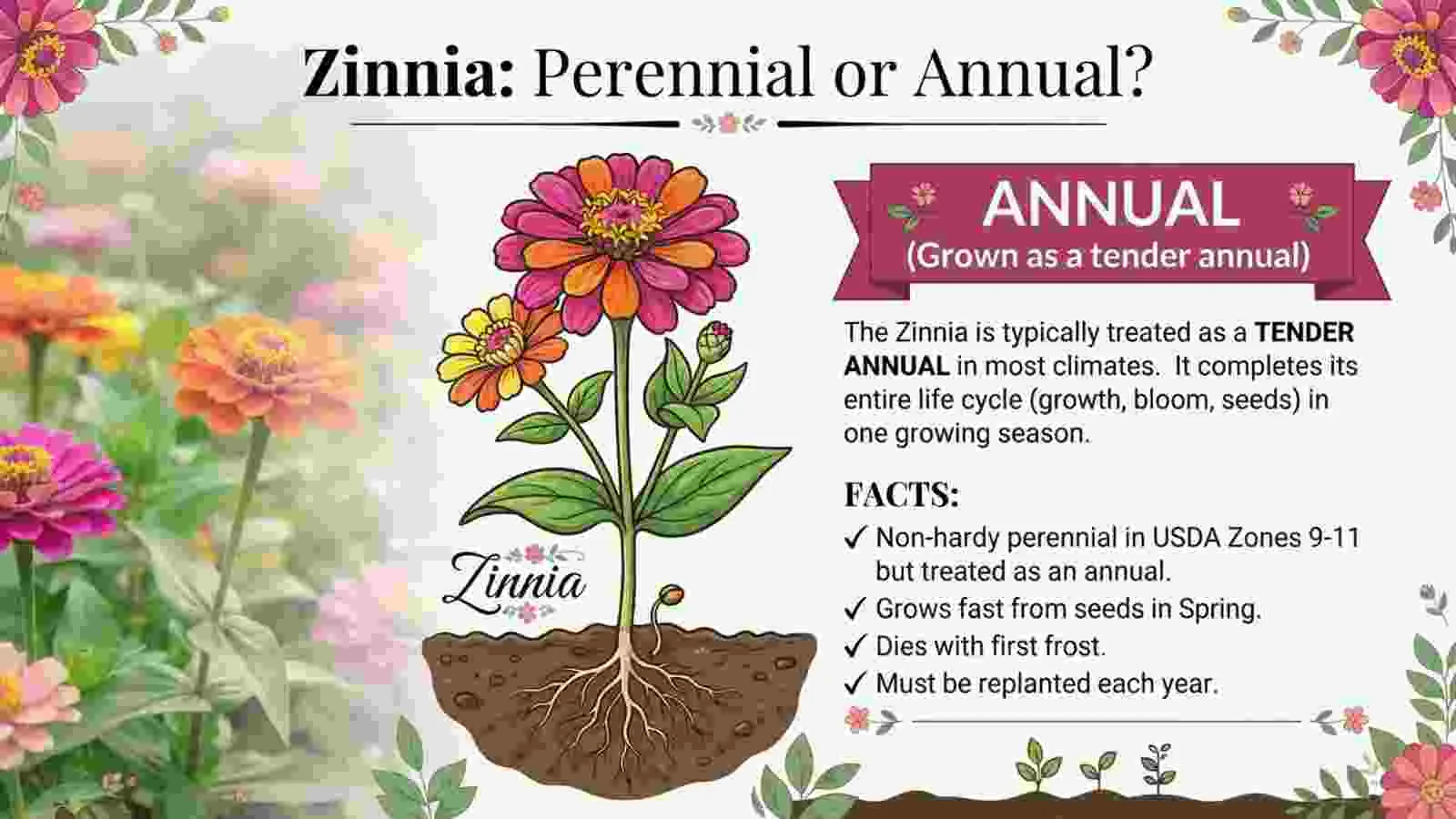
Zinnias belong to the second group. They grow, bloom, produce seeds, and die within one season.
Still, there is more to learn about these popular flowers. Some gardeners collect zinnia seeds and grow new plants the following year.
This can make it seem like zinnias return on their own. In this guide, you will learn whether zinnias are annual or perennial, how they grow, and how to care for them.
You will also discover simple tips for growing healthy zinnias in your garden.
Zinnia Perennial or Annual – Quick Answer
Zinnias are annual flowers, not perennials. They grow for one season, produce colorful blooms, make seeds, and then die.
Most zinnia varieties grow well in warm weather. They love full sunlight and need regular watering. You can plant them in garden beds, pots, or borders.
Here are some quick facts:
- Plant type: Annual
- Blooming season: Summer to fall
- Sunlight: Full sun
- Soil: Well-drained soil
- Water: Regular watering
- Flower colors: Pink, red, orange, yellow, purple, and white
- Life cycle: One growing season
For example, if you plant zinnia seeds in spring, they can bloom in summer and continue flowering until the first frost.
The Origin of Zinnia Flowers
The name zinnia comes from the German botanist Johann Gottfried Zinn. He studied and described these plants in the 18th century.
Zinnias belong to the Zinnia genus and the Asteraceae family. This is the same plant family as daisies and sunflowers.
These flowers are native to Mexico and parts of Central America. They later became popular in gardens around the world because of their bright colors and easy care.
Zinnias are known as annual plants because they complete their life cycle in one growing season. Their seeds can grow into new plants the next year, but the original plant does not usually survive winter.
British English vs American English Spelling
The word zinnia has the same spelling in British and American English. There is no spelling difference between these two forms of English.
However, gardeners may use different words when talking about zinnia plants and their life cycles.
| Term | British English | American English |
| Zinnia | Zinnia | Zinnia |
| Annual flower | Annual flower | Annual flower |
| Perennial flower | Perennial flower | Perennial flower |
| Garden | Garden | Garden |
| Seeds | Seeds | Seeds |
| Flower bed | Flower bed | Flower bed |
The spelling stays the same in both countries. Only some gardening terms and writing styles may vary.
Which Zinnia Varieties Should You Grow?
Zinnias come in many shapes, sizes, and colors. Each type can add beauty to your outdoor space.
Here are some popular varieties:
- Zinnia elegans: A popular type with large, colorful flowers.
- Zinnia angustifolia: A smaller plant with narrow leaves and many blooms.
- Zinnia haageana: A hardy type with bright, small flowers.
- Profusion Zinnia: A popular garden type known for its long blooming season.
- Benary’s Giant Zinnia: A tall variety with large flowers, often used for cutting.
These varieties are annuals. Choose one based on your garden space, flower size, and color needs.
Common Mistakes About Zinnia Plants
Many new gardeners make simple mistakes when growing zinnias. Knowing these mistakes can help your flowers grow better.
- Mistake 1: Thinking zinnias are perennials. Zinnias are annuals and usually die after one growing season.
- Mistake 2: Planting them in deep shade. Zinnias need plenty of sunlight to produce healthy flowers.
- Mistake 3: Giving too much water. Wet soil can cause root problems.
- Mistake 4: Planting seeds too early. Cold soil can slow seed growth.
- Mistake 5: Ignoring dead flowers. Removing old blooms can help the plant produce more flowers.
- Mistake 6: Planting too close together. Good spacing helps air move around the plants.
Avoiding these mistakes can help you enjoy more colorful blooms.
Zinnia Flowers in Everyday Gardening
Zinnias are useful in many garden settings. Their bright colors make them a good choice for home gardens, flower beds, and outdoor pots.
In home gardens: Plant zinnias along garden borders to add color throughout summer.
In flower pots: Choose shorter varieties for containers on patios and balconies.
Flower arrangements: Cut fresh zinnia blooms and use them in indoor displays.
In social media posts: Gardeners often share photos of zinnias with captions about summer flowers and garden growth.
In formal gardening plans: Zinnias can be included in seasonal planting plans because they bloom for a long period in warm weather.
These flowers are also attractive to butterflies and other pollinators.
Zinnia Perennial or Annual – Google Trends and Usage Data
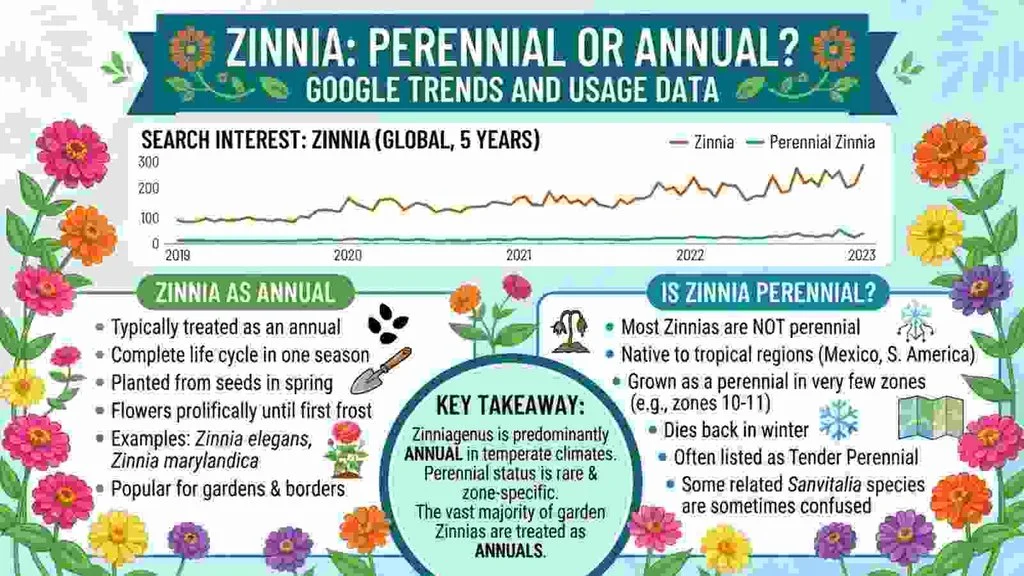
The search phrase “zinnia perennial or annual” is useful for people who want to understand the life cycle of this flower.
Gardeners often search for this question when planning seasonal flower beds or choosing plants for their homes.
Search interest can vary by country and growing season.
- United States: Gardeners often look for zinnia planting guides, seed care, and blooming seasons.
- United Kingdom: People may search for zinnia growing tips, annual flowers, and frost protection.
- Canada: Gardeners often look for planting times and ways to grow zinnias during shorter summers.
- Australia: Searches may focus on warm-weather planting, watering, and flower care.
Interest often rises during spring and early summer when people prepare their gardens.
Exact search volumes and country rankings can change over time. Google Trends can help compare search interest, but it does not show exact monthly search volumes.
Zinnia Annual vs Perennial: Comparison Table
| Feature | Annual Zinnia | Perennial Plant |
| Life cycle | One season | Several years |
| Winter survival | Usually dies | Often survives |
| Flowering | Usually one growing season | Returns in later years |
| Seed production | Yes | Varies |
| Replanting | Usually needed | Usually not needed |
| Example | Zinnia | Coneflower |
This table shows why zinnias are classed as annual flowers rather than perennials.
Frequently Asked Questions
1. Are zinnias annual or perennial flowers?
Zinnias are annual flowers. They grow, bloom, produce seeds, and die within one growing season.
2. Do zinnias come back every year?
Zinnia plants do not usually come back after winter. However, seeds that fall into the soil may grow into new plants the following year.
3. Can zinnias survive winter?
Most garden zinnias cannot survive freezing winter weather. Cold temperatures and frost can kill the plants.
4. Do zinnias need full sun?
Yes. Zinnias grow best in full sunlight. Aim for at least six hours of direct sunlight each day.
5. How long do zinnias bloom?
Zinnias can bloom from summer until the first frost if they receive enough sunlight, water, and care.
6. Can I save zinnia seeds for next year?
Yes. Allow some flowers to dry on the plant. Collect the mature seeds, store them in a cool, dry place, and plant them next spring.
7. Are zinnias easy to grow?
Yes. Zinnias are easy to grow from seeds. They need warm soil, sunlight, and well-drained ground.
Conclusion
Zinnias are annual flowers, not perennial plants. They grow for one season, produce beautiful flowers, make seeds, and die when their growing season ends.
However, you can enjoy these flowers every year by collecting their seeds and planting them again in spring.
Zinnias are a great choice for beginners because they are easy to grow and come in many bright colors.
They can make your garden look fresh and beautiful from summer to fall. Give them full sunlight, well-drained soil, and enough water for healthy growth.
If you want flowers that return naturally every year, choose perennial plants instead. But if you enjoy planting new flowers each spring, zinnias are an excellent option.
With simple care, these annual flowers can bring color, beauty, and life to your garden every growing season.

Mary Roach is an American science writer and bestselling author known for making unusual and complex scientific topics engaging, accessible, and humorous. Her books include Stiff, Packing for Mars, Gulp, and Fuzz.
Author at Simifind.com, sharing clear, informative content designed to help readers understand interesting topics and everyday questions.