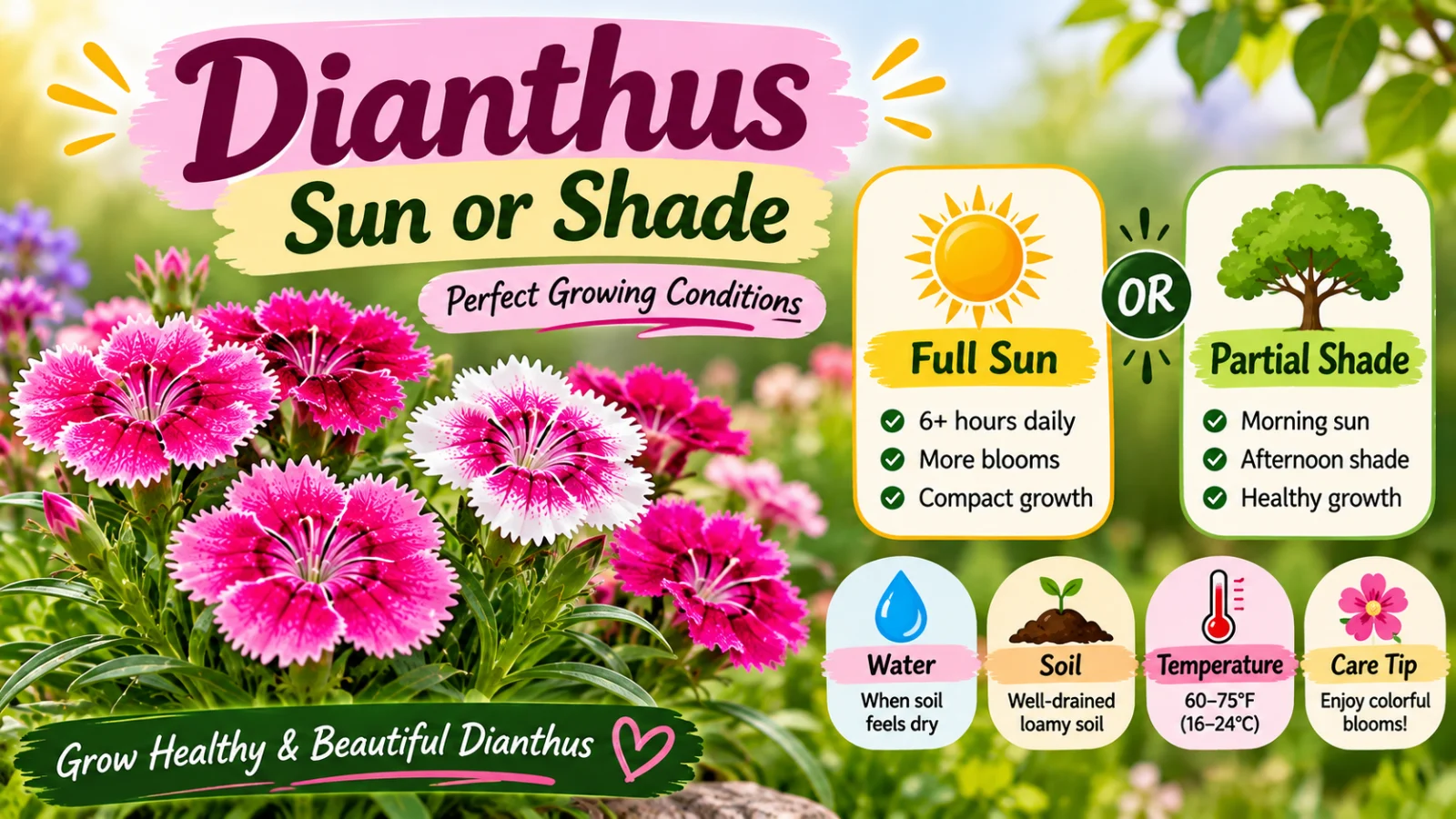
Dianthus flowers are known for their bright colors, sweet scent, and beautiful petals. They can make any garden look fresh and lively.
But before planting them, many gardeners ask an important question: Does dianthus grow best in sun or shade?
Choosing the right spot can make a big difference. Too little sunlight may lead to weak stems and fewer flowers.
Too much heat can also affect some dianthus varieties, especially during hot summer days.
So, should you plant dianthus in full sun, partial shade, or a spot that gets both? The answer depends on your local climate, soil, and the type of dianthus you grow.
In this guide, you will learn how much sunlight dianthus needs, where to plant it, and how to care for it. We will also cover common growing mistakes, useful planting tips, and answers to popular gardening questions.
Dianthus Sun or Shade – Quick Answer
Dianthus grows best in full sun, with at least 6 hours of direct sunlight each day. Most varieties need plenty of light to produce healthy leaves and colorful flowers.
However, dianthus can also grow in partial shade. This is helpful in areas with very hot summers.
Here is a simple guide:
- Full sun: Best for strong growth and more flowers.
- Partial shade: Good in hot climates, especially during the afternoon.
- Full shade: Not recommended because plants may produce fewer flowers and weak stems.
For example, if you live in a cool area, choose a sunny garden bed. If your summers are very hot, give your dianthus morning sunlight and some afternoon shade.
How Much Sunlight Does Dianthus Need?
Most dianthus plants need around 6 to 8 hours of sunlight each day. Good sunlight helps them grow strong and produce more blooms.
However, different varieties may have slightly different needs.
Full Sun for Better Flowers
Full sun is the best choice for most dianthus varieties. It helps plants develop strong stems, healthy leaves, and bright flowers.
A sunny garden bed is a great place to grow dianthus. You can also plant it in containers on a sunny patio or balcony.
Partial Shade in Hot Weather
Partial shade can help protect dianthus from strong afternoon heat. This is especially useful in warm regions where summer temperatures rise quickly.
Try to provide morning sun and light afternoon shade. This gives the plant enough light without exposing it to extreme heat all day.
Can Dianthus Grow in Full Shade?
Dianthus can sometimes survive in a shady spot, but it may not grow well.
Too much shade can cause:
- Fewer flowers.
- Weak or stretched stems.
- Slow growth.
- Poor flowering.
- Increased moisture around the plant.
For the best results, avoid planting dianthus under large trees or in dark garden corners.
Best Location to Plant Dianthus
Choosing the right planting location is just as important as sunlight. Dianthus needs a place with good air movement, well-drained soil, and enough room to grow.
Consider these planting locations:
Garden Beds
Garden beds are a good choice because they provide enough space for roots to spread. Choose a sunny area with loose, well-drained soil.
Pots and Containers
Dianthus grows well in pots. Place containers where they receive at least 6 hours of sunlight.
Make sure the pot has drainage holes. Standing water can damage the roots.
Borders and Rock Gardens
Many dianthus varieties are low-growing plants. They look beautiful along garden borders, pathways, and rock gardens.
These areas often provide good sunlight and drainage.
Does Dianthus Need Morning Sun or Afternoon Sun?
Dianthus can grow in both morning and afternoon sunlight. However, morning sun is often better in places with very hot summers.
Morning sunlight gives plants enough light for healthy growth. Afternoon shade can protect flowers and leaves from extreme heat.
In cooler climates, dianthus can usually handle full-day sunlight.
If your garden gets very strong afternoon sun, watch the plants for signs of heat stress. Wilting, dry leaves, and faded flowers may mean they need some protection.
Best Growing Conditions for Dianthus
Sunlight is important, but it is not the only thing dianthus needs. The right soil, water, and temperature also help plants grow well.
| Growing factor | Best condition |
| Sunlight | 6–8 hours daily |
| Soil | Well-drained soil |
| Water | Moderate watering |
| Temperature | Cool to mild conditions |
| Soil pH | Slightly acidic to neutral, depending on variety |
| Drainage | Good drainage |
| Fertilizer | Light feeding when needed |
Soil Requirements
Dianthus prefers well-drained soil. Heavy, wet soil can cause root problems.
If your garden soil holds too much water, add suitable organic matter or grow dianthus in a raised bed.
Watering Needs
Water dianthus when the top layer of soil begins to dry. Avoid keeping the roots wet for long periods.
Young plants need regular watering while they become established. Mature plants can often handle short dry periods.
Temperature and Climate
Many dianthus varieties prefer cool to mild weather. Some types handle heat better than others.
In very hot climates, afternoon shade and proper watering can help protect the plants.
Common Mistakes When Growing Dianthus
Even though dianthus is fairly easy to grow, a few common mistakes can affect its health and flowers.
1. Planting in Full Shade
Too little sunlight can reduce flowering. Choose a sunny location whenever possible.
2. Overwatering
Dianthus does not like soggy soil. Water only when needed and make sure the soil drains well.
3. Using Heavy Soil
Poor drainage can lead to root rot. Improve the soil before planting.
4. Ignoring Afternoon Heat
Some varieties struggle during extreme summer heat. Provide light afternoon shade when needed.
5. Not Removing Old Flowers
Removing faded flowers can help keep plants tidy and may encourage more blooms in some varieties.
Dianthus Sun or Shade – Comparison Table
| Growing location | Is it suitable? | Expected result |
| Full sun | Yes | Best flowering |
| Morning sun | Yes | Healthy growth |
| Afternoon sun | Yes, depending on climate | Good growth if heat is moderate |
| Partial shade | Yes | May produce fewer flowers |
| Full shade | No | Weak growth and fewer blooms |
| Indoor shade | Usually not ideal | Limited flowering |
Dianthus Sun or Shade – Google Trends and Usage Data

The search phrase “dianthus sun or shade” reflects a common gardening question. People often search for it when choosing a planting location or trying to improve flower growth.
Related searches include dianthus sunlight requirements, how much sun do dianthus need, dianthus growing conditions, and can dianthus grow in shade.
Interest in these searches is linked to several gardening topics:
- Planting advice: Gardeners want to know where to place new plants.
- Flower care: People want more flowers and healthy growth.
- Container gardening: Home gardeners need advice about sunlight for potted dianthus.
- Summer gardening: Gardeners in hot areas want to protect plants from heat.
- Garden design: People want to use dianthus in borders, beds, and rock gardens.
Exact search volumes and country rankings require a live Google Trends or keyword research check. The related phrases above are useful SEO topics, not verified search-volume rankings.
Frequently Asked Questions
1. Does dianthus prefer sun or shade?
Dianthus prefers full sun. Most varieties grow best with at least 6 hours of direct sunlight each day.
2. Can dianthus grow in partial shade?
Yes. Dianthus can grow in partial shade, especially in hot climates. However, it may produce fewer flowers than plants grown in full sun.
3. Can dianthus grow in full shade?
Full shade is not ideal. Plants may develop weak stems, fewer flowers, and poor growth.
4. How many hours of sun does dianthus need?
Most dianthus varieties need 6 to 8 hours of sunlight each day for healthy growth and good flowering.
5. Can dianthus survive hot afternoon sun?
Yes, many varieties can handle afternoon sun. However, extreme heat may stress some types. Afternoon shade can help in very hot regions.
6. Is dianthus good for growing in pots?
Yes. Dianthus grows well in pots and containers. Use well-drained potting soil and place the container in a sunny location.
7. Why is my dianthus not flowering?
Too little sunlight, poor drainage, excess fertilizer, or unsuitable growing conditions can reduce flowering. Give your plant enough sunlight and avoid soggy soil.
Conclusion
Dianthus is a beautiful flower that can brighten garden beds, borders, rock gardens, and containers.
If you want healthy plants and more colorful blooms, full sun is usually the best choice. Most dianthus varieties need at least 6 hours of direct sunlight each day.
However, partial shade can also work well, especially in areas with very hot summers. Morning sunlight and light afternoon shade can help protect plants from extreme heat.
Remember that sunlight is only one part of good dianthus care. Well-drained soil, moderate watering, and good air movement are also important. Avoid full shade and waterlogged soil because both can affect plant health.
Before planting, check the growing needs of your dianthus variety. Some types handle heat better than others. With the right location and simple care, you can enjoy healthy dianthus plants and beautiful flowers throughout their blooming season.
The simple rule is this: give dianthus plenty of sunlight, protect it from extreme heat, and keep its roots out of wet soil.

Here’s a concise 2-line author bio suitable for Simifind.com:
James Dashner is an American bestselling author best known for The Maze Runner series and other popular young-adult fiction.
On Simifind.com, he shares clear, engaging insights and helpful content for readers interested in books, writing, and popular literature.