Have you ever seen a small insect crawling across your floor and wondered if it was a beetle or a cockroach?
These two insects can look alike at first, but they are not the same. Both have six legs, hard outer bodies, and feelers called antennae.
However, their shape, wings, behavior, and habits can help you tell them apart.
People often search for beetle or cockroach because they want to identify an insect in their home, garden, or workplace.
Some beetles look like small roaches, while young cockroaches may look different from adult ones. This can make insect identification hard.
Knowing the difference is useful. Cockroaches can spread germs and may become a home pest.
Most beetles are harmless, and many help plants and gardens. Some beetles can also damage food, wood, or crops.
In this guide, you will learn how to tell a beetle from a cockroach, understand their key features, and see which insect you may have found.
Beetle or Cockroach – Quick Answer
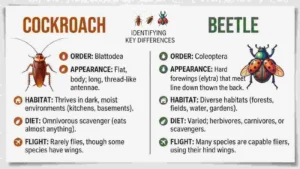
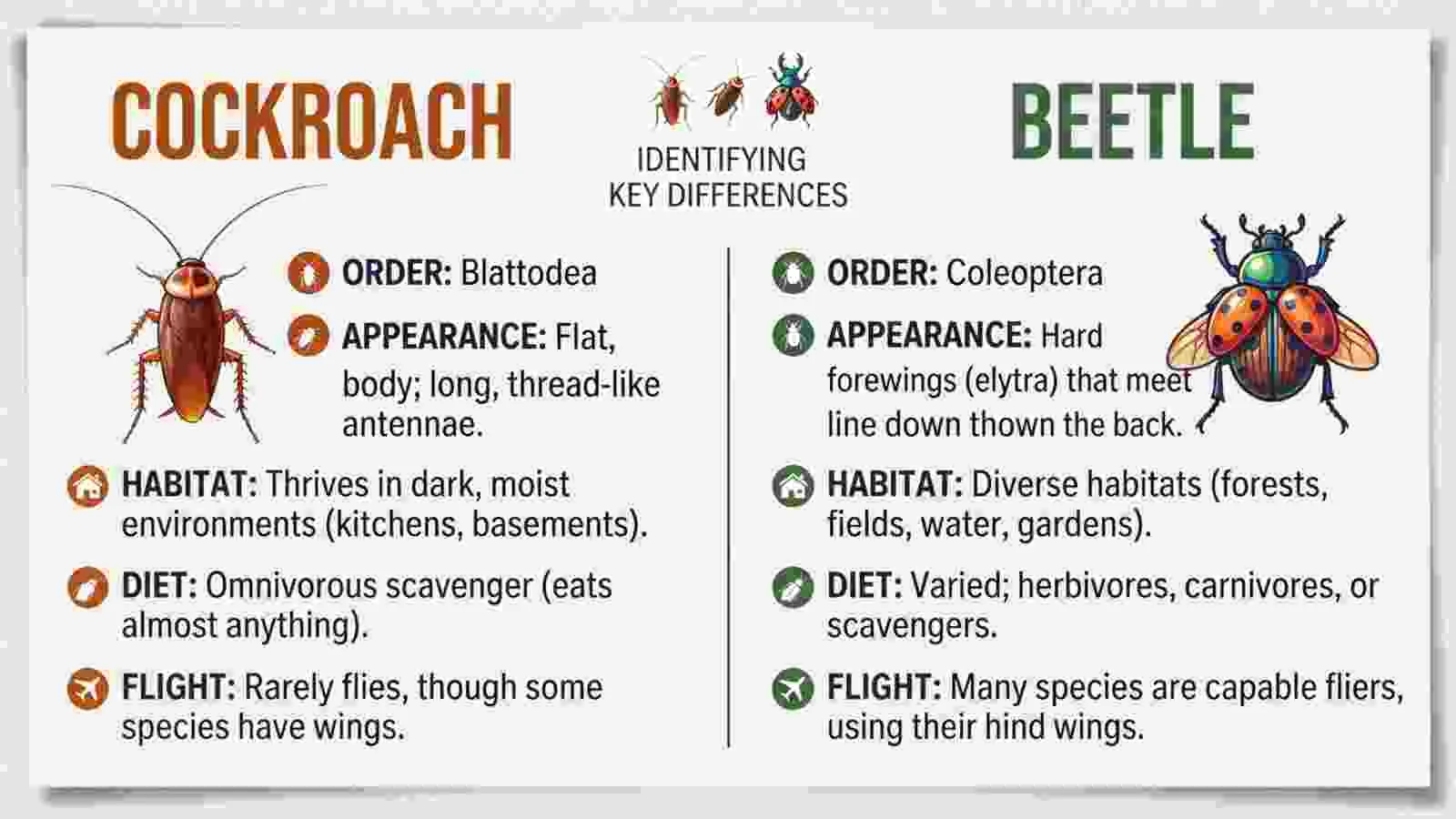
A beetle is an insect with hard front wings that cover its body. A cockroach has a flatter body, long antennae, and wings that lie over its back.
The easiest way to tell them apart is to look at their body shape and wings.
| Feature | Beetle | Cockroach |
| Body shape | Round or oval | Flat and long |
| Wings | Hard front wings | Soft, thin wings |
| Antennae | Short or long | Usually long |
| Legs | Vary by species | Long and spiny |
| Movement | Walks or flies | Runs quickly |
| Food | Plants, insects, wood, or food | Food scraps and many other materials |
| Habitat | Gardens, forests, and homes | Homes, drains, and outdoor areas |
Example: If you see a round insect with a hard shell, it may be a beetle. If it has a flat body, long antennae, and runs very fast, it may be a cockroach.
The Origin of Beetle or Cockroach
The words beetle and cockroach have different histories. Both names describe insects, but they come from different language roots.
Origin of Beetle
The word beetle comes from Old English bitela. It is linked to the word bītan, which means “to bite.”
The name has been used for many types of insects with hard outer bodies. Beetles belong to the insect order Coleoptera. This group includes ladybugs, weevils, ground beetles, and many other species.
Origin of Cockroach
The word cockroach comes from the Spanish word cucaracha. English speakers changed the sound and spelling over time to create the word we use today.
Cockroaches belong to the insect order Blattodea. They are known for their flat bodies, long antennae, and fast movement.
Why Are They Different?
Beetles and cockroaches belong to different insect groups. Their body structures, life cycles, and feeding habits are not the same.
Beetles have hard front wings called elytra. Cockroaches have a softer body and wings that overlap on their back.
British English vs American English Spelling
When comparing beetle and cockroach, there is no major British or American spelling difference.
Both words have the same spelling in British English and American English. The difference is not about spelling. It is about insect identification.
| Word | British English | American English | Meaning |
| Beetle | Beetle | Beetle | An insect with hard front wings |
| Cockroach | Cockroach | Cockroach | A flat-bodied insect |
| Ladybug | Ladybird | Ladybug | A small, round beetle |
| Roach | Roach | Roach | A common short name for cockroach |
| Ground beetle | Ground beetle | Ground beetle | A beetle often found on the ground |
Are There Any Regional Differences?
Yes, some insect names change by region.
- Ladybird: Common in British English.
- Ladybug: Common in American English.
- Roach: Used as a short form of cockroach in both regions.
- Beetle: The same spelling in both varieties.
These regional terms do not change the scientific identity of the insect.
Which Spelling Should You Use?
You should use beetle when talking about an insect from the beetle family. Use cockroach when describing an insect from the cockroach family.
Your choice does not depend on whether you are writing for a British or American audience.
For American Readers
Use beetle and cockroach. Both are standard American English words.
Example: “I found a beetle in my garden, but a cockroach was inside my kitchen.”
For British Readers
Use the same words. British English also uses beetle and cockroach.
Example: “A beetle was sitting on the garden wall.”
For Global Readers
Use the full words when writing educational articles, science guides, or pest control content.
This helps readers understand which insect you mean. Avoid using only the word bug because it can describe many different insects.
Common Mistakes with Beetle or Cockroach
Many people confuse beetles and cockroaches because they can have similar colors and sizes. Here are some common mistakes to avoid.
1. Thinking every brown insect is a cockroach
Not every brown insect is a cockroach. Many beetles are brown, black, or dark red.
2. Confusing hard wings with soft wings
Beetles have hard front wings that protect their flying wings. Cockroaches have thinner wings that lie over their backs.
3. Thinking all beetles are harmless
Most beetles are not dangerous to people, but some can damage crops, stored food, wood, and plants.
4. Calling every crawling insect a cockroach
Many insects crawl on floors and walls. Check their body shape, legs, and antennae before naming them.
5. Confusing baby cockroaches with beetles
Young cockroaches are called nymphs. They do not have fully developed wings, so they may look different from adult cockroaches.
Beetle or Cockroach in Everyday Examples
Both words appear in daily life, news reports, social media, and formal writing. The correct word depends on the insect you are describing.
Emails
- “I found a beetle near the garden door.”
- “There may be a cockroach problem in the kitchen.”
News
- “Scientists found a new beetle species in a tropical forest.”
- “Health workers warned people about cockroach infestations in some buildings.”
Social Media
- “Look at this beautiful green beetle!”
- “I found a cockroach in my room last night.”
Formal Writing
- “Beetles play an important role in many ecosystems.”
- “Cockroaches can survive in many different environments.”
In Science and Education
Beetles are part of the order Coleoptera. Cockroaches belong to Blattodea.
These scientific names help researchers classify insects and study their behavior.
Beetle or Cockroach – Google Trends & Usage Data
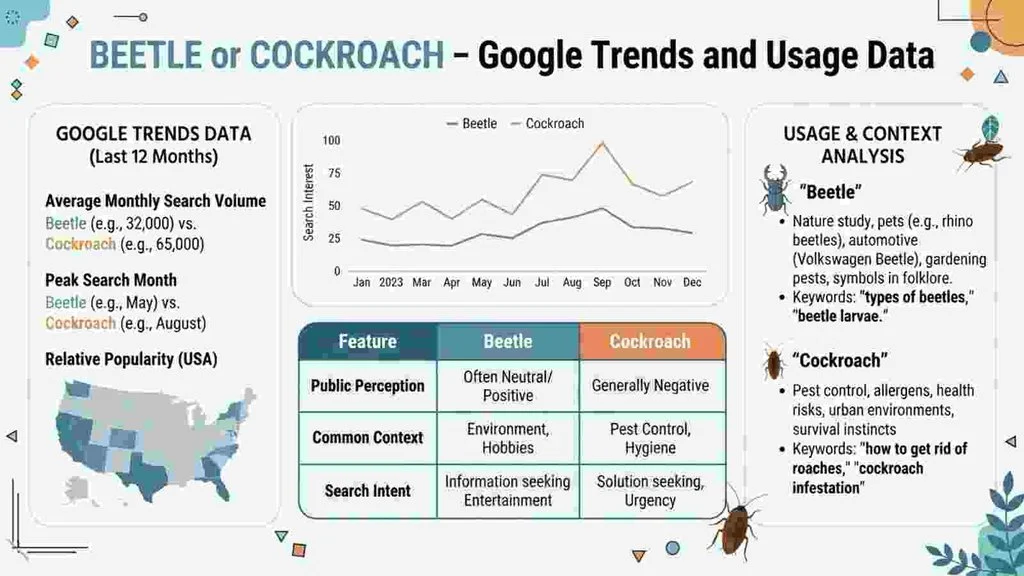
The search terms beetle and cockroach have different search purposes. People often search for beetles to learn about insect species, garden insects, and nature. Cockroach searches are often linked to home pests, insect control, and identification.
However, exact search popularity changes by country, season, and time. Without a live Google Trends comparison, it would not be accurate to claim that one word has a higher search volume than the other.
Search Interest by Context
| Search term | Common search intent | Popular context |
| Beetle | Insect identification | Gardens and nature |
| Cockroach | Pest identification | Homes and kitchens |
| Beetle vs cockroach | Insect comparison | Education |
| Small brown beetle | Insect identification | Household searches |
| Baby cockroach | Pest identification | Home pest control |
Why Do People Search for Beetles?
People often search for beetles when they find an unusual insect in a garden, home, or outdoor space.
Common related searches include:
- Types of beetles
- Small brown beetles
- Black beetle identification
- Beetles in the garden
- Beetles that look like cockroaches
Why Do People Search for Cockroaches?
Cockroach searches often come from people who want to identify a possible pest or learn how to prevent an infestation.
Common related searches include:
- Small cockroach identification
- Baby cockroach vs beetle
- Cockroach in the kitchen
- Signs of cockroach infestation
- How to identify cockroaches
You can compare interest by country and date using the Google Trends tool.
Frequently Asked Questions (FAQs)
1. How can you tell a beetle from a cockroach?
Look at the wings and body shape. Beetles have hard front wings, while cockroaches usually have flatter bodies and long antennae.
2. Can a beetle look like a cockroach?
Yes. Some beetles have brown, oval bodies that look similar to cockroaches. Their hard wing covers can help you tell them apart.
3. Are beetles more dangerous than cockroaches?
Most beetles are harmless to people. Cockroaches can carry germs and contaminate food. However, some beetles can damage plants, wood, and stored products.
4. Do beetles and cockroaches have the same number of legs?
Yes. Both adult beetles and cockroaches have six legs because they are insects.
5. Can cockroaches fly like beetles?
Some cockroach species can fly or glide. Many beetles can also fly. Their flying ability depends on the species.
6. Are baby cockroaches the same as small beetles?
No. Baby cockroaches are called nymphs. They look like smaller versions of adult cockroaches but usually do not have fully developed wings.
7. Which insect is more common in homes?
Both can enter homes. Cockroaches are common household pests, while beetles may enter through windows, doors, plants, or stored food.
Conclusion
Knowing the difference between a beetle and a cockroach can help you identify insects with more confidence.
Although they may look alike, their bodies and wings have clear differences. Beetles usually have hard front wings that protect their bodies. Cockroaches have flatter bodies, long antennae, and fast-moving legs.
Both insects have six legs, but they belong to different insect groups. Beetles are found in gardens, forests, and homes. Cockroaches often live near food, water, and warm places. Some beetles can also become pests, so it is important not to judge an insect by its name alone.
Remember that beetle and cockroach have the same spelling in British and American English. The main difference is their appearance and behavior, not their spelling.
If you find an unknown insect, look closely at its body, wings, and antennae before identifying it. A clear photo can also help with accurate identification.

Mary Roach is an American science writer and bestselling author known for making unusual and complex scientific topics engaging, accessible, and humorous. Her books include Stiff, Packing for Mars, Gulp, and Fuzz.
Author at Simifind.com, sharing clear, informative content designed to help readers understand interesting topics and everyday questions.