Have you ever seen a small, round insect with colorful wings and wondered if it was a ladybug or a beetle?
You are not alone. Many people search for ladybug or beetle because these insects look similar, and their names can cause confusion.
Some think a ladybug is different from a beetle. Others want to know whether ladybugs belong to the beetle family.
The simple truth is that a ladybug is a type of beetle. It belongs to a large insect group called Coccinellidae.
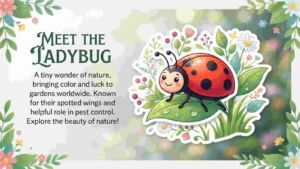
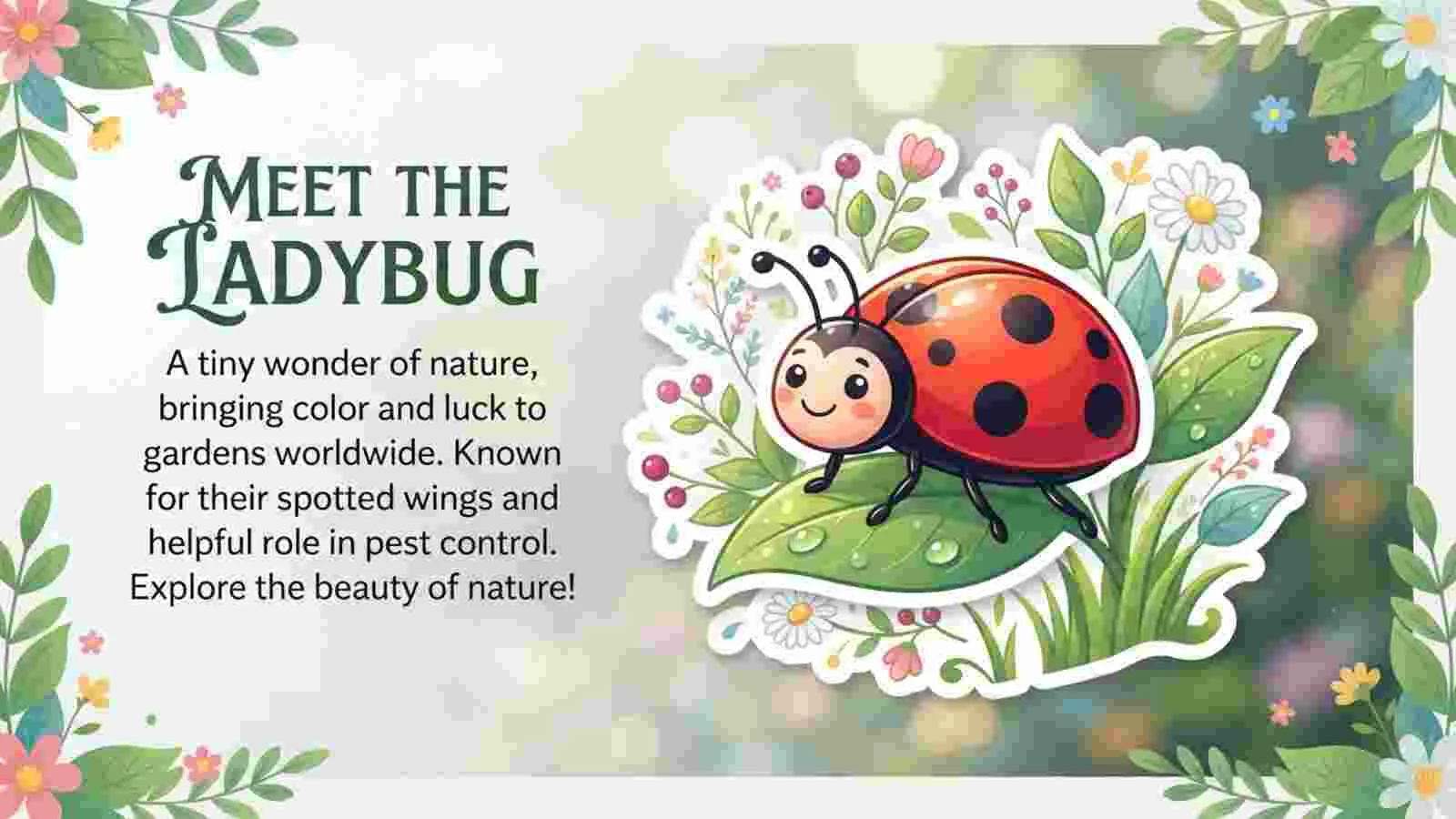
Ladybugs are known for their round bodies, bright colors, and small black spots. Other beetles come in many shapes, sizes, and colors.
Knowing the difference can help you identify insects in your garden, home, or outdoor space.
In this guide, we will explain what makes a ladybug special, how it differs from other beetles, and which name you should use in everyday English.
Ladybug or Beetle – Quick Answer
A ladybug is a beetle, but not every beetle is a ladybug. Ladybugs belong to the beetle family Coccinellidae. They are usually small, round, and colorful, with black spots on their wings.
Here is the simple difference:
- Ladybug: A small, round beetle often known for its red or orange body and black spots.
- Beetle: A broad insect group with many different shapes, colors, and sizes.
For example, a red insect with black spots is likely a ladybug. A large black insect with a hard shell may be another type of beetle.
Both insects have hard front wings that protect their softer flying wings. The key point is that ladybugs are one small group within the much larger beetle family.
The Origin of Ladybug and Beetle
The words ladybug and beetle have different histories. Both names have been used in English for many years.
Where Does the Word Ladybug Come From?
The word ladybug comes from the term Our Lady’s bug. The word “lady” refers to the Virgin Mary in Christian tradition.
In European stories, the red wings and seven black spots of some ladybugs were linked to the Virgin Mary. Over time, the name became popular in everyday English.
The word ladybird is also used, especially in British English. Despite the name, a ladybird is an insect, not a bird.
Where Does the Word Beetle Come From?
The word beetle comes from Old English bitela. It is linked to the word bitan, which means “to bite.”
People have used this name for insects with hard outer wings for centuries. Today, beetle refers to a very large group of insects in the order Coleoptera.
The name includes ladybugs, weevils, scarab beetles, ground beetles, and many other species.
British English vs American English: Ladybug or Beetle
British and American English use different common names for ladybugs. However, both use the word beetle.
In American English, ladybug is the most common name. In British English, ladybird is more common.
The scientific name remains the same in both countries.
| Feature | American English | British English |
| Common name | Ladybug | Ladybird |
| General insect group | Beetle | Beetle |
| Scientific family | Coccinellidae | Coccinellidae |
| Red insect with spots | Ladybug | Ladybird |
| General hard-winged insect | Beetle | Beetle |
Examples in American English
- I found a red ladybug on my garden leaf.
- A ladybug landed on my hand.
- Ladybugs can help protect garden plants.
Examples in British English
- A ladybird is sitting on the flower.
- I saw a ladybird in the garden.
- Ladybirds can eat harmful garden pests.
Both forms are correct. The main difference is regional word choice, not the insect itself.
Which Name Should You Use?
The best name depends on your audience and the type of writing you are doing.
For American readers: Use ladybug. It is the familiar and widely accepted name in the United States.
For British readers: Use ladybird. This is the traditional name used in the UK.
For Australian and other Commonwealth readers: Ladybird is widely understood, although local usage can vary.
For global readers: You can use ladybug (ladybird) the first time you mention the insect. This helps readers from different countries understand your meaning.
For scientific writing, use Coccinellidae when referring to the ladybug family. Use Coleoptera when discussing the larger beetle order.
Common Mistakes with Ladybug or Beetle
People often make a few mistakes when they compare ladybugs and beetles. Here are the most common ones.
Mistake 1: Thinking ladybugs are not beetles.
This is incorrect. Ladybugs are a type of beetle. They belong to the family Coccinellidae.
Mistake 2: Calling every beetle a ladybug.
Not all beetles are ladybugs. Beetles include thousands of different types with many body shapes and colors.
Mistake 3: Thinking all ladybugs are red.
Ladybugs can be red, orange, yellow, black, or other colors. Their patterns also vary.
Mistake 4: Thinking every ladybug has seven spots.
Some ladybugs have seven spots, while others have fewer, more, or no visible spots.
Mistake 5: Confusing ladybugs with other small insects.
Some insects look like ladybugs but belong to different groups. Check their body shape, wings, and other features before identifying them.
Ladybug or Beetle in Everyday Examples
Both words are useful in everyday English. The right choice depends on whether you mean a ladybug or the wider beetle group.
| Context | Example Sentence |
| I found a ladybug near the office window today. | |
| News | Scientists are studying how beetles affect local ecosystems. |
| Social media | Look at this cute ladybug on my flower! |
| School writing | A ladybug is a small beetle with a round body. |
| Formal writing | Ladybugs belong to the insect family Coccinellidae. |
| Gardening | Ladybugs help control some garden pests. |
| Nature study | Beetles are found in many habitats around the world. |
When to Use Ladybug
Use ladybug when talking about this specific group of small, colorful beetles.
Example: “A ladybug landed on the green leaf.”
When to Use Beetle
Use beetle when talking about the larger insect group or a beetle that is not specifically identified as a ladybug.
Example: “A black beetle was crawling near the tree.”
Ladybug or Beetle – Google Trends and Usage Data
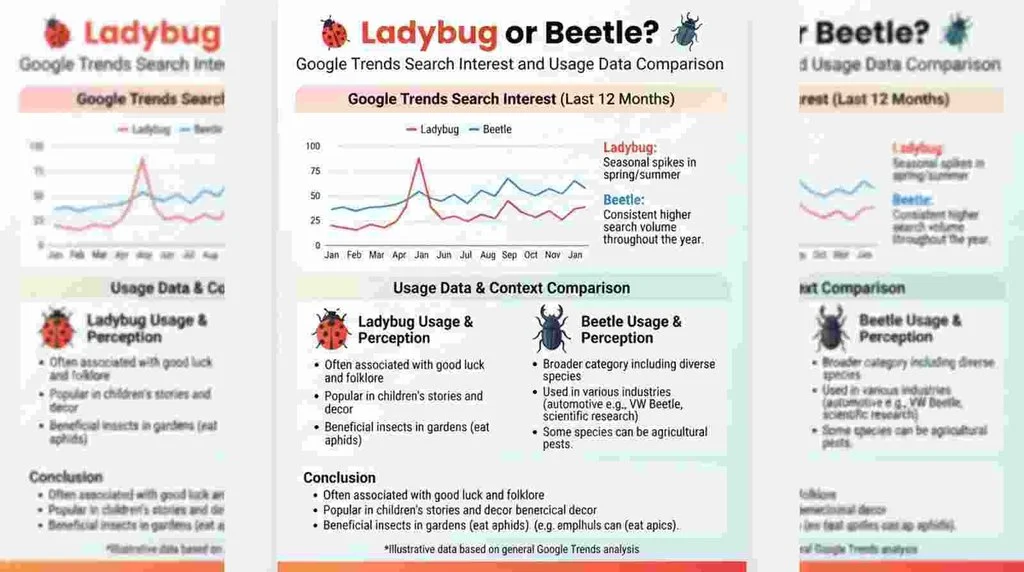
People search for ladybug or beetle to learn about insect identification, garden pests, and the difference between common insect names.
The two words have different search purposes.
- Ladybug: Often linked to gardening, children’s learning, insect pictures, and nature.
- Beetle: Often linked to insect identification, science, pest control, and different beetle species.
- Ladybird: Commonly used in British English and other regions that follow British naming traditions.
Search Interest by Country
| Country | Common Name | Search Context |
| United States | Ladybug | Identification and gardening |
| United Kingdom | Ladybird | Nature and insect education |
| Canada | Ladybug | Gardening and wildlife |
| Australia | Ladybird | Nature and garden insects |
| India | Ladybird / Ladybug | Education and insect identification |
Which Keyword Is More Popular?
Ladybug is a familiar search term in American English. Ladybird is more common in British English. The word beetle has a much wider meaning because it covers many insect species.
Actual Google Trends rankings and search volumes change over time. The country comparisons above describe common naming patterns, not verified live search rankings.
Ladybug vs Beetle: Side-by-Side Comparison
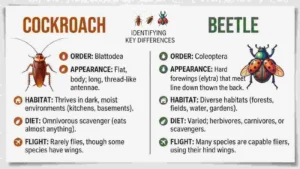
| Feature | Ladybug | Other Beetles |
| Classification | Beetle family Coccinellidae | Many different families |
| Body shape | Usually round or oval | Many shapes |
| Color | Often red, orange, or yellow | Many colors |
| Spots | Common in some species | Depends on species |
| Size | Usually small | Small to very large |
| Diet | Often eats aphids and other small insects | Plants, fungi, insects, or other foods |
| Wings | Hard front wings | Hard front wings |
| Example | Seven-spotted ladybug | Ground beetle |
The main difference is classification. A ladybug is one particular kind of beetle, while beetle is the broader name.
FAQs About Ladybug or Beetle
1. Is a ladybug a beetle?
Yes. A ladybug is a type of beetle. It belongs to the scientific family Coccinellidae, which includes many ladybug species.
2. What is the difference between a ladybug and a beetle?
A ladybug is a specific type of beetle. The word beetle describes a much larger group of insects with many different shapes, colors, and sizes.
3. Are ladybugs and ladybirds the same insect?
Yes. Ladybug and ladybird are two common names for the same group of insects. Ladybug is more common in American English, while ladybird is common in British English.
4. Do all ladybugs have black spots?
No. Some ladybugs have black spots, while others have different patterns or no spots at all. Their colors and markings depend on the species.
5. Are ladybugs good for gardens?
Yes. Many ladybugs eat aphids and other small plant pests. This makes them helpful insects for gardeners.
6. Can a beetle be red with black spots?
Yes. Some beetle species have red bodies and black spots. However, a common red beetle with black spots may be a ladybug.
7. What is the scientific name for a ladybug?
Ladybugs belong to the family Coccinellidae. There are many species within this family, so there is no single scientific species name for all ladybugs.
Conclusion
When comparing ladybug or beetle, remember that both names are correct, but they do not mean exactly the same thing.
A ladybug is a specific type of beetle that belongs to the Coccinellidae family. Beetle is a much broader term that covers many different insects.
If you see a small, round insect with bright wings and black spots, it may be a ladybug. However, not all ladybugs have spots, and not all colorful beetles are ladybugs.
The name also depends on where you live. Americans usually say ladybug, while people in the UK often say ladybird. Both names refer to the same insect group.
For everyday writing, choose the name your readers know best. Use ladybug for American readers, ladybird for British readers, and beetle when talking about the wider insect group.
Understanding this simple difference makes insect identification and English usage much easier.

Here’s a concise 2-line author bio suitable for Simifind.com:
James Dashner is an American bestselling author best known for The Maze Runner series and other popular young-adult fiction.
On Simifind.com, he shares clear, engaging insights and helpful content for readers interested in books, writing, and popular literature.