If you love bright, colorful flowers, ranunculus may be a great choice for your garden. But before you plant them, you may ask one important question: Is ranunculus an annual or a perennial?
The answer can be confusing because ranunculus flowers do not grow the same way in every climate.
Some types can return year after year, while others are grown as annual flowers. Their growth also depends on winter temperatures, soil conditions, and how you care for their roots.
Many gardeners search for ranunculus annual or perennial because they want to know whether they need to plant new flowers each spring or can enjoy the same plants again. This guide explains the difference in simple words.
You will learn how long ranunculus flowers live, which climates suit them best, when to plant their bulbs (also called corms), and how to help them grow.
Whether you are a new gardener or have years of experience, this guide will help you make the right choice.
Ranunculus Annual or Perennial – Quick Answer
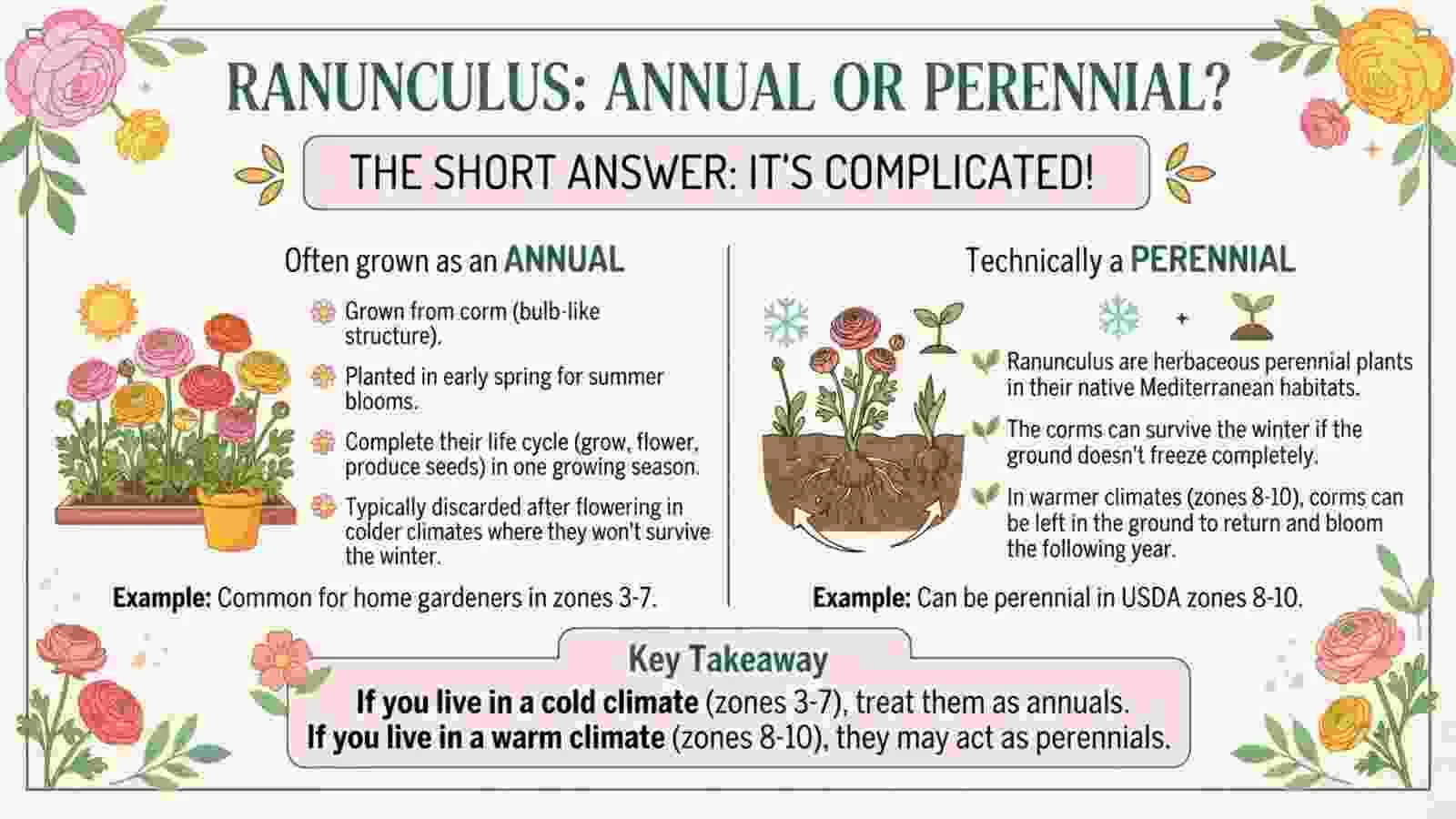
Ranunculus can be both an annual and a perennial, depending on the species and climate. The popular Persian buttercup (Ranunculus asiaticus) is a tender perennial. It can grow again each year in mild climates, especially in USDA hardiness zones 8–10.
In colder areas, gardeners often grow ranunculus as an annual because frost can damage or kill the corms. They plant new corms each year or lift and store them indoors for the next growing season.
Here is a simple guide:
- Annual: Grown for one growing season in cold climates.
- Perennial: Can return for several years in suitable climates.
- Tender perennial: Can survive mild winters but needs protection from frost.
For example, a gardener in California may enjoy ranunculus returning each year, while a gardener in a colder state may need to dig up and store the corms.
The Origin of Ranunculus
The word ranunculus comes from Latin. It means “little frog.” This name is linked to the places where many wild ranunculus plants grow. Some species are often found in wet areas, near ponds, and in damp soil.
Ranunculus belongs to the buttercup family, known as Ranunculaceae. This plant family includes many flowering plants with different shapes, colors, and growth habits.
The Persian buttercup is one of the most popular garden types. It is loved for its soft petals and bright colors. You can find flowers in red, pink, yellow, orange, white, and purple.
There is no British or American spelling difference in the word ranunculus. Both countries use the same spelling. The confusion is about its life cycle, not its name.
Different ranunculus species also have different growing needs. Some are wild plants, while others are grown for garden displays and cut flowers.
British English vs American English: Ranunculus
The word ranunculus is spelled the same in British and American English. There is no spelling change between the two forms of English.
However, gardeners may use different words when talking about this flower. For example, British gardeners may use the word “corms,” while American gardeners may also call them bulbs in everyday conversation.
A corm is not a true bulb. It is a short, thick underground plant stem that stores food for future growth.
| Feature | British English | American English |
| Flower name | Ranunculus | Ranunculus |
| Spelling | Same | Same |
| Plant part | Corm | Corm or bulb (informal) |
| Growing term | Perennial | Perennial |
| Cold season | Winter frost | Winter frost |
| Plant care | Lift and store corms | Dig up and store corms |
Why Do Gardeners Confuse the Terms?
The main reason is climate. A flower that grows as a perennial in one country may be treated as an annual in another.
For example, ranunculus can survive outdoors in mild winter areas. But in places with freezing winters, its corms may not survive in the ground.
Which Should You Choose? Annual or Perennial Ranunculus?
Your choice depends on where you live and how much time you want to spend caring for your flowers.
For gardeners in the United States:
If you live in a warm area, you may be able to grow ranunculus as a perennial. In colder areas, you can grow it as an annual or lift the corms before winter.
For gardeners in the United Kingdom:
Ranunculus can grow well in many gardens, but wet and cold winter soil can cause corms to rot. Good drainage and winter protection are important.
For gardeners in other countries:
Check your local winter temperatures before planting. Mild winters often make perennial growth easier, while harsh winters may require indoor storage.
Professional gardening advice: If you are unsure, treat ranunculus as a tender perennial. Grow it during the cool season, protect its corms from frost, and store them in a dry place when needed.
Common Mistakes with Ranunculus Annual or Perennial
Many gardeners make simple mistakes when growing ranunculus. Understanding these mistakes can help your flowers grow better.
1. Thinking every ranunculus is an annual
Not all ranunculus plants die after one season. Some species are perennial and can return each year in suitable conditions.
2. Treating ranunculus as a hardy perennial
Popular Persian buttercups are tender perennials. They may not survive freezing temperatures or wet winter soil.
3. Calling corms true bulbs
Ranunculus grows from corms, not true bulbs. Both store food for future growth, but they are different plant structures.
4. Leaving corms in wet soil
Too much water can cause corms to rot. Always choose well-drained soil and avoid overwatering.
5. Forgetting winter protection
Cold weather can damage ranunculus corms. In colder regions, lift them before the ground freezes and store them in a cool, dry place.
6. Expecting flowers all year
Ranunculus usually blooms during the cool growing season. Hot summer weather can cause the plants to become dormant.
Ranunculus Annual or Perennial in Everyday Examples
Here are some simple examples of how gardeners can use this term in everyday writing.
1. In gardening emails
“Are ranunculus flowers annual or perennial in our local climate? I want to know if I should buy new corms next spring.”
2. In gardening news
“Ranunculus flowers are popular spring blooms because they offer bright colors and beautiful layers of soft petals.”
3. On social media
“Can ranunculus come back every year? Yes, these flowers can return in mild climates with the right care.”
4. In formal writing
“Ranunculus asiaticus is a tender perennial that may be cultivated as an annual in regions with cold winters.”
5. In garden plans
“Plant ranunculus corms in autumn in mild climates or in late winter to early spring in colder regions.”
6. In gardening discussions
“I grow ranunculus as an annual because my winters are too cold for the corms to survive outdoors.”
Ranunculus Annual or Perennial – Google Trends and Usage Data
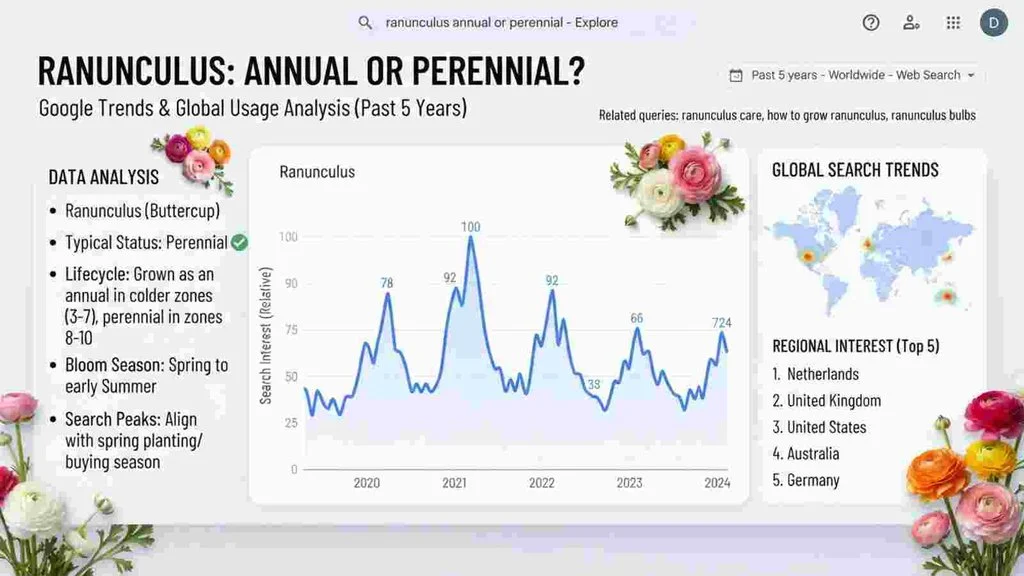
The search term ranunculus annual or perennial reflects a common gardening question. People want to understand the flower’s life cycle before buying corms or planning their gardens.
Search interest can vary by country and growing season.
- United States: Gardeners often ask whether ranunculus can survive winter and return in spring.
- United Kingdom: Many searches focus on winter care, soil drainage, and growing ranunculus outdoors.
- Australia: Gardeners may look for planting times and growing advice based on their local seasons.
- Canada: Cold winter conditions make corm storage and frost protection important topics.
Popular Related Search Terms
These related keywords can help cover different search intentions:
- Is ranunculus an annual or perennial?
- Are ranunculus flowers perennial?
- Do ranunculus come back every year?
- How long do ranunculus flowers last?
- Is Persian buttercup a perennial?
- When to plant ranunculus corms?
- How to grow ranunculus?
- Can ranunculus survive winter?
- Are ranunculus frost hardy?
- How to store ranunculus corms?
- Ranunculus growing zones
- Ranunculus winter care
- Ranunculus planting guide
- Ranunculus flowering season
- Ranunculus bulbs or corms
Important note: These are related keyword ideas, not verified Google Trends rankings or search-volume figures. Actual popularity should be checked with Google Trends or an SEO keyword tool.
Ranunculus Annual or Perennial – Comparison Table
| Feature | Annual Ranunculus | Perennial Ranunculus |
| Life cycle | One growing season | Several years |
| Flower return | Usually needs replanting | Can return |
| Climate | Often grown in cold regions | Best in suitable mild climates |
| Winter care | Corms replanted next season | Corms protected or left in suitable soil |
| Maintenance | Seasonal planting | Seasonal care |
| Flowering | Usually spring | Usually spring |
| Best for | Seasonal garden displays | Long-term garden growth |
FAQs About Ranunculus Annual or Perennial
1. Is ranunculus an annual or perennial flower?
Ranunculus can be both. Popular Persian buttercups are tender perennials, but gardeners often grow them as annuals in cold climates.
2. Do ranunculus come back every year?
Yes, they can return every year in mild climates. Their corms need suitable soil, good drainage, and protection from freezing temperatures.
3. Can ranunculus survive winter?
Ranunculus can survive mild winters. However, freezing temperatures and wet soil can damage or kill the corms.
4. Should I dig up ranunculus corms after flowering?
In colder areas, yes. Allow the leaves to turn yellow and die back before lifting the corms. Dry them and store them in a cool, dry place.
5. How many years do ranunculus flowers last?
When grown as perennials in suitable conditions, ranunculus can return for several growing seasons. Their exact lifespan depends on the species and growing conditions.
6. Can ranunculus grow in pots?
Yes. Ranunculus grows well in pots with drainage holes and good-quality, well-drained potting soil. Keep the soil lightly moist but never waterlogged.
7. When should I plant ranunculus?
In mild climates, plant corms in autumn. In colder climates, plant them in late winter or early spring when severe frost is less likely.
Conclusion
So, is ranunculus an annual or perennial? The simple answer is that it can be both. Its life cycle depends on the species, climate, and growing conditions.
Popular Persian buttercups are tender perennials that can return every year in areas with mild winters.
If you live in a cold region, you can still enjoy these beautiful flowers. Simply grow them as annuals or lift their corms before winter and store them safely for the next planting season.
For the best results, choose well-drained soil, provide enough sunlight, and avoid too much water. Also, check your local growing zone before planting.
Remember that ranunculus is not a true annual in every climate. With proper care and winter protection, these colorful flowers can brighten your garden for more than one season.
Whether you grow them in pots, garden beds, or flower borders, ranunculus is a lovely choice for a colorful spring display.
The best advice is to understand your local climate before deciding how to grow ranunculus.

Mary Roach is an American science writer and bestselling author known for making unusual and complex scientific topics engaging, accessible, and humorous. Her books include Stiff, Packing for Mars, Gulp, and Fuzz.
Author at Simifind.com, sharing clear, informative content designed to help readers understand interesting topics and everyday questions.