A dark spot on your skin can be scary. You may notice a small red, purple, brown, or black mark and wonder if it is a blood blister or melanoma.
Both can look dark, but they are very different. A blood blister is usually harmless. Melanoma is a serious type of skin cancer that needs medical care.
Many people search for this topic because they notice a dark spot under a fingernail, on a toe, or somewhere else on the body.
They want to know if the mark is caused by an injury or something more serious.
The good news is that there are signs that can help you understand the difference. A blood blister often appears after pressure, rubbing, or a small injury.
Melanoma may develop without a clear cause and can change in size, shape, or color.
In this guide, you will learn how to compare both conditions, spot warning signs, and understand when to see a doctor.
Remember, a skin check is the safest way to know what a dark mark really is.
Blood Blister or Melanoma – Quick Answer
A blood blister is a small pocket of blood under the skin. It often forms after an injury, pinching, or repeated rubbing. It may look red, purple, or dark black.
Melanoma is a type of skin cancer that starts in pigment-making cells called melanocytes. It can appear as a new dark spot or as a change in an existing mole.
Here is a quick comparison:
| Feature | Blood Blister | Melanoma |
| Main cause | Pressure or injury | Abnormal cell growth |
| Appearance | Red, purple, or dark | Brown, black, red, or mixed colors |
| Shape | Often round or raised | May have an uneven shape |
| Pain | May feel sore | Often painless |
| Changes | Usually heals over time | May grow or change |
| Risk | Usually harmless | Can be dangerous |
Important: A dark spot cannot be diagnosed by appearance alone. Melanoma can look like a blood blister, especially under a nail. A new, changing, or unexplained dark mark should be checked by a healthcare professional.
The Origin of Blood Blister or Melanoma
The terms blood blister and melanoma come from different medical and language roots.
Blood blister is a simple descriptive term. The word “blood” refers to the blood trapped under the skin. The word “blister” describes a small pocket that forms beneath the outer skin layer.
A blood blister often develops when tiny blood vessels break after pressure or friction. The blood becomes trapped beneath the skin, creating a dark bubble.
Melanoma comes from Greek word roots. “Melano” means black or dark, while “oma” means a growth or tumor. The name relates to the pigment-producing cells where this cancer often begins.
The two terms are not spelling variations. They describe two different conditions:
- Blood blister: A pocket of trapped blood.
- Melanoma: A potentially serious skin cancer.
Understanding these meanings can help people recognize why the two conditions need different types of care.
British English vs American English Spelling
There is no British or American spelling difference between blood blister and melanoma.
Both terms use the same spelling in the United States, United Kingdom, Canada, Australia, and other English-speaking countries.
However, medical writing may use slightly different terms depending on the country and context.
| Term | American English | British English | Meaning |
| Blood blister | Blood blister | Blood blister | Blood trapped under the skin |
| Melanoma | Melanoma | Melanoma | A type of skin cancer |
| Skin cancer | Skin cancer | Skin cancer | Cancer affecting skin cells |
| Nail melanoma | Nail melanoma | Nail melanoma | Melanoma involving the nail area |
| Subungual melanoma | Subungual melanoma | Subungual melanoma | Melanoma beneath a nail |
Example sentences:
- American English: “The doctor checked the dark spot for signs of melanoma.”
- British English: “The doctor checked the dark spot for signs of melanoma.”
The spelling stays the same. The main difference is regional vocabulary and writing style, not the medical terms themselves.
Which Spelling Should You Use?
Since both terms have the same spelling worldwide, you do not need to choose between British and American versions.
Your choice should depend on your audience and the purpose of your writing.
For American readers: Use “blood blister” and “melanoma” in medical articles, health guides, and everyday writing.
For British readers: Use the same terms. You may also use British medical wording where it fits the topic.
For global readers: Choose simple language and explain medical terms when needed. This makes your content easier to understand.
For SEO writers, using both terms naturally in headings and body text can help answer searches from different countries.
Common Mistakes with Blood Blister or Melanoma
People often confuse blood blisters with melanoma because both can appear dark. However, some common mistakes can lead to delays in getting the right medical care.
Here are mistakes to avoid:
1. Thinking every dark spot is a blood blister
A dark mark may have many causes. Do not assume it is harmless without checking it.
2. Assuming melanoma always hurts
Melanoma may not cause pain. A painless spot can still need medical attention.
3. Waiting for every dark mark to heal
A blood blister often improves as the skin heals. However, an unexplained or changing mark should not be ignored while waiting.
4. Believing melanoma always looks like a mole
Melanoma can appear under a nail, on the sole of the foot, or in other areas of the body.
5. Trying to pop a blood blister
Do not cut or pop a blood blister yourself. This can increase the risk of infection.
6. Ignoring changes in a nail
A new dark line or patch under a nail should be checked, especially if it grows, changes, or spreads onto the nearby skin.
Blood Blister or Melanoma in Everyday Examples
These terms appear in health articles, online discussions, medical reports, and everyday conversations.
Here are some examples:
1. In emails
“I noticed a dark spot under my toenail. Could you please arrange an appointment to check whether it is a blood blister or something else?”
2. In news articles
“Health experts encourage people to seek medical advice when they notice new or changing skin spots.”
3. On social media
“I thought the dark mark on my finger was a blood blister, but my doctor advised me to get it checked.”
4. In formal writing
“Melanoma is a serious form of skin cancer that requires early diagnosis and appropriate treatment.”
5. In everyday conversation
“Does this dark spot look like a blood blister, or should I have a doctor examine it?”
These examples show how both terms can be used in different situations. However, online pictures and personal opinions cannot replace a medical examination.
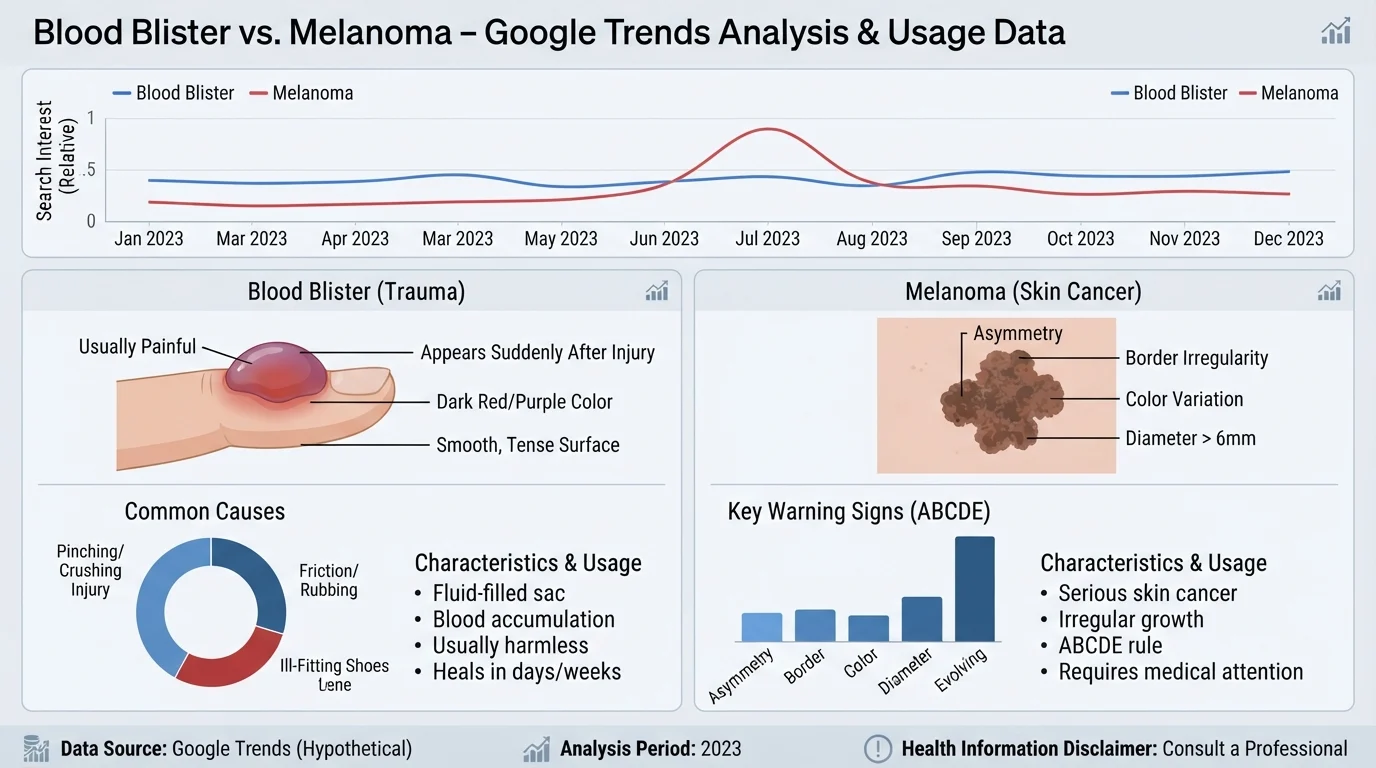
Blood Blister or Melanoma – Google Trends & Usage Data
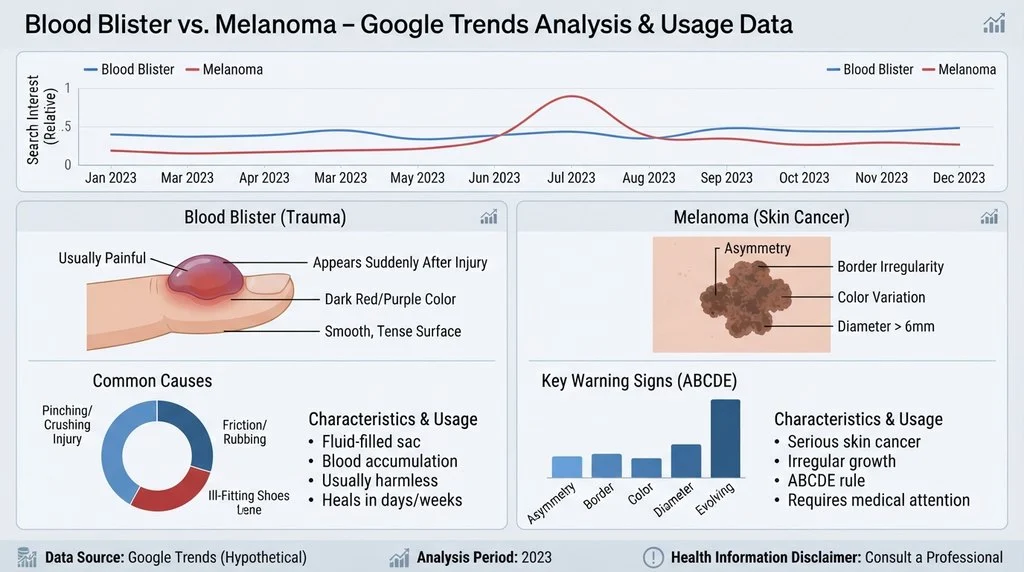
The search phrase “blood blister or melanoma” reflects a common health concern. People often use it when they notice a dark mark and want to understand what it could mean.
Search interest can come from several situations:
- Blood blister searches: People look for causes, healing time, pain, and home care.
- Melanoma searches: People look for warning signs, skin changes, diagnosis, and treatment.
- Nail-related searches: People compare dark marks under fingernails and toenails.
- Skin cancer searches: People seek information about moles, unusual spots, and early detection.
Search interest may vary by country and season. However, exact country rankings and search volumes require current Google Trends or keyword research data. No verified figures are available here, so specific popularity rankings should not be assumed.
For SEO content, useful related search terms include:
- Blood blister vs melanoma pictures
- Blood blister under nail or melanoma
- Black spot under toenail
- Melanoma under fingernail
- Blood blister healing time
- Signs of nail melanoma
- How to tell a blood blister from skin cancer
These related terms help cover the questions people may have when searching for this topic.
FAQs About Blood Blister or Melanoma
1. How can you tell a blood blister from melanoma?
A blood blister often follows an injury or pressure and may heal over time. Melanoma can grow or change in color and shape. A medical examination is needed to tell them apart.
2. Can melanoma look like a blood blister?
Yes. Some melanomas, especially those under or around nails, can look like dark spots or blood blisters. Do not rely on appearance alone.
3. Does a blood blister under a nail go away?
Many blood blisters under nails move toward the nail edge as the nail grows. If the mark does not improve, changes, or has no clear cause, see a doctor.
4. Is melanoma always black?
No. Melanoma can be brown, black, red, pink, white, or a mixture of colors. Some types have little or no visible pigment.
5. Can a painless dark spot be melanoma?
Yes. Melanoma is not always painful. A new, unusual, or changing dark spot should be examined by a healthcare professional.
6. When should I worry about a black spot under my nail?
Seek medical advice if a dark mark appears without an injury, becomes wider, changes color, affects one nail, or spreads onto the skin around the nail.
7. Can a doctor confirm whether it is melanoma?
Yes. A doctor can examine the area with special tools. If melanoma is suspected, a biopsy may be needed to confirm the diagnosis.
Conclusion
Understanding the difference between a blood blister or melanoma is important for your skin health.
A blood blister usually develops after pressure, friction, or an injury. It creates a small pocket of blood beneath the skin and often heals with time.
Melanoma, however, is a type of skin cancer that can appear as a new or changing dark spot.
Both conditions can look similar, especially under fingernails and toenails. This is why it is not safe to judge a dark mark by color, shape, or pain alone.
Watch for changes in size, color, shape, and appearance. Pay close attention to marks that appear without an injury or do not improve.
If you notice an unusual dark spot, arrange a medical check rather than trying to diagnose it yourself.
The most important lesson is simple: a blood blister is often harmless, but melanoma needs early medical attention.
When you are unsure, let a healthcare professional examine the spot. Early assessment can help protect your health and provide peace of mind.

Mary Roach is an American science writer and bestselling author known for making unusual and complex scientific topics engaging, accessible, and humorous. Her books include Stiff, Packing for Mars, Gulp, and Fuzz.
Author at Simifind.com, sharing clear, informative content designed to help readers understand interesting topics and everyday questions.