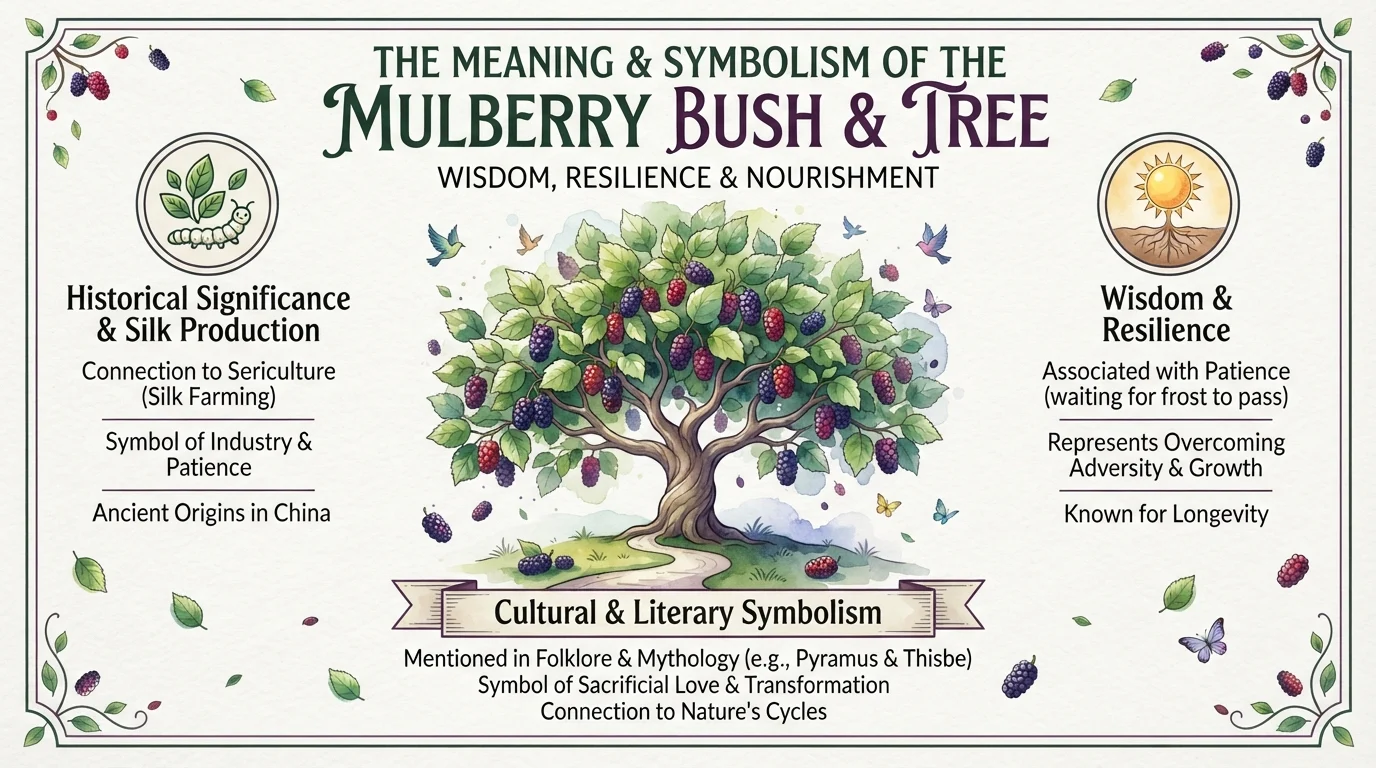
Have you ever wondered whether a mulberry grows as a bush or a tree?
You may have seen a small mulberry plant in a garden or a large one growing in a yard. This can make it hard to know which name is correct.
The good news is that both terms can describe mulberry plants, but they do not mean exactly the same thing. A mulberry is naturally a tree.
However, some types grow as small shrubs, and gardeners can prune them to keep them short and bushy.
People often search for mulberry bush or tree because they want to know how the plant grows, how much space it needs, and which form is best for their garden.
They may also want to know whether a mulberry bush can produce fruit.
In this guide, you will learn the main differences between a mulberry bush and a mulberry tree.
We will also explore their growth, uses, common mistakes, and gardening examples. This will help you choose the right term and understand how mulberry plants grow.
Mulberry Bush or Tree – Quick Answer
A mulberry is mainly a tree, but it can grow as a bush or shrub when it is naturally compact or regularly pruned.
Here is the simple difference:
- Mulberry tree: A woody plant with a main trunk, branches, and a larger crown.
- Mulberry bush: A shorter, bushier form with several stems or branches growing near the ground.
Both forms can produce sweet mulberries, depending on the plant variety and growing conditions.
For example, a mature mulberry tree may grow several metres tall. A pruned mulberry plant can stay much shorter and fit into a small garden.
The word bush describes its shape, while tree describes its natural growth form.
The Origin of Mulberry Bush or Tree
The word mulberry has a long history. It comes from the Old English word morberie, which was linked to earlier Germanic and Latin words for the mulberry fruit.
Mulberry plants belong to the genus Morus. They have been grown for thousands of years in different parts of the world.
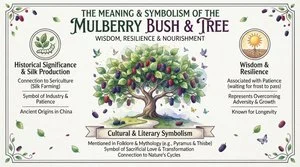
People have valued mulberries for their sweet fruit, shade, and leaves. Some species, especially the white mulberry (Morus alba), are also important in silk production because silkworms feed on their leaves.
The word bush refers to a plant with many branches or stems near the ground. The word tree refers to a larger woody plant with a main trunk.
There is no British-versus-American spelling difference between these terms. The difference is about plant size, shape, and growth.
British English vs American English Spelling
British and American English use the same spelling for both words:
- British English: Mulberry bush or mulberry tree.
- American English: Mulberry bush or mulberry tree.
Neither country uses a different spelling for these plant names.
The main difference is how people describe the plant in everyday gardening conversations. Both British and American gardeners may call a small, pruned mulberry a bush and a larger plant a tree.
| Feature | Mulberry Bush | Mulberry Tree |
| Spelling | Bush | Tree |
| Plant form | Short and bushy | Tall and tree-like |
| Main structure | Several low stems | Usually one main trunk |
| Height | Usually kept low | Can grow several metres |
| Space needed | Less space | More space |
| Fruit | Can produce fruit | Can produce fruit |
| Pruning | Regular shaping | Crown and branch pruning |
| Best use | Small gardens | Large gardens and shade |
Both terms are correct when they describe the plant’s actual form.
Which Spelling Should You Use?
Your choice depends on the plant you are describing and the people who will read your writing.
For US readers: Use mulberry tree when discussing a mature plant. Use mulberry bush for a short, compact, or pruned plant.
For UK and Commonwealth readers: Follow the same rule. These terms are also used in British gardening and plant guides.
For global readers: Use mulberry plant when you are not sure about its shape. This is a simple and clear term that works in most situations.
If you are writing a gardening article, be clear about the plant’s size and growth habit. Do not call every small mulberry plant a different species just because it looks like a bush.
Common Mistakes with Mulberry Bush or Tree
People often confuse the words bush and tree. Here are some common mistakes to avoid.
- Calling every mulberry a bush: Most mulberries naturally grow as woody trees, even if pruning keeps them small.
- Thinking both terms mean different fruits: A mulberry bush and a mulberry tree can produce the same type of fruit.
- Assuming a small plant is a separate species: Size alone does not tell you which mulberry species you have.
- Confusing plant shape with plant type: A pruned tree can look like a bush without becoming a different plant.
- Using the wrong term in gardening guides: Describe the plant’s real growth form to avoid confusing readers.
The best approach is to look at the trunk, branches, and overall shape before choosing a name.
Mulberry Bush or Tree in Everyday Examples
Both terms appear in gardening, emails, news stories, social media posts, and formal writing.
Here are some examples.
1. In everyday conversation
- We planted a mulberry tree in our backyard.
- The mulberry bush is full of ripe fruit.
- Can this mulberry plant grow in a small garden?
2. In emails
- I would like to buy a small mulberry tree for my garden.
- Can you tell me how to prune a mulberry bush?
- Please share your advice on growing mulberries.
3. In news and gardening articles
- Mulberry trees provide shade and fresh fruit in home gardens.
- Small mulberry bushes are useful for compact outdoor spaces.
4. On social media
- Look at the fresh mulberries growing on my tree!
- My little mulberry bush is producing fruit this year.
5. In formal writing
- Mulberry trees belong to the genus Morus.
- Pruning can help gardeners maintain a compact mulberry plant.
- Some mulberry species are grown for their fruit and leaves.
These examples show that the correct term depends on the plant’s shape and the context.
Mulberry Bush or Tree – Google Trends & Usage Data
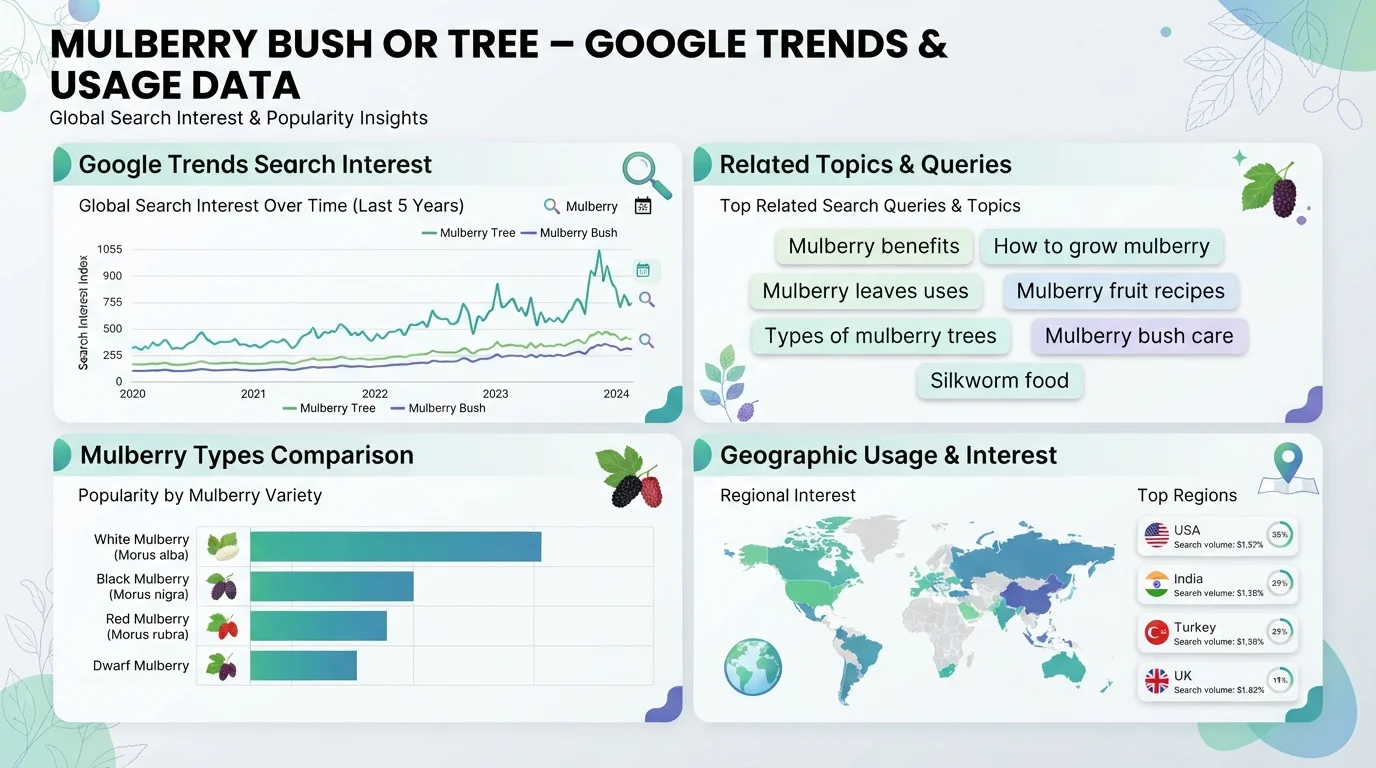
The search phrase mulberry bush or tree reflects a common gardening question. People want to know whether mulberries grow as trees, shrubs, or both.
However, the two terms do not represent competing spellings. They describe different plant forms.
Search interest may come from several gardening needs:
- Plant identification: People want to identify a mulberry growing in their yard.
- Garden planning: Homeowners want to know how much space a mulberry needs.
- Fruit production: Gardeners want to grow mulberries for fresh fruit.
- Pruning advice: People want to keep a mulberry plant small and easy to manage.
- Plant buying: Buyers want to choose a suitable mulberry variety.
The United States, United Kingdom, Australia, and other English-speaking regions all use the words mulberry bush and mulberry tree.
Google Trends data should be checked separately for each search term and country before making claims about which one is more popular. Search volume and interest can also change over time.
For accurate research, compare these terms in Google Trends:
- Mulberry bush
- Mulberry tree
- Mulberry plant
- How to grow mulberries
This comparison can help content creators understand what gardeners want to learn and which topics deserve more attention.
FAQs About Mulberry Bush or Tree
1. Is a mulberry a bush or a tree?
A mulberry is naturally a woody tree. However, some varieties grow with a bush-like shape, and pruning can keep them short.
2. Can a mulberry bush produce fruit?
Yes. A mulberry plant that grows as a bush can produce fruit. Its fruit may be purple, black, red, or white, depending on the species.
3. How tall does a mulberry tree grow?
Mulberry trees vary in height. Some can reach 40 to 60 feet, while dwarf varieties stay much smaller.
4. Can I grow a mulberry tree in a small garden?
Yes. Choose a dwarf variety or prune a suitable mulberry tree to control its size. Make sure it gets enough sunlight.
5. What is the difference between a mulberry bush and a blackberry bush?
They are different plants. Mulberries grow on plants in the genus Morus, while blackberries grow on thorny or thornless brambles in the genus Rubus.
6. Do mulberry trees lose their leaves in winter?
Yes. Most mulberry trees are deciduous. They lose their leaves during autumn or winter and grow new leaves in spring.
7. Which is better for a garden, a mulberry bush or tree?
A bush-shaped mulberry is useful for small spaces and easy fruit picking. A full-sized mulberry tree is better for larger gardens where you want shade and fruit.
Conclusion
The choice between a mulberry bush or tree depends on the plant’s shape and size.
A mulberry is naturally a tree, but it can also grow as a short, bushy plant. Both forms can produce delicious fruit and add beauty to a garden.
If you have a large outdoor space, a mulberry tree can provide shade and fresh fruit. If your garden is small, a dwarf variety or a carefully pruned mulberry plant may be a better choice.
Remember that mulberry bush and mulberry tree are not different spellings. They describe different growth forms of plants in the same genus. Neither term is limited to British or American English.
For clear writing, use mulberry tree for a tree-shaped plant and mulberry bush for a compact, bushy plant. If you are unsure, mulberry plant is a safe choice.
Understanding this simple difference will help you choose the right plant, care for it, and use the correct term in everyday writing.

Here’s a concise 2-line author bio suitable for Simifind.com:
James Dashner is an American bestselling author best known for The Maze Runner series and other popular young-adult fiction.
On Simifind.com, he shares clear, engaging insights and helpful content for readers interested in books, writing, and popular literature.