Have you ever wondered whether cotton or polyester is better for your clothes?
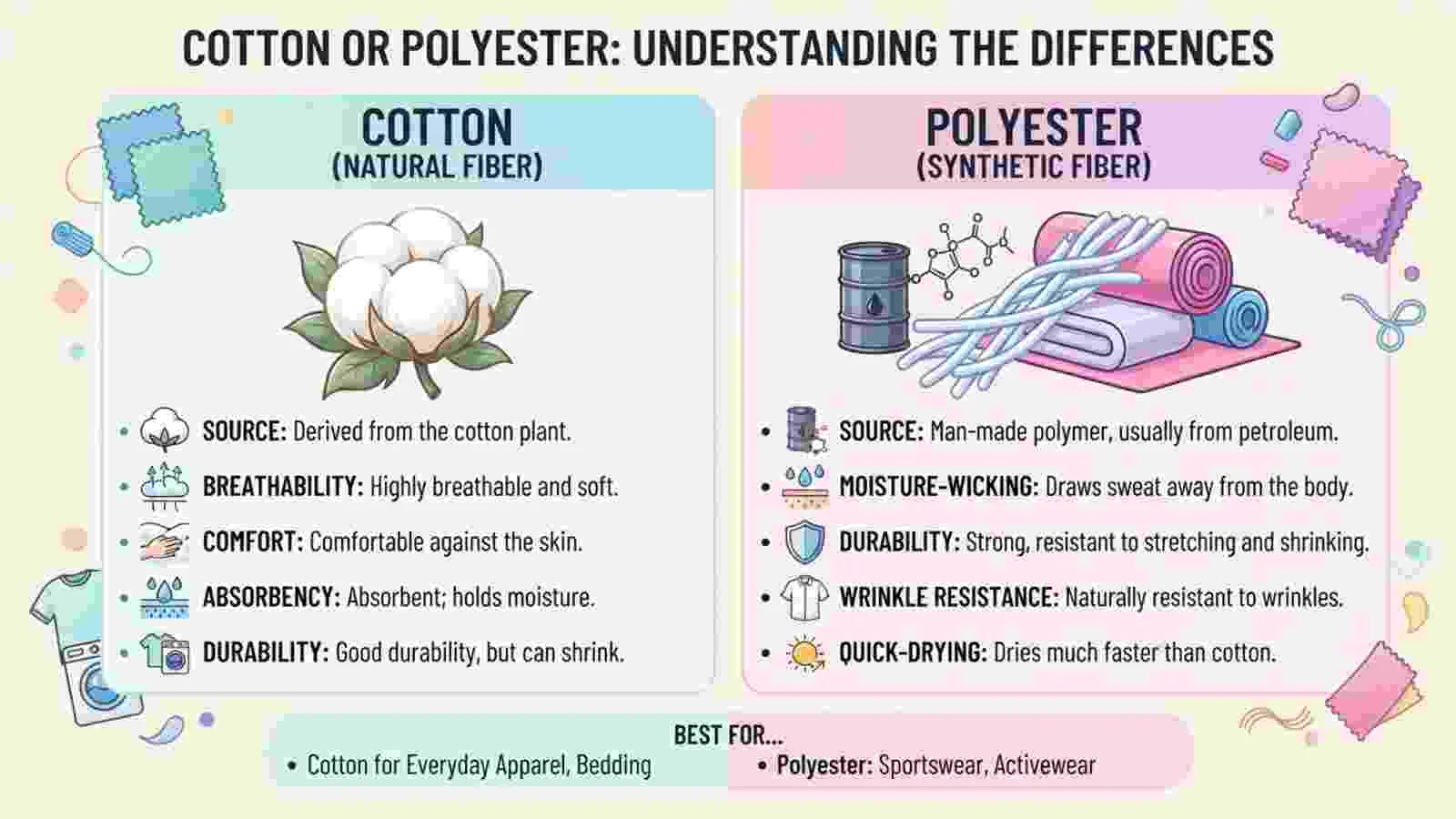
Both fabrics are popular, but they have different features. Cotton is a natural fabric made from plants.
Polyester is a artificial fabric made from fibres. Each has its own benefits and drawbacks.
People often search for cotton or polyester when buying T-shirts, shirts, bedsheets, sportswear, dresses, and other clothing.
They want to know which fabric feels softer, lasts longer, keeps the body cool, and costs less. The choice can be confusing because both fabrics look good and come in many styles.
Cotton is known for its soft feel and ability to absorb moisture. Polyester is popular because it dries fast, resists wrinkles, and holds its shape. Some clothes also use a blend of both fabrics.
In this guide, we will compare cotton and polyester in simple words. You will learn about their differences, uses, advantages, disadvantages, and which fabric is best for your needs.
Cotton or Polyester – Quick Answer
Cotton is usually better for softness, moisture absorption, and everyday comfort. Polyester is usually better for quick drying, wrinkle resistance, and durability.
The best choice depends on how you plan to use the fabric.
- Choose cotton: For T-shirts, underwear, bedsheets, towels, and everyday clothes.
- Choose polyester: For sportswear, uniforms, jackets, and travel clothes.
- Choose a cotton-polyester blend: For clothes that need both comfort and easy care.
Neither fabric is perfect for every situation. Your climate, activity, budget, and personal comfort all matter.
The Origin of Cotton and Polyester
Where Does Cotton Come From?
Cotton is a natural fibre that comes from the cotton plant. People have used cotton for thousands of years to make clothes, bedding, and other products.
Cotton fibres grow around the seeds of the plant. Workers collect and clean these fibres before turning them into yarn and fabric.
Cotton became popular because it is soft, easy to dye, and comfortable to wear. Today, it is used in shirts, jeans, dresses, towels, and home products.
Where Does Polyester Come From?
Polyester is a synthetic fibre developed in the twentieth century. British scientists John Rex Whinfield and James Tennant Dickson helped develop polyethylene terephthalate (PET) polyester in the 1940s.
Unlike cotton, polyester does not grow on plants. It is made through chemical processes, often using materials derived from petroleum. Some modern polyester is also made from recycled plastic.
Polyester became popular because it is strong, lightweight, quick to dry, and easy to care for.
British English vs American English: Cotton and Polyester
Cotton and polyester have the same spelling in British English and American English.
There is no spelling difference between these two fabric names. However, some textile terms and related words may differ between regions.
| Term | British English | American English |
| Cotton | Cotton | Cotton |
| Polyester | Polyester | Polyester |
| Colour | Colour | Color |
| Fibre | Fibre | Fiber |
| Fabric | Fabric | Fabric |
| Clothing | Clothing | Clothing |
| Washing | Washing | Washing |
| Jumper | Jumper | Sweater |
Both cotton and polyester are understood worldwide. You do not need to change their spelling when writing for readers in the United States, United Kingdom, Canada, or Australia.
Which Fabric Should You Use?
Your choice depends on your needs and the type of clothing you want to buy.
For American Readers
Cotton is a good choice for everyday T-shirts, underwear, and comfortable home clothes. Polyester is useful for gym clothes, sports uniforms, and travel clothing.
For British and Commonwealth Readers
Both fabrics are widely used in everyday clothing. Cotton works well for soft shirts and bedding, while polyester is useful for school uniforms, outdoor clothing, and easy-care garments.
For Global Readers
If you want a natural feel, choose cotton. If you want clothes that dry quickly and resist wrinkles, choose polyester.
A cotton-polyester blend can also be a practical choice for people who want a balance of comfort and durability.
Common Mistakes When Choosing Cotton or Polyester
Many shoppers make simple mistakes when comparing these fabrics.
1. Thinking polyester is always uncomfortable
Modern polyester can be soft and lightweight. Its comfort depends on fabric quality, construction, and finish.
2. Thinking cotton never shrinks
Cotton can shrink during washing and drying, especially when exposed to high heat.
3. Believing cotton is always cooler
Cotton absorbs sweat, but wet cotton can feel heavy. Lightweight polyester may work better for some sports activities.
4. Thinking polyester is always cheaper
The price depends on quality, brand, design, and manufacturing.
5. Ignoring fabric labels
Always check the fabric percentage. A garment made with 65% polyester and 35% cotton is different from one made with 65% cotton and 35% polyester.
6. Assuming every polyester fabric is waterproof
Polyester fibres resist water absorption, but ordinary polyester fabric is not automatically waterproof.
Cotton or Polyester in Everyday Examples
Both fabrics are used in many parts of daily life.
| Everyday Use | Better Choice | Reason |
| Summer T-shirts | Cotton | Soft and absorbent |
| Gym clothes | Polyester | Dries quickly |
| Bedsheets | Cotton | Comfortable and absorbent |
| Sports uniforms | Polyester | Strong and easy to wash |
| Towels | Cotton | Absorbs water well |
| Travel clothes | Polyester | Resists wrinkles |
| Casual shirts | Both | Depends on personal taste |
| School uniforms | Polyester blend | Holds shape well |
| Baby clothes | Soft cotton | Gentle feel |
| Outdoor jackets | Polyester | Useful for many weather-resistant designs |
Emails
- “Could you please confirm whether the new shirts are made from cotton or polyester?”
- “We prefer cotton fabric for our summer clothing collection.”
- “Please check the polyester percentage before placing the order.”
News
- “Many clothing brands are using recycled polyester in their new collections.”
- “Cotton remains a popular choice for everyday clothing.”
Social Media
- “Cotton or polyester? I prefer cotton for daily wear.”
- “Looking for quick-drying polyester clothes for my next workout.”
- “A cotton-polyester blend is my choice for easy-care clothing.”
Formal Writing
- “Cotton is a natural fibre widely used in the textile industry.”
- “Polyester is a synthetic material valued for its strength and durability.”
- “Blended fabrics combine the properties of natural and synthetic fibres.”
Cotton or Polyester – Google Trends and Usage Data
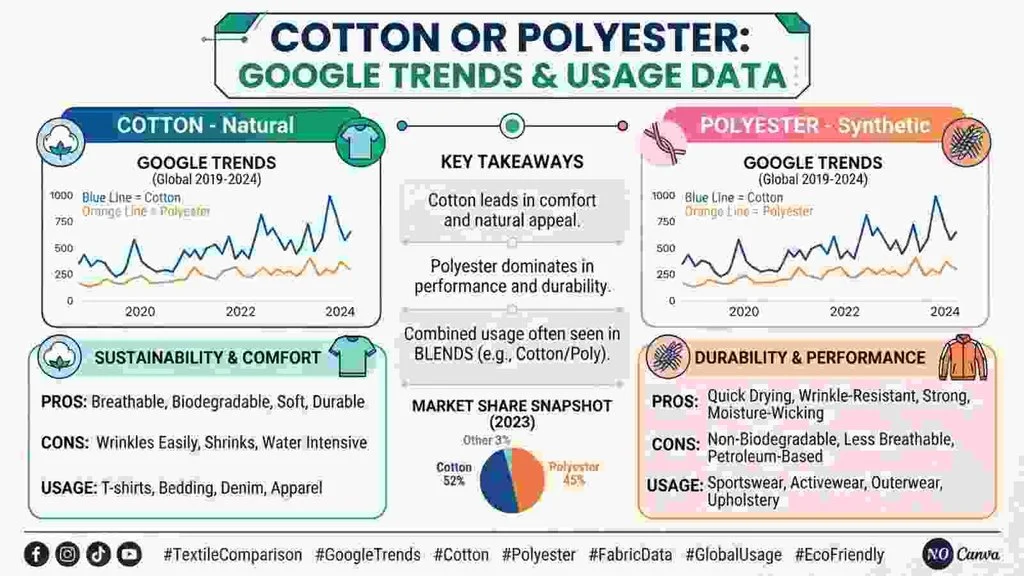
Cotton and polyester are widely discussed in the clothing, textile, fashion, and manufacturing industries.
People search for these fabric names when shopping for clothes, comparing product quality, or learning about textile materials.
Popular Search Markets
- United States: Searches often relate to clothing comfort, T-shirts, bedsheets, and fabric comparisons.
- United Kingdom: Common topics include clothing materials, school uniforms, and fabric care.
- Canada: Searches may focus on winter clothing, everyday comfort, and durable materials.
- Australia: People may compare fabrics for warm-weather clothing, sportswear, and outdoor use.
- India: Cotton and polyester are important topics in clothing, textile production, and fabric shopping.
These are relevant search contexts, not a verified ranking of countries by Google Trends interest.
Why Do People Search for Cotton or Polyester?
- Comfort: People want to know which fabric feels softer.
- Durability: Buyers compare how long each material lasts.
- Weather: Shoppers look for suitable fabrics for hot and cold conditions.
- Price: Many people compare the cost of cotton and polyester clothes.
- Care: Buyers want fabrics that are easy to wash and maintain.
- Sustainability: People compare natural fibres, recycled polyester, and environmental impact.
How to Check Google Trends
Google Trends can help compare search interest for “cotton” and “polyester” over time. You can select different countries, compare related search terms, and explore regional interest.
Remember that Google Trends uses an indexed score from 0 to 100. It does not show the exact number of searches. A higher score means greater relative search interest within the selected location and time period.
Cotton vs Polyester: Comparison Table
| Feature | Cotton | Polyester |
| Material | Natural | Synthetic |
| Source | Cotton plant | Chemical polymers |
| Feel | Soft | Smooth |
| Breathability | Generally good | Depends on construction |
| Water absorption | High | Low |
| Drying time | Slow | Fast |
| Durability | Good | Generally higher |
| Wrinkle resistance | Low | High |
| Shrinkage | Possible | Usually low |
| Maintenance | Needs more care | Easy to maintain |
| Cost | Varies | Often affordable |
| Best use | Daily clothing | Sportswear |
| Environmental concern | Water and farming impacts | Fossil resources and microplastic pollution |
FAQs About Cotton or Polyester
1. Is cotton better than polyester?
Cotton is generally better for softness and moisture absorption. Polyester is better for quick drying and wrinkle resistance. The best choice depends on your needs.
2. Is polyester cheaper than cotton?
Polyester is often cheaper to produce, but retail prices depend on fabric quality, brand, and clothing design.
3. Which fabric is better for summer?
Lightweight cotton is a popular summer choice because it feels soft and absorbs sweat. Lightweight polyester can also work well for exercise and active use.
4. Which fabric lasts longer?
Polyester generally has better resistance to stretching, abrasion, and repeated washing. However, good-quality cotton can also last for many years.
5. Is cotton more breathable than polyester?
Cotton is generally breathable and absorbs moisture. However, modern polyester fabrics can also provide good airflow when they have the right design.
6. Is a cotton-polyester blend good?
Yes. A cotton-polyester blend combines some of cotton’s softness and absorbency with polyester’s strength and wrinkle resistance.
7. Which fabric is better for sensitive skin?
Many people prefer soft, smooth cotton because it feels comfortable against the skin. However, skin comfort depends on fabric quality, dyes, finishes, and individual sensitivity.
Conclusion
Choosing between cotton or polyester depends on what you need from your clothes. Both fabrics have useful features, but they are made in different ways and offer different levels of comfort and performance.
Cotton is a natural fabric that feels soft and absorbs moisture. It is a good choice for everyday clothing, towels, bedsheets, and summer outfits. However, it can wrinkle, shrink, and take longer to dry.
Polyester is a synthetic fabric that is strong, dries quickly, and resists wrinkles. It works well for sportswear, uniforms, travel clothes, and many outdoor products. However, it may hold body odours and can feel less comfortable in some fabric designs.
If you want a balance between both materials, a cotton-polyester blend is worth considering. It offers some of the benefits of each fabric.
Our final advice: Choose cotton for everyday comfort, polyester for easy care and activewear, and a blend when you want both. Always check the fabric label before buying.

Here’s a concise 2-line author bio suitable for Simifind.com:
James Dashner is an American bestselling author best known for The Maze Runner series and other popular young-adult fiction.
On Simifind.com, he shares clear, engaging insights and helpful content for readers interested in books, writing, and popular literature.